REVIEW · LOS ANGELES
Downtown Los Angeles: Culture and Arts Walking Tour
Book on GetYourGuide →Operated by ExperienceFirst California · Bookable on GetYourGuide
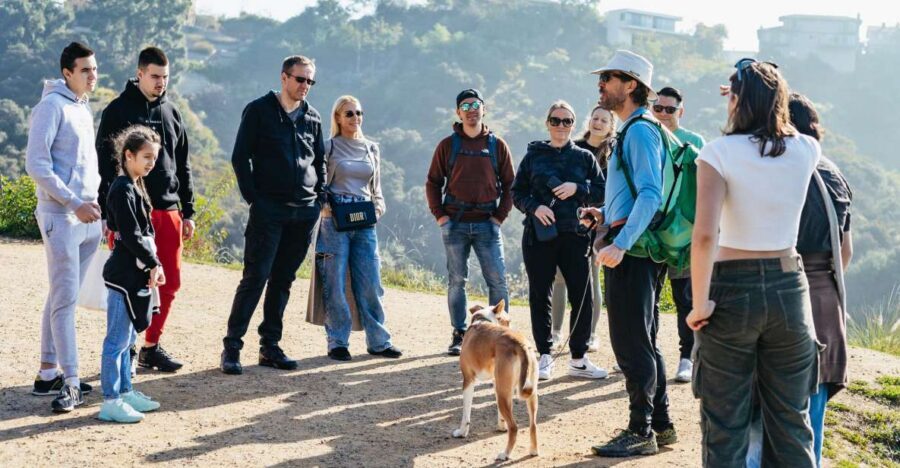
Downtown LA has a way of surprising you fast. This tour turns what most people treat as traffic-bound chaos into a smart, walkable story of public transportation and the architecture that frames it. I especially like how the guide connects big ideas (cars vs. mass transit) to specific places you can see with your own eyes, and how the route mixes famous landmarks with LA’s everyday culture spots.
I also love the way the tour brings Downtown’s evolution into the light—Spanish-era beginnings, later civic power, and the more recent gentrification that’s changed the look and feel. On earlier departures led by guides such as Paul, Chris, Sam, Matt, and Phil, the common thread is clear speaking and strong storytelling, even for teens.
One thing to consider: it’s a fast-moving 2-hour walking tour (no luggage allowed), so you’ll want comfortable shoes and a realistic expectation that you’ll be outdoors most of the time.
In This Review
- Key highlights you’ll feel on this walk
- A Downtown walking tour that starts with the subway, not the skyline
- The Angels Flight moment: history you can ride, not just hear
- The bookstore and the market: LA culture between the landmarks
- Grand Street arts stops: symphonies, museums, and the Downtown arts cluster
- Civic Center LA: power, legends, and how the city keeps running
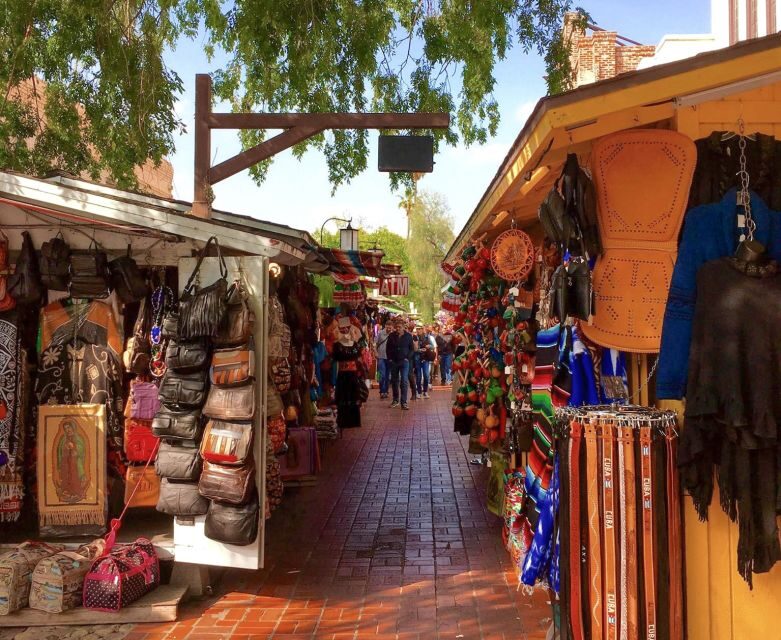
- Olvera Street and the oldest Los Angeles story you can walk through
- Downtown gentrification: what changed, and how to read the new look
- Union Station: mission revival and Art Deco in one transit time machine
- Price and value: why $39 makes sense for 2 hours
- Who this tour is best for (and who should think twice)
- Quick practical tips before you go
- Should you book this Downtown Los Angeles Culture and Arts Walking Tour?
- FAQ
- Where is the meeting point?
- How long is the tour?
- How much does the tour cost?
- What’s included in the price?
- What isn’t included?
- Where does the tour end?
- What should I bring?
- Is luggage allowed?
- What language is the tour in?
- Can I cancel for a refund?
- Is there a pay-later option?
Key highlights you’ll feel on this walk
- Angels Flight, plus the Red Line story: you hear the transit history and then get to experience a famous piece of it.
- Real Downtown stops, not random photos: The Last Bookstore, The Bradbury Building, and Grand Central Market show how LA eats, reads, and shops.
- Big-name architecture within easy reach: Union Station, Walt Disney Concert Hall, the Bradbury, and the US Bank Tower area all shape the skyline.
- Civic and cultural context: you’ll learn who held power, including references to former Mayor Tom Bradley and retired police chief William Parker.
- Olvera Street and Spanish roots: the tour ties the city’s name and pueblo life to the Spanish Empire’s impact.
- Downtown gentrification explained in plain terms: you’ll understand what changed and why it matters for what you see today.
A Downtown walking tour that starts with the subway, not the skyline
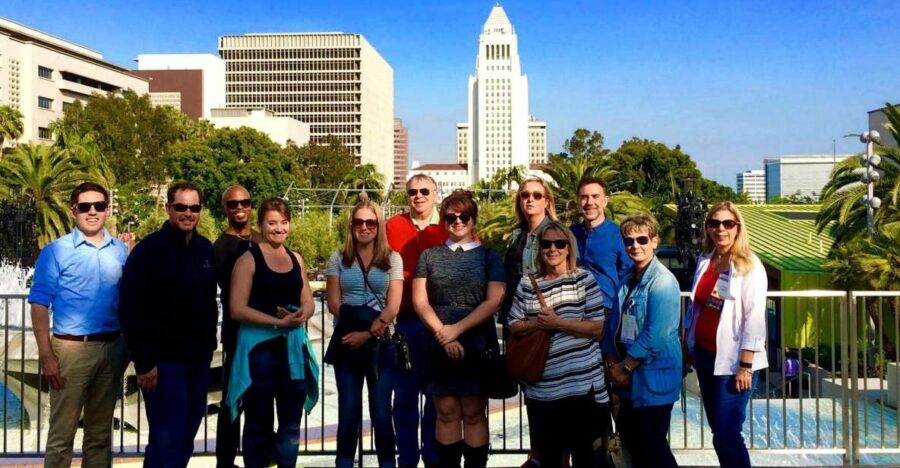
Most LA first-timers arrive with one mental picture: gridlock. This tour keeps that tension front and center, but it flips the usual script. Instead of treating transit as an afterthought, the walk begins with Los Angeles public transportation—how it formed, how it competed with car culture, and what happened to major rail lines along the way.
That matters because Downtown doesn’t just look different over the years—it functions differently. When you understand how people moved (and how some options faded), you start seeing the city like a system, not a set of stand-alone sights. It also makes later stops click: you’ll notice transit-adjacent design, civic buildings placed for access, and why certain areas became magnets.
You can also read our reviews of more walking tours in Los Angeles



The Angels Flight moment: history you can ride, not just hear
After the intro about LA transit and the demise of the original Red Line, you get a hands-on payoff later in the tour: hopping on Angels Flight. This isn’t a random add-on. It’s a compact, recognizable slice of Downtown movement, and it helps you connect the lecture to a quick real-world ride.
I like this kind of sequencing. You learn why rail matters, then you experience a piece of LA’s transit identity. Even if you already know the basics about LA, this moment usually reframes the city’s “car everywhere” reputation. You walk away with an easier time mapping Downtown in your head—and yes, that can help you avoid the usual freeway mindset.
The bookstore and the market: LA culture between the landmarks
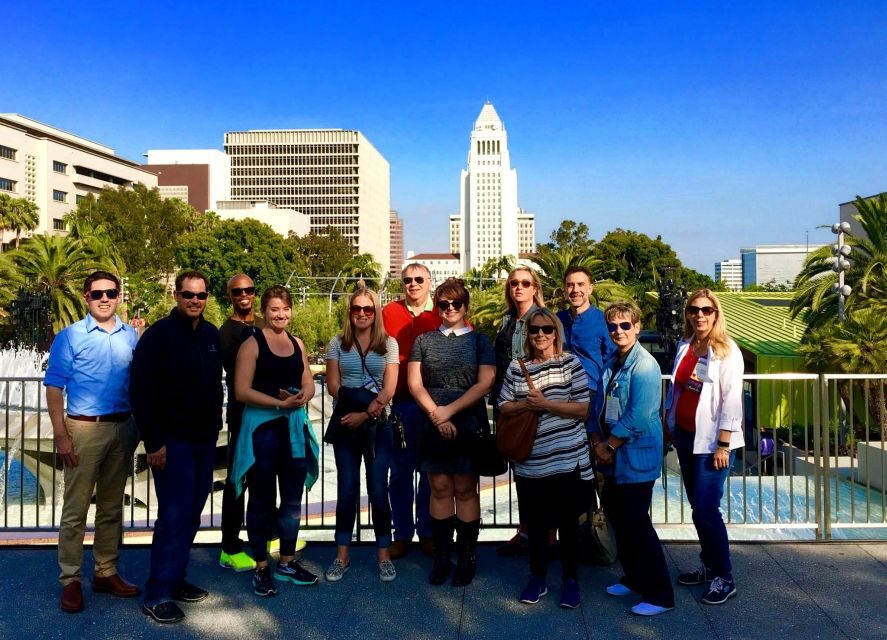
The tour doesn’t only aim for postcard architecture. It also leans into places that feel unmistakably LA in everyday life.
You’ll stop at The Last Bookstore, a spot that’s famous for its size, vibe, and obsessive love of books. Even if you don’t plan to buy anything, it’s a strong reset from the usual walking-tour mode. It reminds you Downtown isn’t just institutions—it’s also strange, creative retail and people doing their normal day.
Then comes The Bradbury Building and Grand Central Market. The Bradbury is the kind of building that rewards lingering. It’s a visual story in metal, glass, and light, and it gives you a break from guessing what you’re looking at. Grand Central Market, meanwhile, is where LA energy feels human. You get the sense of how locals and visitors actually refuel—without needing a reservation or a museum ticket. If food is part of your travel style, this stop alone can make the tour feel worth it even beyond the architecture.
Grand Street arts stops: symphonies, museums, and the Downtown arts cluster
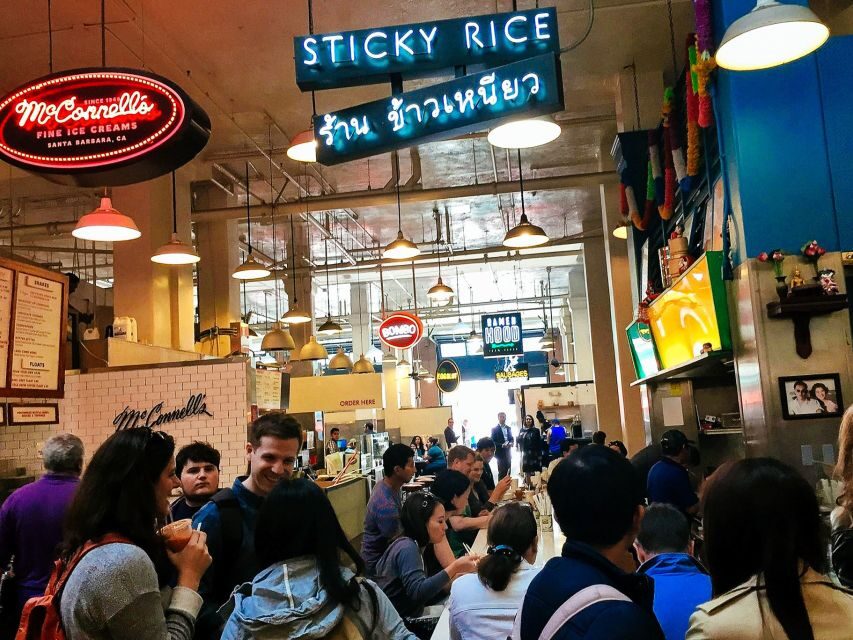
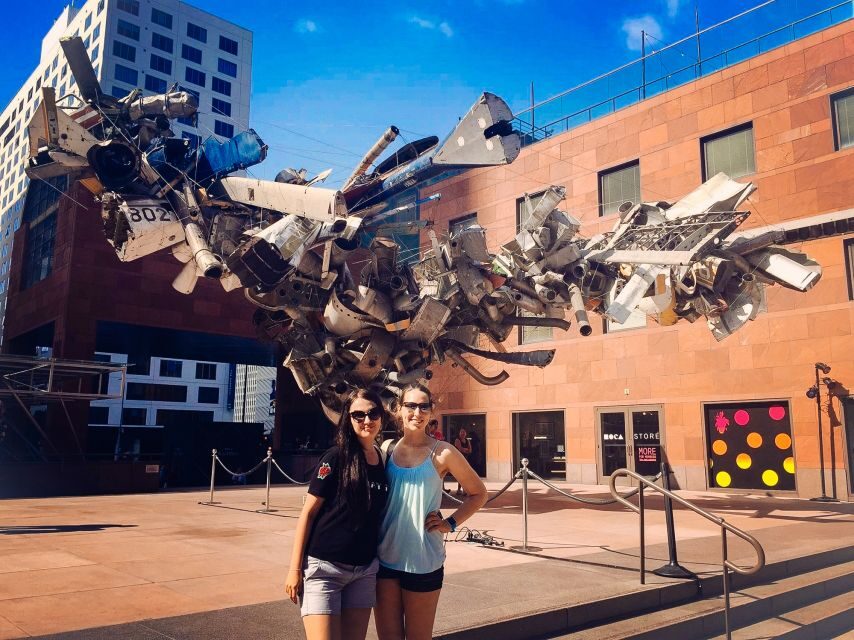
As the walk moves toward the cultural core on and around Grand Street, you’ll see institutions that signal LA’s ambition to be a world-class arts city. You’ll pass by landmarks tied to major performances and contemporary exhibitions, including:
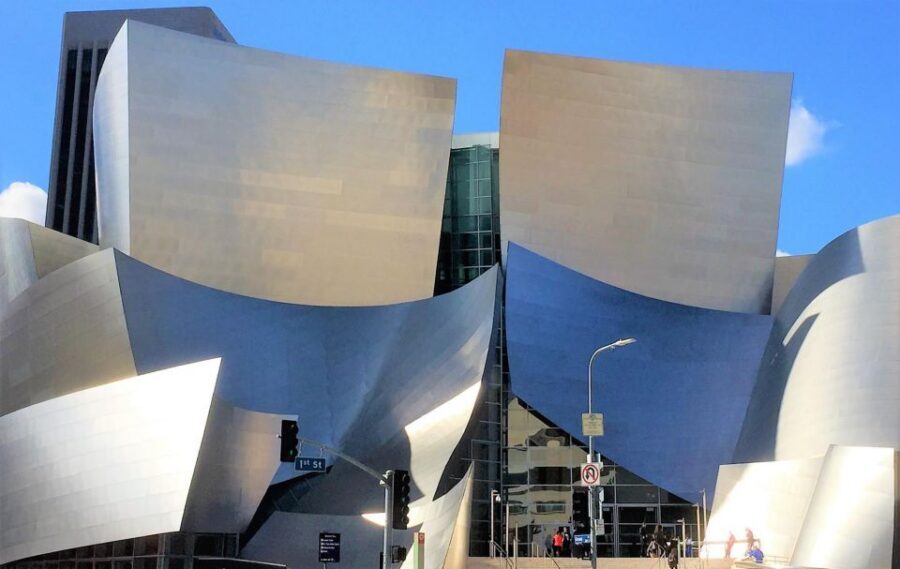
- Walt Disney Concert Hall
- Music Pavilion
- Museum of Contemporary Art (MOCA)
- The Broad
This section works well because the guide doesn’t treat these buildings as distant celebrities. You’ll learn how they fit into Downtown’s shift from business and government gravity to arts and visitor gravity. You also get a stronger sense of why these venues keep showing up in LA itineraries: they’re not just beautiful exteriors; they act like anchors for foot traffic and neighborhood identity.
A practical note: if you’re the type who likes to zoom from one photo to the next, slow down here. The architecture is the point, but so is how the campus-like arts layout shapes walking routes and views.
Civic Center LA: power, legends, and how the city keeps running
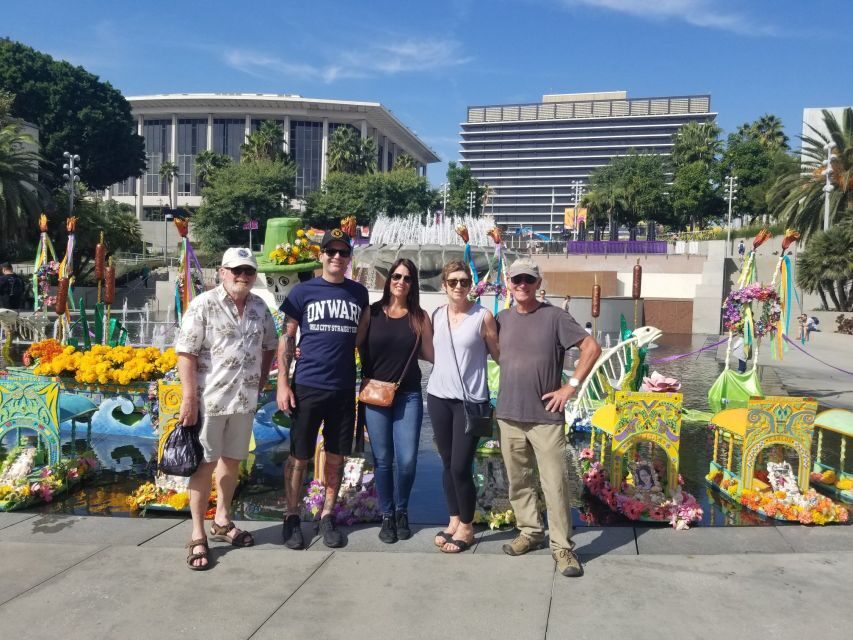
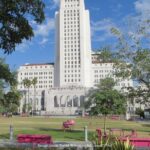
Next, you head toward the Civic Center, the administrative center where you can literally see how order gets made for a sprawling city. This isn’t abstract. You’ll learn about the functions tied to city governance and hear local legend details connected to prominent figures such as former Mayor Tom Bradley and retired police chief William Parker.
I like this stop because it gives Downtown context you can’t get from a skyline photo. When you understand who shaped policy, policing, and civic planning, the buildings start to feel purposeful rather than ceremonial. It also helps you interpret the neighborhood’s tone—why some areas feel official, why others feel in-between, and why Downtown’s public face keeps changing.

Olvera Street and the oldest Los Angeles story you can walk through

Then the tour shifts into the heart of old LA: Olvera (often associated with Olvera Street). This is where you move from modern institutions back into the Spanish-era foundation of the city.
You’ll learn about the pueblo life that existed here and how the city’s namesake connects to the larger Spanish Empire influence. For me, this stop is the moment when the tour’s title becomes real. Downtown Los Angeles stops being just a modern district and becomes a layered place where older eras still shape street patterns and identity.
Olvera Street also sets up the tour’s later contrast with Downtown’s more recent reinvention. You see how something can be both historic and constantly changing, and the guide makes the change feel understandable instead of random.
Downtown gentrification: what changed, and how to read the new look
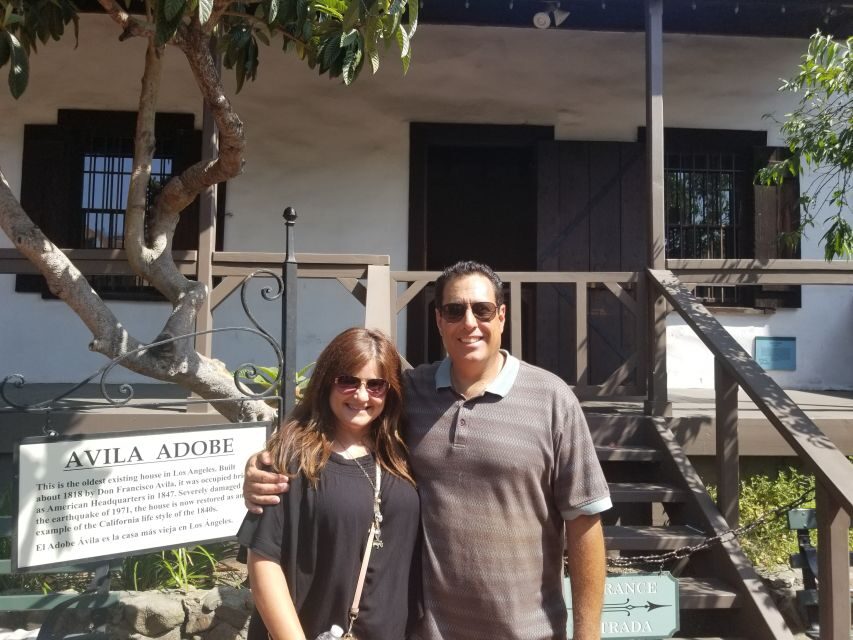
A big part of the tour’s value is its willingness to tackle gentrification without fogging it up. You’ll hear how the landscape changed dramatically in recent years, and more importantly, you’ll learn what those changes mean as you walk.
This is where the tour’s “walking review” style really earns its keep. Instead of talking about gentrification as a headline, you’ll connect it to visible shifts: who’s moving through a space, what kinds of businesses cluster where, and how architecture and public areas get repurposed over time. You don’t have to agree with every opinion—just hearing a clear, local explanation helps you read Downtown with less confusion.
Union Station: mission revival and Art Deco in one transit time machine
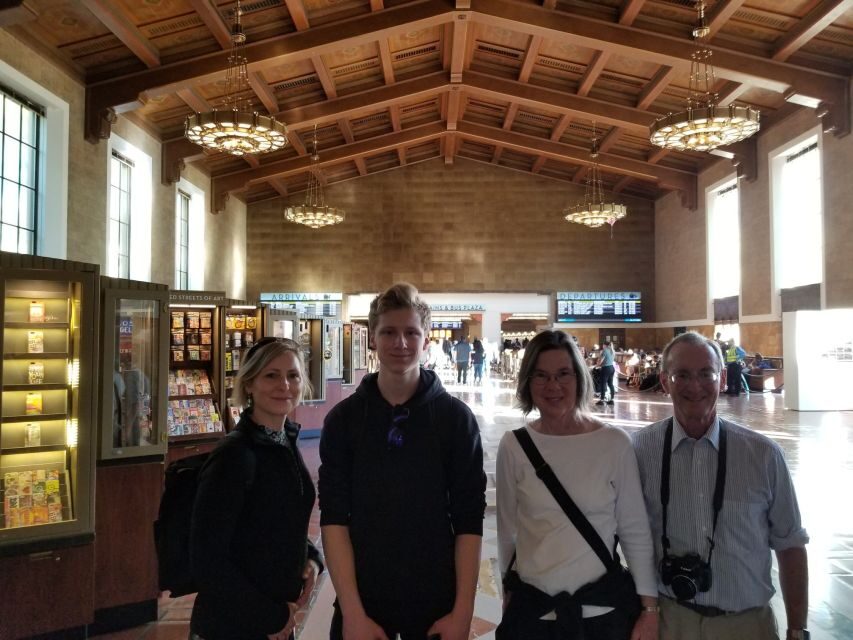
For the finale, you head to Union Station, described as a mission revival and Art Deco-infused building. It’s the kind of place where even people who aren’t train nerds feel something immediately: scale, symmetry, and the sense that this was built to welcome travelers.
The guide ties it to its historic role as a major transit hub, often referred to as the Grand Central of the West. That’s a strong way to frame what you’re seeing. Union Station isn’t just a beautiful building; it’s an example of how Downtown became a central node for movement and commerce—and how that identity is still part of the city’s pull.
If you’re hoping for one last “wow” before the walk ends, this is the spot. It also closes the loop nicely: the tour starts with how LA moved people, and it ends with one of LA’s most iconic movement-related structures.
Price and value: why $39 makes sense for 2 hours
At $39 per person for about 2 hours, this tour sits in a sweet spot. You’re paying for more than sightseeing. You’re paying for a guide who can connect:
- the story of LA’s transit competition (cars vs. rail),
- big architectural landmarks you’d otherwise skim,
- and Downtown’s shifts from Spanish roots to civic power to modern cultural identity.
Add in that the tour includes a guide and a live walk-and-explain format, plus a short, experience-based moment with Angels Flight, and the price starts to feel fair. If you tried to DIY this route, you’d probably spend money on transit questions, end up missing context at several buildings, and lose time figuring out how the pieces connect.
If you’re the kind of traveler who likes learning as you go, $39 is a reasonable deal for the amount of ground covered and the quality of interpretation described by guides like Paul, Chris, Sam, Matt, and Phil.
Who this tour is best for (and who should think twice)
This tour fits you well if you:
- want a Downtown LA overview that doesn’t stop at big names,
- like architecture plus story context,
- enjoy transit history and how it shapes real neighborhoods,
- can handle a steady walk for about 2 hours.
You might think twice if you:
- prefer fully seated tours or long museum visits (this is mostly outdoors and walking),
- travel with large luggage (it’s not allowed),
- expect a slow, stop-and-snack experience (food options aren’t included; you’ll mainly be observing the key stops).
Quick practical tips before you go
- Wear comfortable shoes; you’ll be walking through multiple districts and blocks.
- Plan to travel light. No luggage or large bags is allowed.
- Bring a “learning mindset.” This tour is best when you treat each stop as a clue in a larger Downtown story.
Should you book this Downtown Los Angeles Culture and Arts Walking Tour?
I’d book it if you want a guided Downtown experience that feels grounded, not gimmicky. The mix of transit history, landmark architecture, and older LA storytelling (Olvera) creates a full picture in just two hours. If you also care about how Downtown changed through gentrification, this tour gives you a framework that helps you see what’s different without guessing.
Pass if you want only the most famous buildings with minimal walking. But for most people looking for a first solid Downtown orientation, this is a strong pick.
FAQ
Where is the meeting point?
The tour starts at 541 S Spring St, Los Angeles, CA 90013, outside of the Spring Arcade building.
How long is the tour?
The duration is 2 hours.
How much does the tour cost?
The price is $39 per person.
What’s included in the price?
A professional English-speaking guide is included.
What isn’t included?
Meals, drinks, and entrance fees to museums are not included.
Where does the tour end?
The tour finishes at 800 Alameda St, Los Angeles, CA 90012.
What should I bring?
You should bring comfortable shoes.
Is luggage allowed?
No. Luggage or large bags are not allowed.
What language is the tour in?
The tour is offered in English.
Can I cancel for a refund?
Yes. Free cancellation is available up to 24 hours in advance for a full refund.
Is there a pay-later option?
Yes. You can reserve your spot and pay later.