REVIEW · LOS ANGELES
LA’s Art Deco & Beaux Art Architecture: Private Walking Tour
Book on Viator →Operated by Travel Curious · Bookable on Viator
Downtown LA turns into an architecture classroom. This private walking tour threads through iconic Art Deco and Beaux-Arts buildings with a guide who navigates downtown so you can pay attention to the details. I especially like the photo-friendly pace, because each stop gives you time to look up and frame the shot you actually want.
I also enjoy how the route links styles across time, from Los Angeles City Hall’s film-famous look to the Eastern Columbia Building’s clock-tower finish. One consideration: it’s still a 3-hour downtown walk, so plan for steady walking and normal city sidewalk life.
In This Review
- Key things to know before you go
- Why this downtown LA Art Deco and Beaux-Arts walk feels worth it
- Starting at Los Angeles City Hall (and why film directors love it)
- Bradbury Building: Beaux-Arts details you’ll notice up close
- Title Guarantee Building apartments and the Art Deco idea of verticality
- Pershing Square: linking eras before Art Deco even had its moment
- CalEdison corner (1931): where marble and corners can steal the show
- Los Angeles Central Library: the Art Deco look that survived
- Oviatt Building: Romanesque Revival mixed with Art Deco makeovers
- Ending at Eastern Columbia Lofts and its famous clock tower
- How to make the most of the 3 hours (without rushing your eyes)
- Who this tour suits best (and who might want a different format)
- Price and value: what $175 buys you in downtown LA
- A couple of helpful add-ons if you have extra time
- Should you book this Art Deco and Beaux-Arts architecture tour?
- FAQ
- How long does the LA Art Deco & Beaux Art architecture private walking tour take?
- Is this tour private or shared?
- Where does the tour start and where does it end?
- Is it wheelchair accessible?
- Do I need tickets or admission fees for the stops?
- What’s included in the price, and what’s not?
- What language is the tour offered in?
- Does weather affect the tour?
- What is the cancellation policy?
Key things to know before you go
- Private guide for your group with a route built for architecture spotting, not rushing.
- All stops are free and no tickets are required, so you’re paying for the guidance and the time.
- Downtown navigation included, which makes a big difference in a city that loves to surprise you with parking lots and side streets.
- Wheelchair accessible and near public transportation, which helps keep the day practical.
- Photo time is part of the plan, not an afterthought.
- A rooftop moment can happen on some days, which adds a fun surprise if your route lines up that way.
Why this downtown LA Art Deco and Beaux-Arts walk feels worth it
This tour is built around one simple idea: downtown LA is full of architectural eras that you can’t really appreciate at speed. You’ll spend about three hours moving between major buildings, with stops set up so you can zoom in on the shapes, materials, and “why did they build it like that” questions.
The value is in the combination of a private guide plus free access to the sights. At $175 per person, you’re not buying entry tickets—you’re buying someone to connect the dots between Beaux-Arts, Art Moderne, and Art Deco so your photos and memories make sense later.
You can also read our reviews of more walking tours in Los Angeles



Starting at Los Angeles City Hall (and why film directors love it)
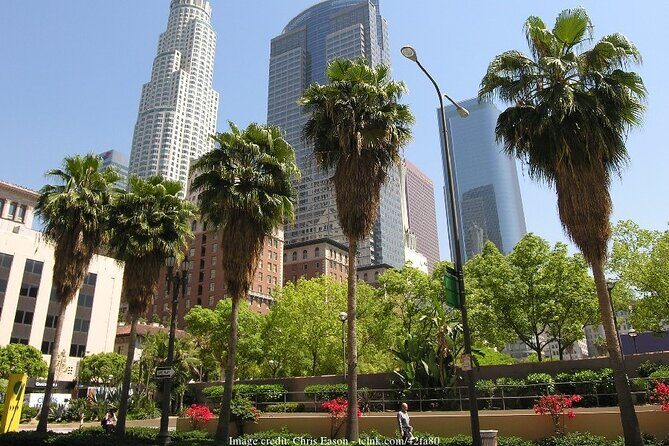
You begin at Los Angeles City Hall, a standout downtown landmark with an eclectic style that has shown up in films more than once. Even if you only know it from the outside, it’s a strong starting point because it sets a visual tone: LA was already thinking big long before “modern” became a buzzword.
From there, you head toward the LA Courthouse, highlighted as an Art Moderne example. This matters because Art Moderne is a cousin to the later look: cleaner lines and a different kind of confidence. If you’re the type who likes comparing eras side by side, this opening stretch gives you that foundation fast.
Bradbury Building: Beaux-Arts details you’ll notice up close
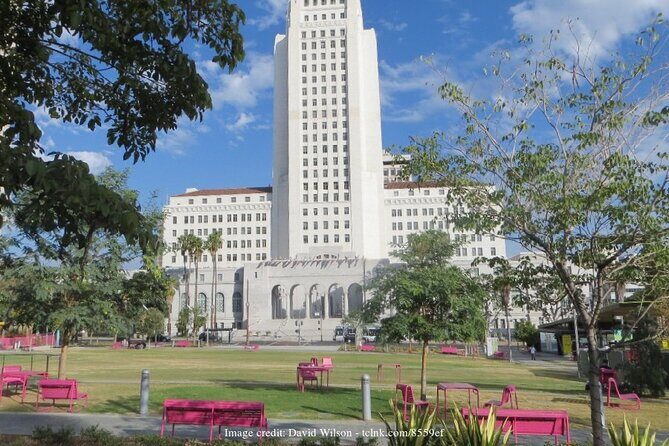
Next up is the Bradbury Building, often treated like a downtown signature. It’s described as one of the oldest surviving Beau-Arts architecture buildings downtown, so you’re not just looking at something pretty—you’re looking at something that helped define the area’s architectural staying power.
This stop is short, around 30 minutes. Use that time to slow down on the façade lines and any interior views you can access from where you’re standing. If you’re a photographer, you’ll want to take your first wide shot, then return for tighter frames—this is the kind of building where the angles look better when you’ve trained your eye.
Title Guarantee Building apartments and the Art Deco idea of verticality
Then you walk to the Title Guarantee Building from 1930, now loft-style apartments. The key point here is verticality: Art Deco often gets credit for “sparkle,” but its real power is how it makes buildings feel like they stretch upward on purpose.
This is one of your tighter stops (about 15 minutes). With limited time, you’ll get the best results by photographing the building’s vertical lines and any stacked patterns you see along the edges. The guide’s role is especially useful here—without that prompt, it’s easy to see only the surface and miss the design logic.
Pershing Square: linking eras before Art Deco even had its moment
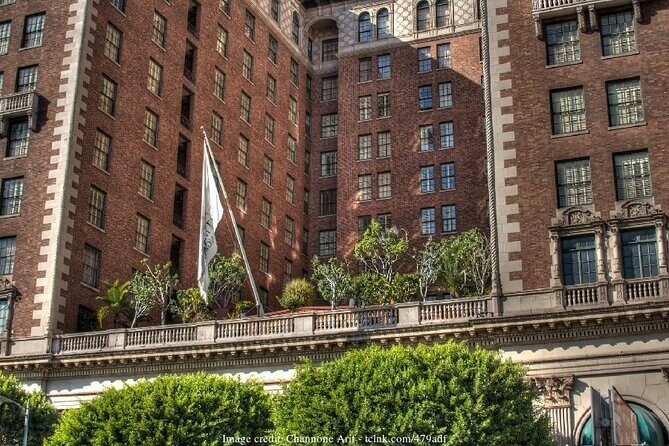
At Pershing Square, your guide will connect the dots between what came before and what became Art Deco. You’ll also get an example of a Beaux-Arts building—specifically the 1925 Biltmore hotel—as part of the story of how downtown tastes evolved.
This stop is also around 15 minutes, so think of it as a “history checkpoint.” You’re not trying to absorb every detail here; you’re grabbing the framework so later buildings land with more meaning. If you’re traveling with someone who wants explanations rather than just photos, this is a good place for them to ask questions.
You can also read our reviews of more private tours in Los Angeles



CalEdison corner (1931): where marble and corners can steal the show
Next is the CalEdison building from 1931, positioned on a prominent corner. The tour notes that you might be able to enter, which matters because marble on floors and columns tends to look different once you’re inside and seeing how light hits the materials.
This stop runs about 30 minutes, giving you a chance to compare outside vs. possible inside details. If you do get access, focus on materials and edges rather than trying to photograph everything at once. Corners are a big deal in Art Deco design, and the guide can help you spot what’s intentional versus what’s just decorative.
Los Angeles Central Library: the Art Deco look that survived
The Los Angeles Central Library (from 1926) is the next major anchor. You’ll see it as an early Art Deco example, and you’ll also hear the story of how it was saved from demolition in 1978 by the Los Angeles Conservatory. That kind of conservation detail is more than trivia—it tells you why certain buildings are still here to study.
This stop takes about 30 minutes. From a practical perspective, that’s enough time to take a strong exterior shot and then circle for a different angle. If you only shoot from one spot, you’ll miss the way the building’s design reads differently depending on where you stand.
Oviatt Building: Romanesque Revival mixed with Art Deco makeovers
The Oviatt Building is where the tour gets fun because it’s described as a mix: parts in a Romanesque Revival style, and later changes made to resemble Art Deco. The story includes a specific spark point: the owner visited the Paris exposition in 1925, and that influence shows up in how the building evolved.
You’ll also pass by the PacMutual building from 1908, described as temple-like in style and later remodeled in the 1930s for an Art Deco look. This is the kind of comparison that makes the whole tour click. Instead of treating Art Deco like a single “look,” you see it as something that got adapted onto older structures as tastes changed.
This stop is about 15 minutes. It’s short, but it’s also dense. Take one photo for each building you pass, even if you plan to come back later—downtown angles change quickly with traffic and crowds.
Ending at Eastern Columbia Lofts and its famous clock tower
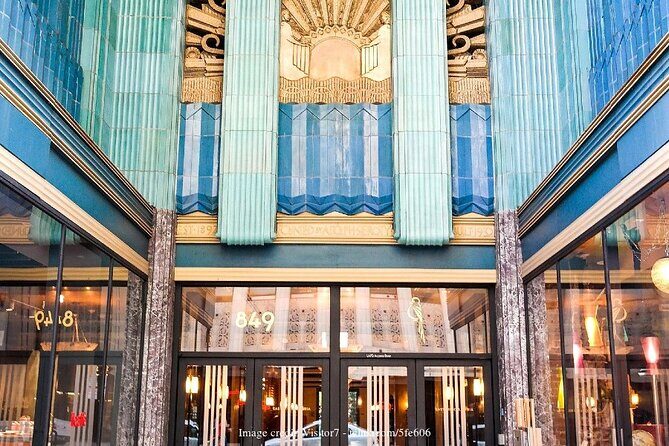
Your finish is at the Eastern Columbia Building (the tour ends at the Eastern Columbia Lofts address). It’s described as spectacular, with an iconic clock tower and a greenish terra cotta original look. It’s now luxury condominiums, and the tour notes that Johnny Depp still owns one of the units.
This end point is about 15 minutes, but it’s designed to feel like a finale. If you want one last strong shot, save your best lens-ready angle for here; this is the building your brain will use to label the whole trip later. The tour also mentions the finish is close to public transport and taxi links, with your guide able to advise you on getting going.
How to make the most of the 3 hours (without rushing your eyes)
Because the route is timed by stops, you’ll get the best experience if you treat each segment like a mini assignment. Start wide to capture the building’s full character, then come in for details that prove the style: repeating verticals, streamlined corners, ornamental shapes, and material textures.
It helps that your guide handles navigation, so you’re not stuck consulting your phone every few blocks. Still, plan your camera strategy. If you spend 20 minutes on one façade, you might end up sprinting later for the shots you really wanted.
If you’re with kids or someone who’s less into architecture, keep it playful. Ask them to pick a building with the most “tall lines” or the “most fancy door.” The tour structure makes those prompts easy because each stop highlights a different feature of the era.
Who this tour suits best (and who might want a different format)
This works especially well if you enjoy walking through downtown and noticing design choices. It’s also a smart pick for anyone who likes to learn while looking—your guide connects the timeline so you’re not just collecting images.
The tour notes a moderate physical fitness level, plus wheelchair accessibility. That combination usually means you’ll have to be comfortable with regular sidewalk conditions and time on your feet, even if ramps and paths are available.
If you’re hoping for long museum-style interiors every stop, you might find the time at each location intentionally brief. The format is about seeing a set of key buildings and understanding them quickly, not lingering for hours in one place.
Price and value: what $175 buys you in downtown LA
At $175 per person for about three hours, you’re paying for a private group guide, not just sightseeing. The biggest value driver is that no tickets are required and each stop’s admission is free based on what the tour highlights.
That means your money goes toward interpretation: why a building is classified the way it is, and how the architecture style evolves as downtown grows. If you’ve ever visited a landmark and thought, Cool, but why does it matter, this is designed to answer that question.
You can also consider timing and predictability. With a route that includes navigation and dedicated photo time, you’re less likely to waste energy getting from one place to the next. That’s often where walking tours either deliver value—or disappoint.
A couple of helpful add-ons if you have extra time
Downtown LA can be a full day if you stitch things together. One guide day has been paired with other nearby highlights like Angels Flight and a market area, plus a Disney Theatre stop if you’re in that part of the day. If you want more than architecture, plan to add a separate activity after you finish at Eastern Columbia.
If your day includes a rooftop viewing surprise (as some experiences note), you’ll want to stay flexible with your schedule and dress for open-air conditions.
Should you book this Art Deco and Beaux-Arts architecture tour?
Book it if you want a focused downtown LA architecture walkthrough with a private guide and the freedom to take your time photographing. It’s especially worth it if you’re curious about how styles connect—Beaux-Arts to Art Moderne to Art Deco—so the city’s buildings stop feeling random.
Skip it (or consider a different tour) if you want lots of long interior visits at each stop. This route is designed for quality looks and comparisons, not a museum marathon.
FAQ
How long does the LA Art Deco & Beaux Art architecture private walking tour take?
It’s about 3 hours total.
Is this tour private or shared?
This is a private tour/activity, meaning only your group participates.
Where does the tour start and where does it end?
The tour starts at Los Angeles City Hall, 200 N Spring St, Los Angeles, CA 90012 and ends at Eastern Columbia Lofts, 849 S Broadway, Los Angeles, CA 90014 near the Eastern Columbia Building.
Is it wheelchair accessible?
Yes, it’s listed as wheelchair accessible and is near public transportation.
Do I need tickets or admission fees for the stops?
No. The tour says no tickets are required, and the listed admissions are free.
What’s included in the price, and what’s not?
Included: a friendly, professional tour guide for your private group and plenty of time to take photos. Not included: gratuities, food and drink, and hotel pickup/drop-off and transportation on the day if you need it.
What language is the tour offered in?
The tour is offered in English.
Does weather affect the tour?
Yes. It’s noted as requiring good weather. If canceled due to poor weather, you’ll be offered a different date or a full refund.
What is the cancellation policy?
You can cancel for a full refund up to 24 hours in advance of the experience start time. If you cancel less than 24 hours before, the amount paid won’t be refunded.