REVIEW · LOS ANGELES
Looney Los Angeles Scavenger Hunt
Book on Viator →Operated by Alley Kat Adventures · Bookable on Viator
LA scavenger hunts feel silly until you start. This one turns Los Angeles into a game board, with a live remote host sending your digital quest and keeping you involved as you move between stops. I like the mix of indoor and outdoor moments, and I especially love that the challenges push you to talk to people and notice small details you’d normally speed past.
One key thing to consider: this hunt is tech-dependent. You’ll need a working domestic phone number for the reservation and a fully charged smart phone with GPS plus the ability to send/receive data and messages. If that sounds like a hassle, plan ahead and confirm you have the right phone setup before you leave.
In This Review
- Key things to know before you go
- Starting at Romancing the Bean Cafe and getting your digital quest
- How the remote host keeps you in sync (and why your phone matters)
- The walking and driving rhythm between checkpoints
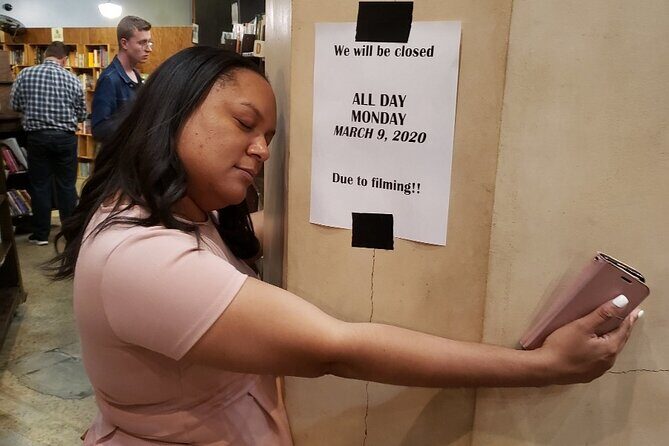
- Stop 1: The Last Bookstore for fast momentum and puzzle-friendly fun
- Stop 2: Mulholland Drive when the hunt turns scenic
- Stop 3: Griffith Observatory for landmark energy and challenge variety
- Stop 4: It’s A Wrap for the satisfying finish
- Why you’ll probably laugh more than you expect
- Value and how to get the most out of it
- Who this LA hunt suits best
- Should you book Looney Los Angeles Scavenger Hunt?
- FAQ
- How long is the Looney Los Angeles Scavenger Hunt?
- Where does the hunt start?
- Where does the hunt end?
- Is the hunt offered in English?
- How do you communicate with the guide during the hunt?
- Do I need a smartphone?
- What if I have an international phone number or technical problems?
- Is it family and dog friendly?
- What’s the maximum group size?
- Is free cancellation available?
Key things to know before you go

- Remote-hosted gameplay: you get instructions digitally and communicate by text with your host during the hunt
- Photo and message challenges: you’ll send photos back so the host can cheer you on and help
- A walking-and-driving route: you’ll follow the hunt document from checkpoint to checkpoint
- Four major LA stops: The Last Bookstore, Mulholland Drive, Griffith Observatory, and It’s A Wrap
- Built for variety: indoors, outdoors, and bonus wacky challenges keep it from feeling repetitive
- Small-ish max group: up to 30 travelers, which helps you stay organized during a moving game
Starting at Romancing the Bean Cafe and getting your digital quest

The hunt begins at Romancing the Bean Cafe at 3413 Magnolia Blvd, Burbank, CA 91505. It’s a practical starting point because you’re set up first, then you’re off to solve, walk (or drive), and repeat. The tour is scheduled for about 2 hours, so it feels like a fun block of time, not an all-day commitment.
When the start time hits, you’ll receive your quest in a way that keeps you moving. You’re not just reading clue cards on your own; you’ll get your instructions from a live and interactive remote host. That matters, because scavenger hunts can go wrong when you’re confused. Here, the support is built into the experience.
You’ll also get a mobile ticket. That’s one less thing to manage while you’re busy chasing down clues. And since the experience ends back at the meeting point, you avoid the “now how do we get back” scramble that some activity games cause.
You can also read our reviews of more tours and experiences in Los Angeles.



How the remote host keeps you in sync (and why your phone matters)

This is not a set-it-and-forget-it activity. The host connects with you remotely and stays involved while you play. You’re asked to provide a local phone number or WhatsApp number so you can connect with your guide, which is a smart design for real-time help.
The main requirement is your phone setup. Each team needs at least one fully charged smart phone with GPS that can send and receive data and messages, including photos and videos. This is also why the hunt is best for people who don’t mind using their phone to participate, not just to navigate.
If you have an international phone number or run into technical issues, you’re told you can complete the game using WhatsApp or email. That’s a clear backup plan. Still, do yourself a favor: test your messaging, check you can send photos, and make sure cellular data or Wi‑Fi is available in the areas you’ll be moving through.
The walking and driving rhythm between checkpoints
The experience alternates between indoor and outdoor locations, and it’s designed so you’re not stuck doing only one type of activity. You’ll walk or drive between checkpoints, following what the hunt document tells you to do. That flexibility is helpful if your group includes people with different comfort levels for walking.
But there’s a trade-off. Because you’re moving between stops, you need to stay organized as a team. Keep your phone charged, spread out smartly (don’t lose teammates), and be ready to pivot quickly when a clue points you somewhere new.
This is also where the remote host interaction really shines. If you get stuck, you can message for assistance instead of grinding to a halt. The game is clearly built to keep momentum, not to trap you in confusion.
Stop 1: The Last Bookstore for fast momentum and puzzle-friendly fun

Your first major checkpoint is The Last Bookstore. Starting with a location that supports browsing and clue-solving sets the tone. Early on, you want momentum, and this stop helps you get into the game mindset quickly.
What I like about starting here is the contrast: you’ll begin in a place where you can slow down just enough to think, while still being active in solving clues and handling challenges. For many groups, the hardest part of a scavenger hunt is the first “okay, what do we do?” moment. A well-known, clue-friendly setting reduces that problem.
Also, this stop helps with the social side of the hunt. Since one of the goals is to interact with locals along the way, being in an environment where people are used to browsing and chatting makes it easier to ask, observe, and play.
A possible drawback: if your group doesn’t enjoy indoor puzzle time, you may wish you had more outdoor walking right away. Still, the overall format keeps switching modes so it doesn’t turn into one long indoor stretch.
Stop 2: Mulholland Drive when the hunt turns scenic
Next up is Mulholland Drive. This stop gives you a different feel than a typical “go inside, look around” checkpoint. Expect a more road-and-sight kind of segment, where the route itself becomes part of the experience.
This is the kind of stop that helps the hunt feel like more than just a puzzle list. It makes you look at the city’s layout and change your perspective from street corners you’d normally drive past. If you’re doing this as a group, it’s also a good moment for quick discussions like: Which clue seems like it’s pointing to a landmark? What’s the safest place to regroup?
Because you’re following instructions that may involve driving, make sure you plan your team’s flow. Decide in advance who’s driving, who’s handling the phone, and how you’ll keep everyone together so you don’t burn time reuniting.






Stop 3: Griffith Observatory for landmark energy and challenge variety

The hunt’s third checkpoint is Griffith Observatory. This is a high-recognition LA location, and that matters because it gives your scavenger hunt a sense of place. When a game includes a landmark people already talk about, it helps you feel grounded even when the clues get weird or challenging.
This stop also fits the hunt’s format of alternating between indoor and outdoor time. Even if you’re moving quickly, the observatory setting naturally supports pauses—either for solving something that requires focus or for sending a photo back to the host to prove you found what the clue intended.
It’s also a strong choice for mixing group types. Families often appreciate big-name stops that make it feel like you’re doing something real, not just wandering. Friend groups tend to enjoy the landmark backdrop for laughter and quick photo exchanges with the remote host.
What to keep in mind: landmark areas can be busy in general. Since this hunt is about staying on schedule across multiple checkpoints, build in a little patience and keep your team communication tight.
Stop 4: It’s A Wrap for the satisfying finish

Your final checkpoint is It’s A Wrap. The name alone signals a playful, slightly offbeat tone, and that fits the rest of the experience: wacky challenges, bonus prompts, and the general idea that you should have fun while you learn.
Ending with a stop that feels like a distinct “chapter” helps you close the game cleanly. By the final stretch, you usually have a better sense of how the scavenger hunt wants you to think: read the clue, act on it, document it, and move. That makes the last segment feel more rewarding rather than stressful.
I also like that the experience ends back at the meeting point. You’re not left guessing how to wrap up. You’ve got a clear end, which is rare for self-paced games.
Why you’ll probably laugh more than you expect

One reason this hunt earns a top rating is the simple design: it encourages people to get out of their comfort zone. The challenges are not just trivia. They’re structured so you’re doing stuff, texting photos, and reacting to what the host says in real time.
That’s also what makes it feel good for groups. If someone in your party is competitive, you can race to solve clues. If someone is more relaxed, they can focus on finding details and sending proof photos. Everyone contributes, and the host’s feedback helps keep energy up.
The experience is also described as family and dog friendly, which tells you the pacing is designed to work for a range of ages and personalities. It’s not set up as a “no distractions” hike. It’s built for movement plus interaction.
Finally, you’ll likely discover places you would have skipped on your own. Not because you’re chasing a checklist, but because the game logic sends you to spots that fit the clues.
Value and how to get the most out of it
Even without any ticket price details here, you can judge value by what’s included: a remote-hosted interactive experience, a set route with defined stops, photo-based challenges, and built-in support if you get stuck. For many people, that’s worth it compared with doing a purely self-guided scavenger hunt.
To maximize your value, come prepared. Bring your charged phone. Make sure GPS is on and data is working. Assign one person as the “photo and message” operator so the team doesn’t lose time passing the phone back and forth.
If you want to keep the fun going, ask about booking another tour. There’s a note that you’ll get a discount if you’d like to book another tour afterward. That can be a nice way to stretch your vacation entertainment without feeling like you’re paying twice for the same idea.
Who this LA hunt suits best
This scavenger hunt is a fit if you like a structured game with enough freedom to feel spontaneous. It works well for tourists who want a playful way to see a familiar city, and it can also work for people who live nearby and want a different weekend plan.
It’s especially promising for:
- Friend groups who like laughing together and reacting to clues
- Families looking for something interactive rather than passive sightseeing
- Corporate groups who want a team activity with built-in communication (plus the option for custom experiences and virtual team builders)
- Bachelor and birthday groups that want light chaos with a clear endpoint
It may be less ideal if your group hates phone use or gets stressed when tech requirements show up. If that’s you, you can still do it, but you’ll want to double-check your phone and messaging setup before the hunt starts.
Should you book Looney Los Angeles Scavenger Hunt?
Book it if you want Los Angeles to feel like a game, not a museum day. You’ll get a real structure (four distinct stops), interactive support from a remote host, and challenges that push you to look up, look around, and talk to people. If your group likes laughter and problem-solving, it’s a strong match.
Skip it or reconsider if your phone setup is unreliable or you can’t handle real-time texting and photo sending as part of the activity. Because this hunt depends on a working phone number and a phone with GPS and messaging capability, you’ll enjoy it most when your tech is ready.
FAQ
How long is the Looney Los Angeles Scavenger Hunt?
It lasts about 2 hours.
Where does the hunt start?
It starts at Romancing the Bean Cafe, 3413 Magnolia Blvd, Burbank, CA 91505, USA.
Where does the hunt end?
The activity ends back at the meeting point.
Is the hunt offered in English?
Yes, it’s offered in English.
How do you communicate with the guide during the hunt?
You’ll connect with a remote host during the hunt, and you should provide a local phone number or a WhatsApp number in your reservation. You’ll also text photos back to the host.
Do I need a smartphone?
Yes. Each team must bring at least one fully charged smart phone with GPS that can send and receive data, photos, videos, and text messages.
What if I have an international phone number or technical problems?
You can complete the game using WhatsApp or email if you have an international phone number or run into technical difficulties.
Is it family and dog friendly?
Yes, it’s described as family and dog friendly.
What’s the maximum group size?
The experience has a maximum of 30 travelers.
Is free cancellation available?
Yes. You can cancel up to 24 hours in advance for a full refund.