REVIEW · LOS ANGELES
Family Surf Lesson
Book on Viator →Operated by Golden Wave Surf School · Bookable on Viator
Standing on a surfboard is a real goal.
This Venice, Los Angeles surf lesson is built around fast progress, with a small group (max 10) and coaching focused on basics, safety, and getting you onto the board. The instructors are set up to help people go from non-surfer to catching small waves, and they plan the lesson so you’ll be standing before the time runs out.
What I like most is the way the coaching is broken into simple steps. Instructors Alex and David are known for making the lesson understandable for both adults and kids, with hands-on corrections that help you get your balance quicker. I also like the payoff: the instruction is aimed at real wave attempts, not just standing around watching.
One thing to consider: the setup can be very mobile. A couple of reports describe meeting at a van in a parking lot and getting wetsuits that were less than ideal (wet and even torn). If you book, do a quick gear check when you’re handed the suit, and speak up if something feels off.
In This Review
- Key points before you go
- Venice surf lesson: what “family” really means here
- Meeting point in Venice: expect a practical handoff
- Small-group coaching: why a max of 10 matters
- Technique and safety: the two things that prevent beginner wipeouts
- The goal in 2 hours: standing up and catching small waves
- Kids, beginners, and first-timers: how the coaching adapts
- The Venice water reality: shallow spots can change the feel
- Gear, wetsuits, and a quick reality check before you paddle
- Value: what you get for your time in a small-group class
- Who should book this surf lesson
- A balanced takeaway: what to hope for, what to watch
- Should you book Golden Wave Surf School in Venice?
- FAQ
- Where is the family surf lesson meeting point?
- How long is the surf lesson?
- Is the lesson in English?
- What group size should I expect?
- Do I learn surfing basics and safety?
- Will I stand on the board during the lesson?
- Is this suitable for people with moderate physical fitness?
- Do I need to know how to swim?
- What happens if weather is bad or I cancel?
Key points before you go
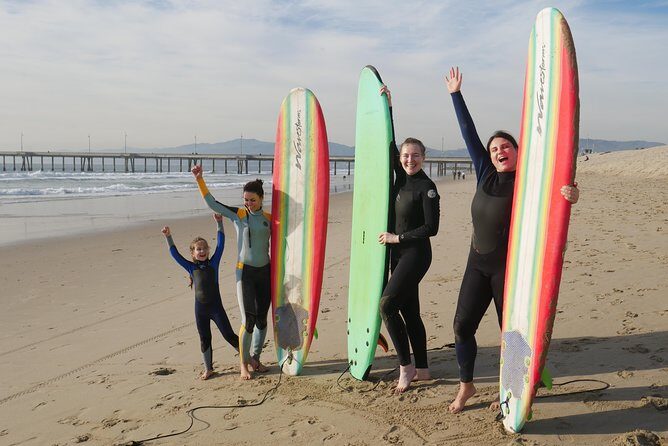
- Max 10 people keeps the focus on your stance, not a crowded beach scene.
- Safety + technique first means you learn how to handle wipeouts and timing before you chase waves.
- Alex and David are hands-on teachers who explain surfing in step-by-step language.
- Stand-up goal: the plan is to help you get on your board and catch small waves within about 2 hours.
- Mobile meet-up: plan for a practical parking-lot style handoff rather than a storefront experience.
Venice surf lesson: what “family” really means here
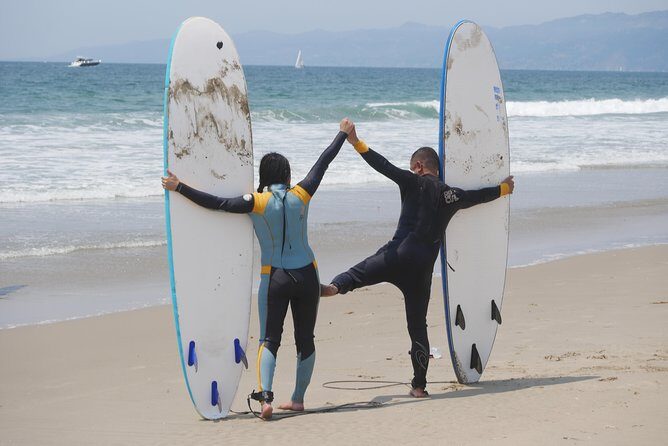
If you’re picturing a big, noisy surf camp, this isn’t that. This Golden Wave Surf School lesson is intentionally capped at 10 people, so you’re not fighting for attention. That matters because surfing is one of those sports where tiny corrections make a big difference—where you look, how you hold your arms, when you pop up.
The “family” part mostly means the lesson works for mixed ages and skill levels, as long as you fit the provider rules. The school’s own guidance is clear about when you need a private lesson: if you don’t know how to swim, are under 18, have disabilities, don’t speak English, or you’re booking a private party event, you must book privately. So for families, the easiest path is usually: adults (and older kids who meet the rules) go with the small-group lesson, and anyone outside the rules switches to private coaching.
This lesson is offered in English, runs about 2 hours, and starts at 10 Washington Blvd, Venice, CA 90292. It ends back at the same meeting point. Since the location is near public transportation, it’s not a total hassle if you’re not driving.
You can also read our reviews of more tours and experiences in Los Angeles

Meeting point in Venice: expect a practical handoff
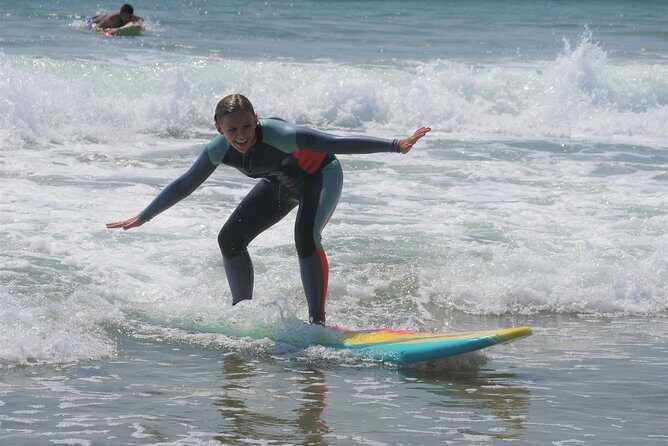
The meeting point is straightforward: 10 Washington Blvd, Venice, CA 90292. What’s less “vacation postcard” and more “real-life beach logistics” is how the lesson starts. At least some people have described the operation as mobile—meeting in a parking lot setup where wetsuits are handed out from a van-like setup.
That doesn’t automatically mean it’s bad. For a lot of surf schools, this is how you keep things moving: less waiting, quicker gear distribution, and you get to the water fast. But it does mean you should treat gear handoff like part of the process, not an afterthought.
When you get your wetsuit, do a quick check:
- Is it your size (or at least close)? Too big can feel baggy and slow you down.
- Is it dry and not smelly from someone else’s session?
- Are there any tears or compromised seams?
One review mentioned torn suits and wet gear. Another experience described a smooth lesson with enthusiastic instructors. The best way to protect yourself is simple: check the suit right away and ask for a swap if it doesn’t feel right.
Small-group coaching: why a max of 10 matters
A group of 10 sounds small until you’re standing in it with wet hands and a board under one arm. In practice, small-group surf lessons work because the instructor can watch you continuously. When you’re learning, you don’t need speeches—you need corrections.
Golden Wave Surf School keeps this lesson limited to 10 travelers max, and the approach is built around short coaching moments. The goal isn’t just to get you in the water. It’s to help you progress quickly, which is why the instructors focus on:
- basic surfing techniques
- safety
- and practice that pushes you to try standing before the session ends
If you’ve taken a lesson before and felt like the instructor was always busy with someone else, this group size is the reason to be optimistic. You should expect more direct feedback and more chances to attempt wave riding.
Technique and safety: the two things that prevent beginner wipeouts
Surfing is not hard to understand, but it’s hard to do without good fundamentals. In this lesson, you’re aiming to learn both:
1) how to move on the board (the technique), and
2) how to stay safe while you’re learning (the safety)
Even if you’ve only ever watched surfers, the safety part is what helps you feel calm in the water. Beginners often panic at the wrong moment—right when waves are picking you up or when you don’t yet know how your wipeout will happen. A safety-first lesson helps you understand how to get in and out and how to respond when things don’t go smoothly.
The school’s teaching is tied to a specific coaching background: the lead coach describes himself as a certificated professional surf coach and a WSL professional surfer. What that means for you is not magic, it’s method. The instruction is structured around progression: take the skill, break it down, repeat it, then apply it to small waves.
The goal in 2 hours: standing up and catching small waves
The headline promise is that you should stand up on your board before the end of the lesson. That’s an ambitious goal, but it’s realistic when the surf is beginner-friendly and the instruction is tight.
In reviews, people described moments where everyone stood at least once and caught small waves. Others specifically praised Alex for breaking the lesson into easy steps for both adults and an 8-year-old child. That kind of result usually comes from two things:
- The instructor helps you find your timing and balance quickly.
- They keep you moving through attempts, not stuck waiting for one big moment.
In practical terms, you should prepare for short attempts and lots of resetting. Surf lessons are repetitive on purpose. You’re building comfort with the board, then adding wave timing. By the end, the lesson is supposed to click enough that standing feels possible, not just theoretical.






Kids, beginners, and first-timers: how the coaching adapts
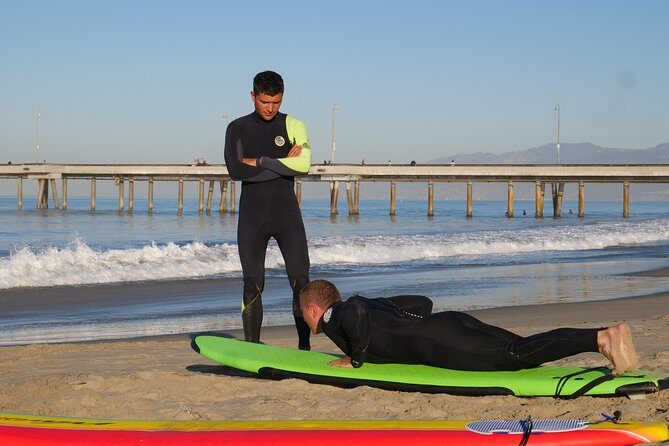
If you’re bringing a kid, this is where the difference between a good surf coach and a random demo really shows. Alex and David are credited with being effective for adults and children, with step-by-step explanations and confidence-building.
What you should look for in a beginner-friendly lesson is not just friendliness—it’s clarity. A strong coach tells you exactly what to do next in simple terms:
- where to place your hands
- how to get your feet under you
- how to look at the right part of the wave
- how to avoid fighting the water
The provider also sets firm rules on when people must take private lessons, including anyone under 18. That rule can feel surprising if you’re shopping for a “family surf lesson.” But it’s also a sign they take safety seriously. If you’re under the age limit for the shared lesson rules, plan on private instruction so the coaching ratio and approach match your needs.
The Venice water reality: shallow spots can change the feel
One negative review said the chosen surf spot was extremely shallow, so when you fell you hit sand just a couple of feet under the water. That changes the whole beginner experience. Shallow water can mean:
- faster wipeouts,
- sand contact more often,
- and less time to recover before you feel the bottom.
It can also be good for learning because you’re not getting tumbled far out. Still, it’s a factor to keep in mind if you’re sensitive to falling or if you have any concerns about knees, hands, or general comfort when you wipe out.
If you’re booking with the expectation of a smooth, deep-water “easy mode,” you might want to adjust your mindset. This is learning. Expect some bumps, and take comfort in the fact that the instructor’s job is to guide you through the safest way to attempt standing.
Gear, wetsuits, and a quick reality check before you paddle
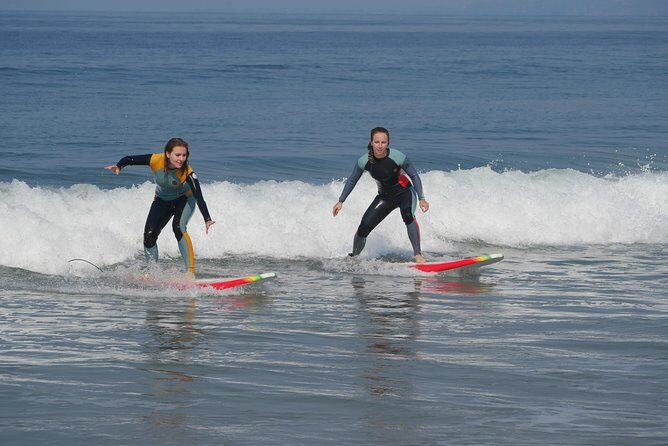
Wetsuits can make or break comfort in the ocean. A wetsuit that fits well helps you stay warm and lets you move more freely. A suit that’s damaged or wet can be miserable.
One experience described receiving a torn wetsuit and another described torn suits for both an adult and a child. The lesson may still be great, but your comfort matters—because when you’re cold or distracted, your learning slows.
So here’s my practical advice:
- Inspect the wetsuit seams quickly.
- Confirm it’s the right size.
- If it’s wet or torn, ask for another option immediately.
Also, if you don’t know how to swim, the provider’s own rules require you to book a private lesson. That’s not the place to “hope it works out.” Surf schools have to manage risk, and you should choose the format that matches your swimming ability.
Value: what you get for your time in a small-group class
You’re buying time with a real surf coach, not just access to the beach. The lesson is about 2 hours, and the structure is designed so you’re actively learning and actively attempting. That’s value.
The max group size helps too. In a big group, beginners wait their turn; in a max-10 group, you get more direct correction and more attempts per person.
There’s also an optional add-on for media. One review mentioned an extra $20 per person for pictures and videos, and said it was worth it. If you want proof of your first stand-up attempt, it might be a worthwhile splurge—especially since surf learning can feel like chaos while you’re doing it.
Who should book this surf lesson
This is a good fit if:
- you want beginner coaching in a small-group setting
- you’re comfortable with moderate physical activity
- you want a lesson that aims for standing up quickly
- you like step-by-step teaching and want your technique corrected
It may be a poor fit if:
- you don’t swim and are hoping to join a shared lesson (you’ll likely need a private booking)
- your group includes someone under 18 who must follow the private-lesson rule
- you have strong concerns about gear condition and want a more traditional check-in setup
For families, the best approach is to match the format to the age and swimming rules from the provider, then use the small-group lesson when it fits.
A balanced takeaway: what to hope for, what to watch
On the upside, the lesson is built around quick progression, safety, and real attempts at catching small waves. Multiple experiences praised Alex for coaching both adults and kids, breaking things down clearly, and making sure people stood up and caught waves. That’s exactly what you want from a short, beginner-focused lesson.
On the downside, the learning environment depends on practical things like gear handoff and suit condition. If your wetsuit arrives wet or damaged, your experience can go downhill fast. And if the surf spot is shallow, falls can be more punishing than you expect.
So my advice is simple: go in expecting a real learning session, not a spa-day. Do a gear check, ask questions early, and lean on the instructor’s correction style.
Should you book Golden Wave Surf School in Venice?
If you meet the shared-lesson requirements and you want a structured, coached path to standing and catching small waves in about 2 hours, I think this is worth considering. The max of 10 format is a real quality signal, and instructors like Alex and David are known for getting people up and into the action.
But if you (or your group) has special needs like non-swimming, under-18 participants, disabilities, or you need language support beyond English, plan to book a private lesson as required. And if gear matters a lot to you, show up ready to inspect wetsuits at handoff.
Bottom line: book if you want active coaching and are prepared for the practical side of Venice surf lessons. Skip or switch formats if you need a different level of safety support or a more controlled gear setup.
FAQ
Where is the family surf lesson meeting point?
The lesson meets at 10 Washington Blvd, Venice, CA 90292, USA, and it ends back at the same location.
How long is the surf lesson?
It lasts about 2 hours (approx.).
Is the lesson in English?
Yes, the lesson is offered in English.
What group size should I expect?
The activity has a maximum of 10 travelers.
Do I learn surfing basics and safety?
Yes. The lesson includes basics of surfing techniques and safety.
Will I stand on the board during the lesson?
The lesson is designed so you should stand up on your board before the end.
Is this suitable for people with moderate physical fitness?
Yes. The provider notes travelers should have a moderate physical fitness level.
Do I need to know how to swim?
If you don’t know how to swim, the provider says you MUST book a private lesson.
What happens if weather is bad or I cancel?
The experience requires good weather. If it’s canceled due to poor weather, you’ll be offered another date or a full refund. You can cancel up to 24 hours in advance for a full refund.