REVIEW · LOS ANGELES
LA Walk of Fame 100 Years of Hollywood Tour By Junket
Book on Viator →Operated by Junket: Los Angeles Tours and Premium Experiences · Bookable on Viator
Hollywood dates itself in plain sight. This 100-year themed walk is a fun way to connect iconic Los Angeles sights to the stories that made them matter. With a professional guide and a tight 2-hour route, you cover a lot of classic Hollywood without turning it into a museum day.
I love the way this tour focuses on accurate, well-researched history instead of vague name-dropping. I also like that it’s built around big cinematic moments you can actually see nearby, including a final Hollywood Sign view from Hollywood Boulevard.
One thing to consider: it’s still a walking tour through Hollywood, and you’ll want moderate fitness and a plan for heat. Also, food and drink aren’t included, so come ready to snack on your own.
In This Review
- Key highlights from the LA Walk of Fame 100 Years of Hollywood Tour
- Starting at Musso & Frank: How the walk gets going
- What you actually get from a “100 years of Hollywood” tour
- Hollywood Walk of Fame roots: Chaplin and the dirt-road origin story
- The Egyptian Theatre and King Tut Fever: When premieres became events
- The academy stop: Mark Ruffalo and Marlon Brando’s educational thread
- Max Factor’s origin: From a makeup store to beauty standards
- The playhouse-to-cinema change: Citizen Kane’s big-screen debut
- Chinese Theatre tradition: Handprints, hoof prints, and paw prints
- Hollywood Roosevelt Hotel: The first Academy Awards in 1929
- Magic Castle: A members-only club for magicians
- Frank Lloyd Wright house: Why it’s uninhabitable due to design
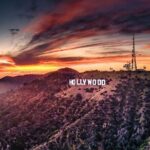
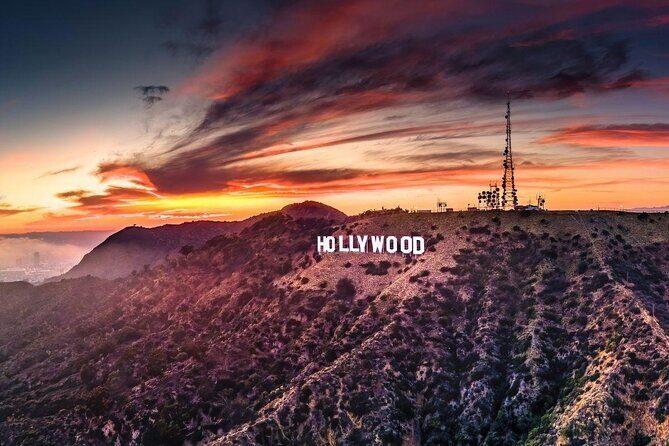
- The Hollywood Sign finale from Hollywood Boulevard
- Price and logistics: Is $26 good value for this route?
- Who this tour suits best (and who should rethink it)
- Should you book this LA Walk of Fame 100 Years of Hollywood Tour by Junket?
- FAQ
- Where does the tour start?
- Where does the tour end?
- What time does the tour begin?
- How long is the tour?
- Is food included?
- What language is the tour offered in?
- How many people are on the tour?
- Is free cancellation available?
Key highlights from the LA Walk of Fame 100 Years of Hollywood Tour
- A guided 100-year timeline that links famous landmarks to specific film-era moments
- Musso & Frank as the start point, right on Hollywood Boulevard for easy arrival and orientation
- Real Hollywood icons in sequence, from theater history to sidewalk handprints and footprints
- Small-group energy (up to 25 people) that makes questions feel normal
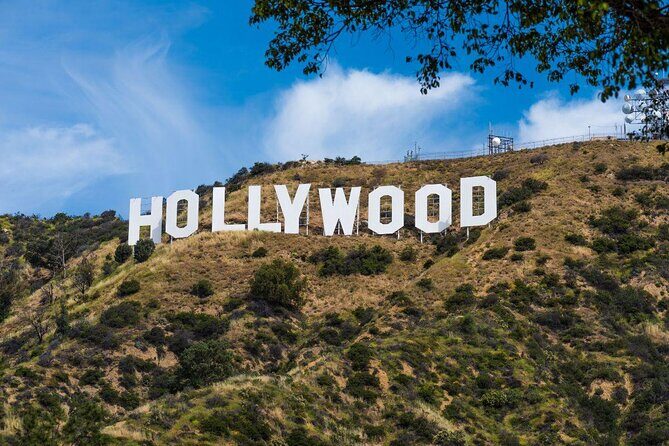
- A payoff end on Hollywood Boulevard, with a view of the Hollywood Sign
- Mobile ticket included, so you’re not juggling paper while walking
Starting at Musso & Frank: How the walk gets going
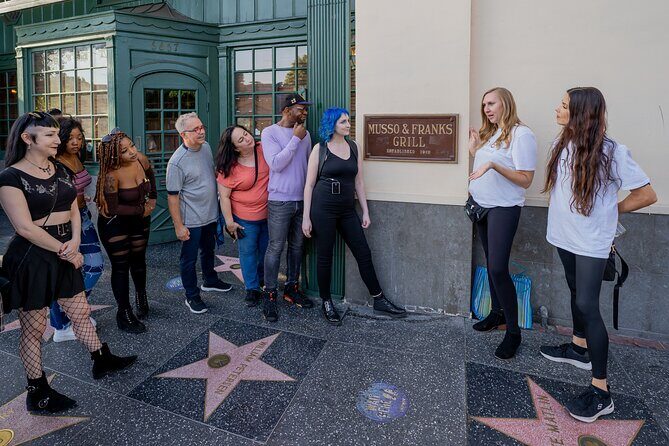
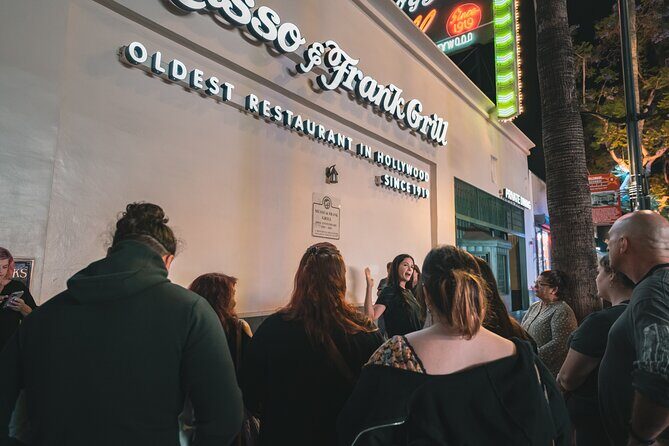
The tour meets at Musso & Frank Grill, 6667 Hollywood Blvd. The start time is 11:00 am, and the route runs about 2 hours.
I like this start location because it’s practical: you’re already on the main strip, so getting your bearings is easier. The tour also uses a mobile ticket, which helps when you’re moving fast and don’t want to dig through a wallet.
You’ll be walking with a group capped at 25. That matters because Hollywood Boulevard can feel chaotic on your own, but a guide keeps the pace focused and the route sensible.
Also note: the tour is offered in English and is described as needing moderate physical fitness. It’s not a race, but you should expect real walking time.
You can also read our reviews of more walking tours in Los Angeles

What you actually get from a “100 years of Hollywood” tour
This is a facts-forward walking experience, not a showy stop-by-stop performance. The included promise is a professional, courteous guide plus thoroughly researched, accurate history and facts.
That’s a big deal in Hollywood, where it’s easy to get trapped in generic trivia. Here, the value is connecting what you see—hot spots, theaters, sidewalk traditions—to the why behind them.
The pacing is built for learning on the move. In about two hours, you’ll get a timeline vibe: early Hollywood glamour, major theater milestones, star culture, and the kinds of traditions that still show up in the sidewalks today.
And because the group size stays reasonable, you can usually ask follow-up questions without shouting over a crowd.
Hollywood Walk of Fame roots: Chaplin and the dirt-road origin story
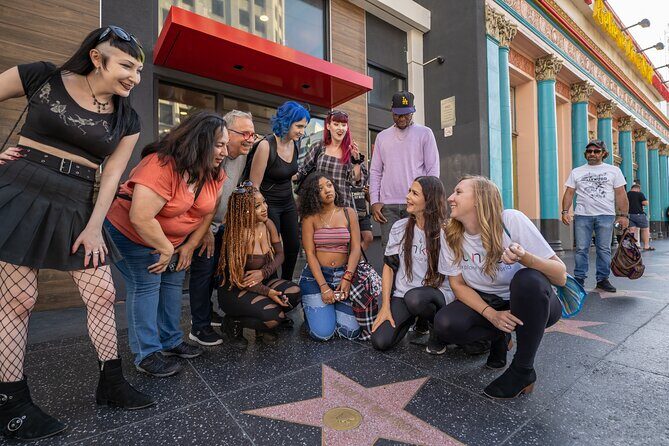
One of the first stops is the 100-year-old landmark that became a home for celebrity tributes. You’ll hear how early Hollywood energy looked very different—starting with the idea of Charlie Chaplin racing down a dirt road for roast lamb kidneys.
The point of this opening stop isn’t just to brag about famous names. It’s to help you understand how Hollywood started as a scrappy industry with big dreams and quick publicity, then gradually turned into the polished system you recognize today.
When you’re standing near Walk of Fame-style spots, it helps to know the early vibe. You’ll see the stars as part of a longer story, not just glitter on the sidewalk.
If you like film history that’s specific and story-driven, this first stop sets the tone well.
The Egyptian Theatre and King Tut Fever: When premieres became events

Next up is the Egyptian Theatre, tied to the era of King Tut Fever. The history angle here starts with the first ever movie premiere, which gives you a sense of Hollywood ramping up as a cultural headline machine.
This stop is useful even if you’re not a hardcore theater person. It shows you how movies became community events—dressed up, hyped, and announced like major public happenings.
As you stand in the area, you’ll get context for why these venues matter. The guide’s job here is to connect architecture and location to how Hollywood wanted audiences to feel.
The academy stop: Mark Ruffalo and Marlon Brando’s educational thread
You’ll also see a renowned academy connected to acting training, with former students including Mark Ruffalo and Marlon Brando. That’s an interesting pivot from theaters and publicity into the human pipeline behind on-screen talent.
This part works best when you’re thinking beyond red carpets. It helps explain how Hollywood isn’t only about glamour—it’s also about craft, rehearsal, and learning how to perform.
Even if you don’t recognize every building from the outside, the names give you something to anchor your attention. You can look at it like a clue: famous careers usually have earlier steps you don’t always notice.
Max Factor’s origin: From a makeup store to beauty standards
Another stop focuses on Max Factor and how a former makeup store launched his career and helped reshape American beauty standards.
This is one of the most practical story stops on the walk, because it connects Hollywood aesthetics to business and innovation. Makeup wasn’t just artistry. It was also a technology and a way to influence what people thought looked good.
If you’ve ever wondered why old film faces look the way they do, this kind of stop adds a missing piece. It turns the look of early cinema into something you can understand as a product of changing standards.
The playhouse-to-cinema change: Citizen Kane’s big-screen debut
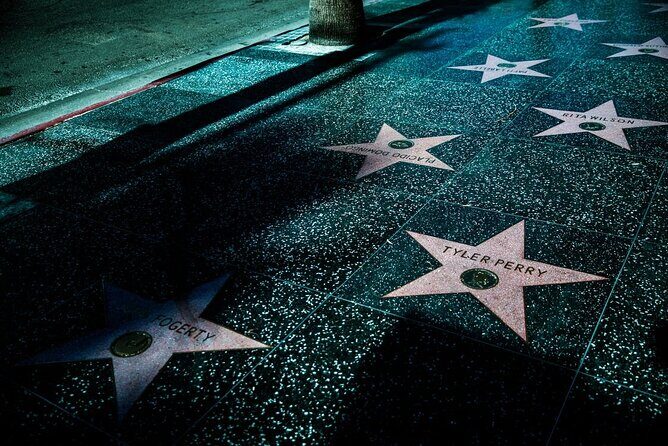
You’ll see a building that started out holding live plays, then had its first movie screening of the controversial film Citizen Kane.
This stop is about Hollywood learning, experimenting, and shifting formats. It’s a reminder that the movie industry didn’t always have a smooth, accepted path—some of its biggest moments were also arguments.
It’s also a nice mental contrast: live theater culture versus early cinema culture. The guide’s framing should help you notice how one venue can represent two eras of entertainment.
Chinese Theatre tradition: Handprints, hoof prints, and paw prints
Another highlight is the sidewalk tradition tied to the Chinese Theatre courtyard: the place where handprints in the sidewalk began. You’ll also hear about non-human hoof and paw prints, which adds a fun, offbeat twist to the “celebrity only” idea.
This stop is the best kind of photo moment: it’s iconic, but it’s also specific. You’ll leave with a story for why these prints exist and what the tradition represents.
It’s also a good break in the walk rhythm. You can slow down, look closely, and actually take in details that you’d otherwise rush past.
If you’re the sort of person who notices small things—signatures, symbols, patterns—this part will feel rewarding.
Hollywood Roosevelt Hotel: The first Academy Awards in 1929
The tour includes a stop at the iconic hotel that hosted the first Academy Awards in 1929. This is where Hollywood’s awards machinery comes into focus.
This matters because it’s not only about movies—it’s about recognition, influence, and how Hollywood turned its industry into a narrative system with winners and legends. The guide’s job here is to connect that 1929 moment to the idea of prestige that still drives the business.
Standing in the area, you get a sense of how hotels and venues helped build the social side of Hollywood. Awards nights weren’t just ceremonies; they were power gatherings.
Magic Castle: A members-only club for magicians
You’ll learn about a location that’s a members only club for magicians, with the note that a stay can be arranged for a price.
This stop works because it shows Hollywood as a place for performance beyond acting and film. Magic is part theater, part spectacle, part skill—exactly the kind of entertainment Hollywood knows how to package.
Practically, you’ll mostly get the context rather than a guaranteed inside visit. Still, the story is fun, and it keeps the walk from becoming a straight-line history lecture.
If you’re into the lighter side of show business, this is a good one.
Frank Lloyd Wright house: Why it’s uninhabitable due to design
Another stop points out a Frank Lloyd Wright-designed house that is sadly uninhabitable due to its design.
This is a different angle on Hollywood. Instead of focusing only on film, it highlights that Los Angeles is also shaped by big-name architects and ambitious ideas. And it includes a real-world lesson: even famous design plans can fail to work as intended.
If you like architecture stories that include complications, this stop adds depth. You’ll also get a sense of why Los Angeles is full of “famous names” that don’t always mean “easy to access.”
It’s a reminder to look at buildings as stories with trade-offs, not just postcards.
The Hollywood Sign finale from Hollywood Boulevard
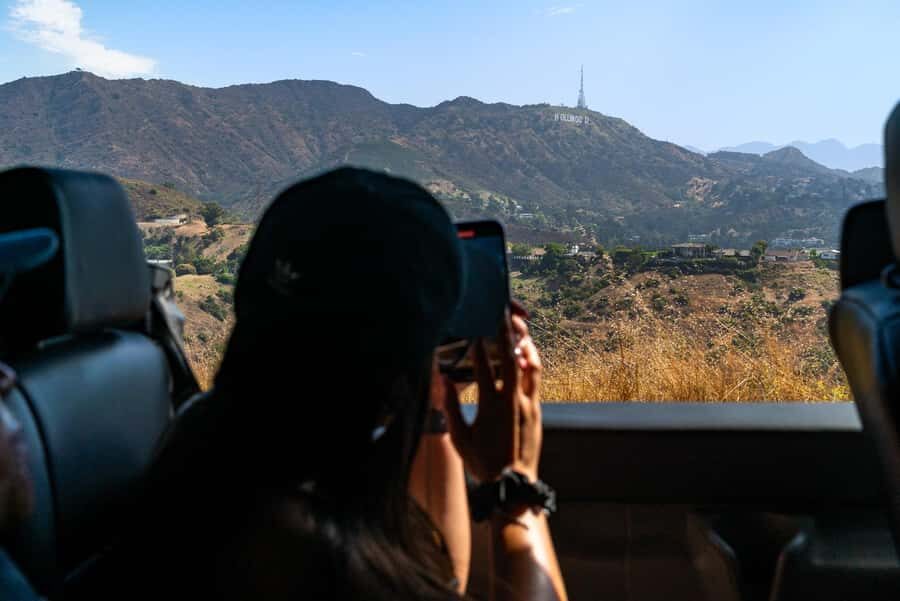
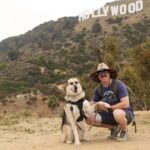
The final stop is built around the view of the Hollywood Sign from Hollywood Boulevard. The tour ends at 6801 Hollywood Blvd, Hollywood, CA 90028.
I like this ending because it feels like a reward you can physically reach and then enjoy on your own terms. You can take photos, pause, and orient yourself for whatever you do next—dinner, a museum detour, or just another walk.
From a planning standpoint, ending where you can keep exploring makes the tour feel less like a dead-end. You’re still in the action, but you’re not stuck in the same exact starting spot.
Price and logistics: Is $26 good value for this route?
The price is $26.00 per person for about 2 hours, with a guide included.
For LA, that’s honestly a reasonable deal for a guided walk with multiple major landmarks in one go. The value isn’t only the number of stops—it’s the fact that the guide is using thoroughly researched and accurate history and facts. In a city where “Hollywood facts” can range from true to wildly made-up, paying for correct context is part of the bargain.
It also helps that you start and end right on Hollywood Boulevard. That reduces friction. You don’t need extra transport just to “set up” the day.
What you should plan for: no food or drink included. If you’re doing this at 11:00 am, I recommend bringing water and deciding where you’ll eat after. Hollywood walking can get tiring fast, and you don’t want to pay tourist prices while you’re hungry.
Who this tour suits best (and who should rethink it)
This tour suits you if you want a guided Hollywood history walk with real names, specific milestones, and lots of landmarks in a short window. It’s also a strong match if you like asking questions and want a professional guide who keeps facts straight.
It’s a good option for solo travelers, couples, and small groups who want structure. The group cap of 25 keeps it from feeling like a big mob, which helps with questions and pacing.
You might want to rethink it if heat and walking are issues for you. The tour requires moderate physical fitness, and Hollywood can be hot and tiring, especially around midday.
Also, if you’re looking for long indoor time at each site, this route is more about seeing and learning outdoors than lingering in buildings.
Should you book this LA Walk of Fame 100 Years of Hollywood Tour by Junket?
I’d book it if you want an efficient way to connect Hollywood Boulevard sights to a readable story. For $26 and about 2 hours, you get a guided timeline that hits Walk of Fame-style legacy, theater milestones, beauty history, sidewalk traditions, and a proper Hollywood Sign finish.
Pass if you want a slow-paced, deep-dive museum style day or if you hate walking through busy streets. And if you come without water and a snack plan, you’ll feel it.
If you’re flexible, this tour is a smart use of time in Los Angeles—especially if you only have a half-day to see the famous stuff without turning it into chaos.
FAQ
Where does the tour start?
It starts at Musso & Frank Grill, 6667 Hollywood Blvd, Hollywood, CA 90028, USA.
Where does the tour end?
It ends at 6801 Hollywood Blvd, Hollywood, CA 90028, USA.
What time does the tour begin?
The tour starts at 11:00 am.
How long is the tour?
The duration is approximately 2 hours.
Is food included?
No. Food and drink are not included.
What language is the tour offered in?
The tour is offered in English.
How many people are on the tour?
There is a maximum of 25 travelers.
Is free cancellation available?
Yes. You can cancel up to 24 hours in advance for a full refund.