REVIEW · LOS ANGELES
Long Beach: Whale and Dolphin Watching Cruise
Book on GetYourGuide →Operated by Harbor Breeze · Bookable on GetYourGuide
Whales are wild, but this cruise is calm. This Long Beach whale and dolphin watching trip stands out for its low-emission catamarans and the on-board teaching crew. I like that you get expert marine education from Aquarium of the Pacific educators, and you also ride on a custom-built fleet designed for stable wildlife viewing.
My favorite parts are the naturalist-style narration (the facts make the animals easier to spot) and the boat setup: inside and outside areas, panoramic windows, and a smooth ride when conditions cooperate. One drawback to keep real: the ocean is the ocean, so whale sightings can be hit-or-miss even on great days, and it can be cold and windy out on the water.
In This Review
- Key things I think are worth your attention
- First: where you start in Long Beach (and why it matters)
- Boarding Harbor Breeze: catamaran comfort with ocean-friendly tech
- The 150-minute loop: Long Beach waterfront to the San Pedro Breakwater
- What you’re really hunting for: whales first, then dolphins and friends
- The on-board experts: Aquarium of the Pacific educators in plain English
- Eco-friendly wildlife viewing you can feel good about
- Weather and what to wear: the cold water rule
- Price and value: is $45 a fair deal for wildlife watching?
- Who this cruise is best for (and who should pick a different day plan)
- My booking advice: when to go and what to prioritize
- Should you book the Long Beach whale and dolphin cruise?
- FAQ
- How long is the whale and dolphin watching cruise?
- How much does the ticket cost?
- What is included in the tour?
- Do they serve food or drinks onboard?
- Is parking included?
- What languages are offered?
- Do I get to see the animals from inside and outside?
- Is the boat wheelchair accessible?
- Where do I meet for the cruise?
- Is cancellation refundable?
Key things I think are worth your attention
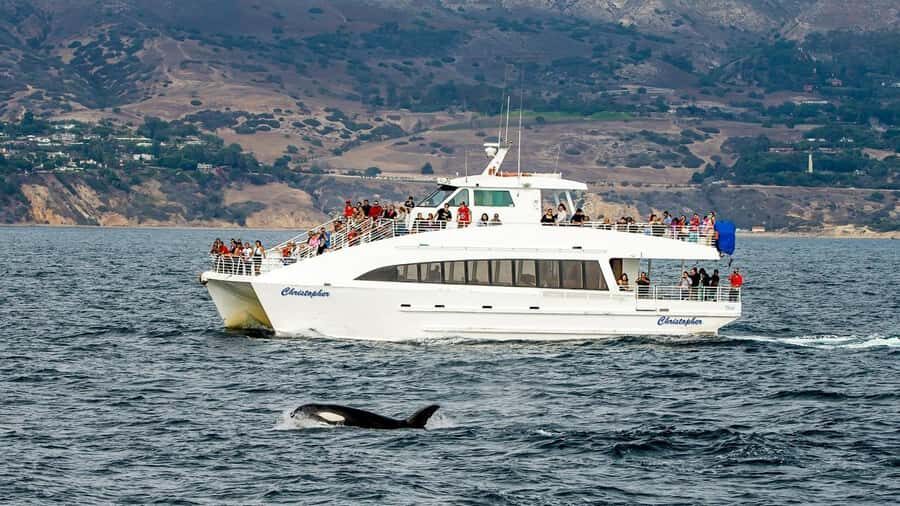
- Aquarium of the Pacific educators onboard with live English narration and engaging MC-style hosting
- Harbor Breeze catamarans built for stability, comfort, and wildlife viewing
- Low emission, ultra-quiet engines aimed at not disturbing marine life
- Two-tier viewing with inside climate control and outside sightlines
- Sealife Guarantee voucher if you don’t see any sealife on your sailing
First: where you start in Long Beach (and why it matters)
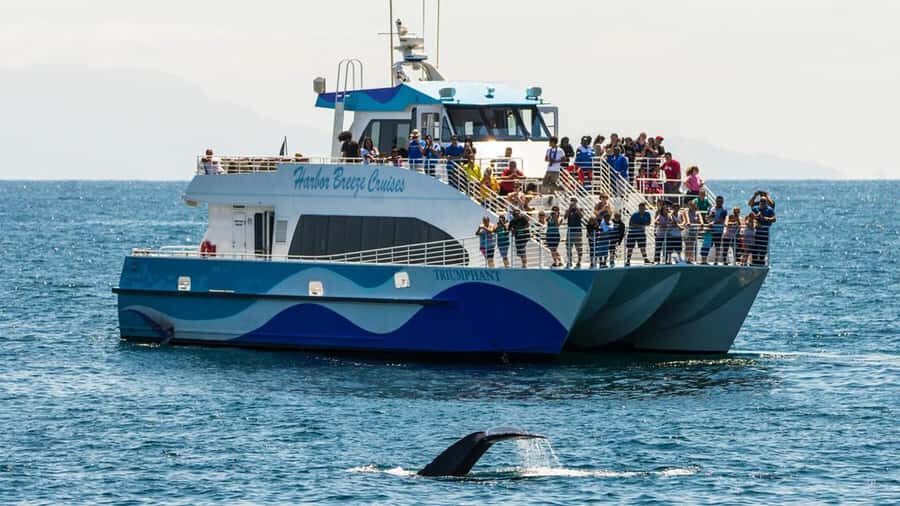
You’ve got two possible starting points for the cruise: LA Waterfront Cruises and Harbor Breeze Cruises. Either way, you’ll be departing from the Long Beach waterfront and heading out along the coast toward promising viewing areas.
This choice is more important than it sounds. The closer you are to your designated meeting spot, the less time you spend scrambling with parking. Also, the cruise route is set up as a loop: you start at one of those waterfront options, do multiple “sightseeing” passes, then return to the same type of drop-off location.
If you’re driving, plan around validated parking. The ticket booth in Long Beach can provide parking validation, and there’s also mention of San Pedro Free Trolley Lot Parking. Food and drinks aren’t included, so you’ll want to be sure you’re set before boarding.
You can also read our reviews of more boat tours in Los Angeles


Boarding Harbor Breeze: catamaran comfort with ocean-friendly tech
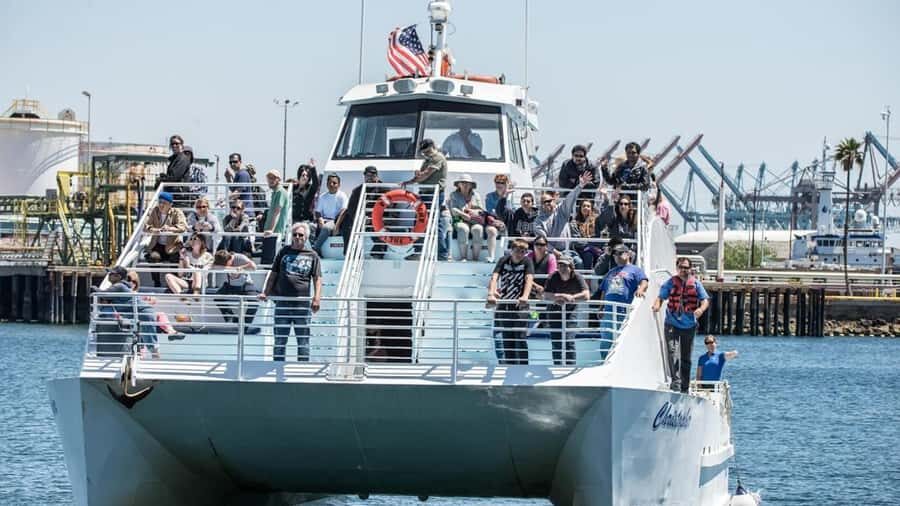
This is a Harbor Breeze operation, and the vessel matters. The fleet uses custom built whale-watching catamarans, and the big practical benefit is stability. When you’re staring at the ocean for long stretches, you want your footing and viewing to be steady—not bouncing.
Inside seating is climate controlled. That’s not just a luxury; it changes how long you can stay “on task” watching. Outside seating gives you the best sightlines for surface activity and quick sightings, so you’ll likely bounce between indoors for warmth and outside for the views.
Other comfort details help too:
- panoramic windows for wide viewing from inside
- multiple restrooms
- inside and outside seating so you aren’t stuck with one temperature all trip
Then there’s the eco angle, which is part of why this company is positioned as animal-welfare focused. The boats are described as running ultra-quiet, low emission engines, aimed at limiting disturbance to whales and their marine environment.
One more operational plus: the captains and crew specialize in whale watching, with over 30 years of experience. That doesn’t guarantee animals show up on your watch, but it does suggest smoother decisions in real sea conditions.
The 150-minute loop: Long Beach waterfront to the San Pedro Breakwater
Your total sailing time is about 150 minutes (listed as 2 to 2.5 hours on departures). That’s a sweet spot. Long enough to leave the immediate harbor area, reposition based on conditions, and still get multiple sightseeing passes without dragging.
Here’s how the route is laid out as you go:
1) Departure from your chosen Long Beach starting point (one of the two waterfront options)
2) Sightseeing while traveling through the Long Beach area
3) More sightseeing passes
4) Views near RMS Queen Mary
5) Views near Carnival Cruise Terminal – Long Beach
6) Traveling toward San Pedro Breakwater for the main wildlife watching area
7) Return drop-off at the same waterfront options (again depending on what you booked)
What makes these “sightseeing” segments valuable is not just scenery. They set you in the right mindset: you’re leaving a port city that looks one way from shore and seeing it from the water. You also get time for the narration to build your “spotting skills.” By the time you reach the breakwater area, you’re already listening for the cues that tell you what you’re looking at.
A practical note: the early part of the ride can be the least predictable for comfort. Port departures can feel colder and windier before you get into any calmer pockets. Reviews commonly point out that warmth matters.
What you’re really hunting for: whales first, then dolphins and friends
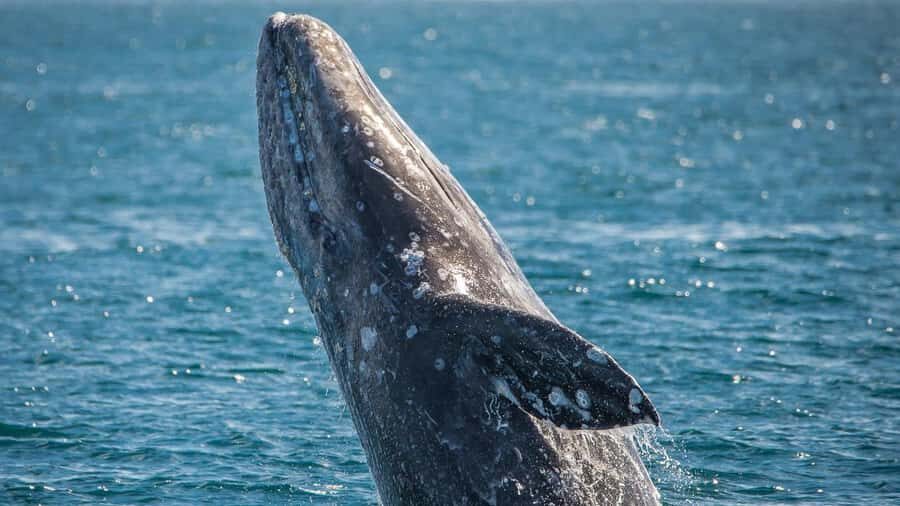
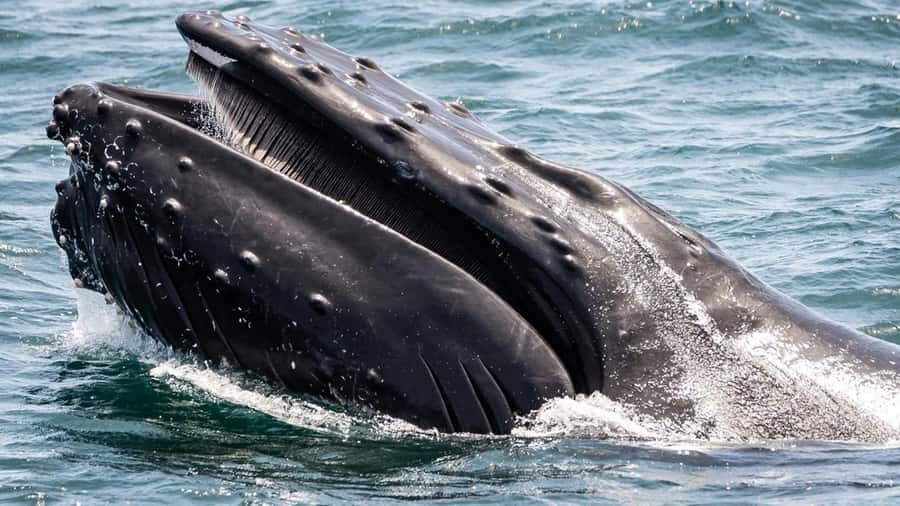
The core promise is whale watching. The tour is structured for high chances of spotting whales, with naturalists on board to help you interpret behavior and identify species patterns.
In real life, whales can show up as:
- a slow surfacing pattern you notice only once you know what to watch for
- brief moments of activity (breathing, moving, turning)
- more dramatic behavior on some sailings, such as breaching events
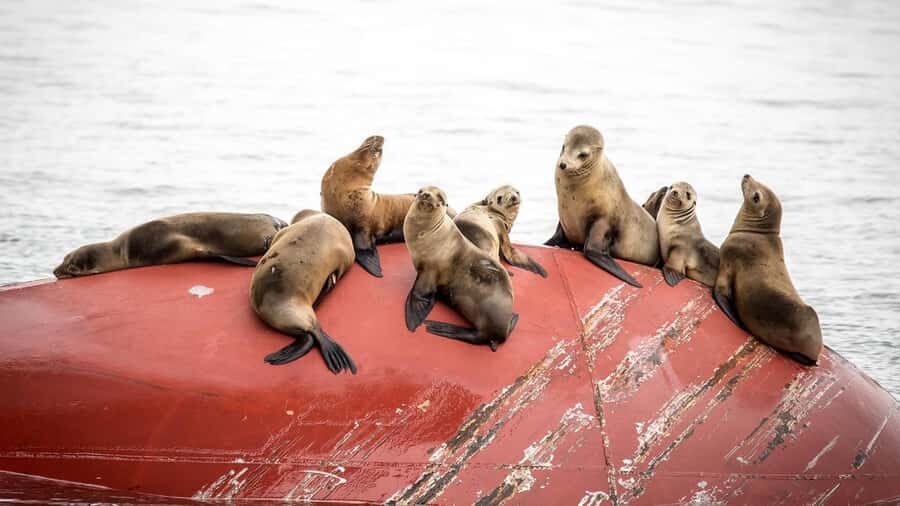
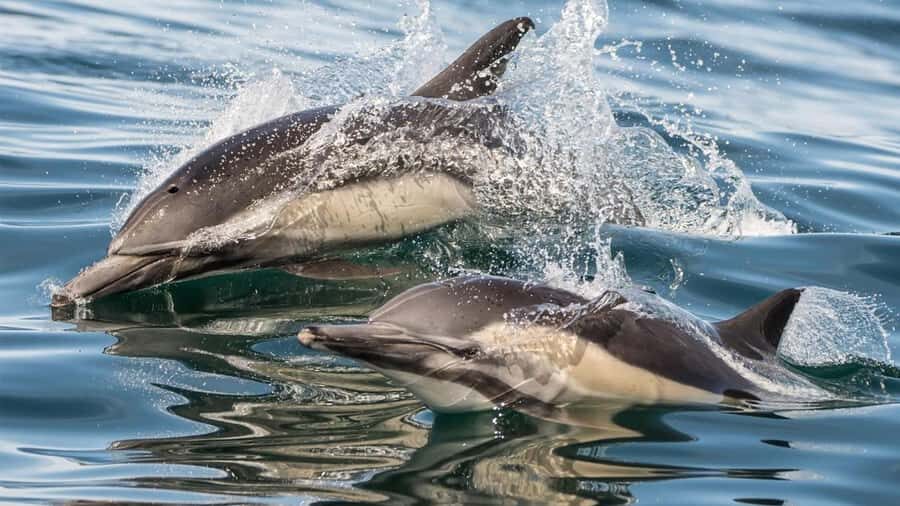
If whales aren’t visible at every turn, you’re not stuck with silence. The itinerary and narration are set up to help you find other wildlife too, like:
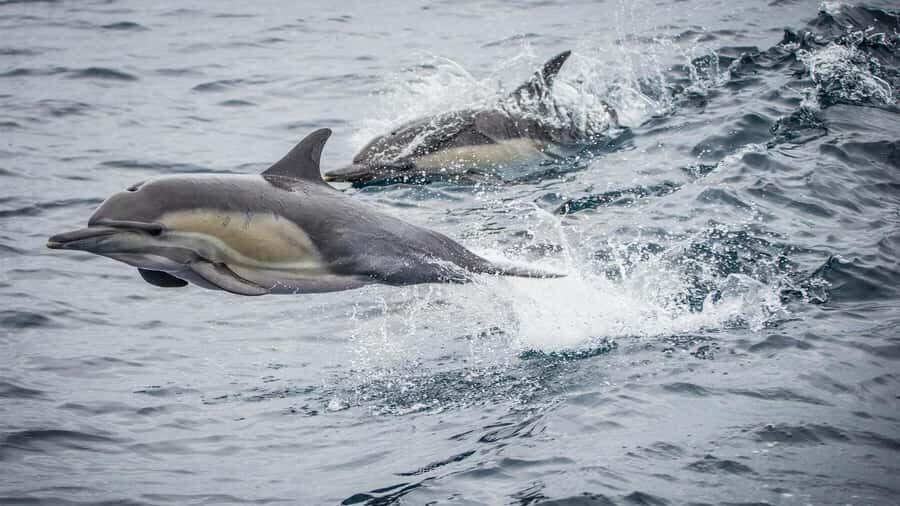
- dolphins
- seals
- seabirds
Dolphins are often the confidence boost of the day. Several real departures talk about big dolphin encounters, including pods that seemed to stay engaged with the boat for stretches. That kind of behavior is exactly why these catamarans are built to keep viewing comfortable—when animals swim near, you’ll want to hold a steady gaze and track motion.
Even when whale sightings don’t happen, you can still end up with a strong day if you stay alert to dolphins, sea lions/seals, and seabirds. Still, keep your expectations realistic: this is wildlife watching, not a show. The ocean decides.
The on-board experts: Aquarium of the Pacific educators in plain English
One of the biggest strengths here is the education team. You’ll have expert educators from the Aquarium of the Pacific on board. The narration is live and in English, and the format includes a live tour guide plus an MC onboard who keeps the flow engaging.
I love tours where facts don’t feel like a textbook. The way this one is set up, you get context that helps you spot what’s actually happening. When you know what behaviors mean, you stop staring at the water and start recognizing events.
Based on real on-board experiences, the educator approach tends to include:
- animal behavior and characteristics
- local marine ecosystem facts
- guidance that makes spotting easier rather than just reciting definitions
That education is also why the ride feels good even if visibility isn’t perfect. When the sea is a little choppy or the light shifts, you’ll still have a mental checklist for what to look for.
You can also read our reviews of more whale watching tours in Los Angeles

Eco-friendly wildlife viewing you can feel good about
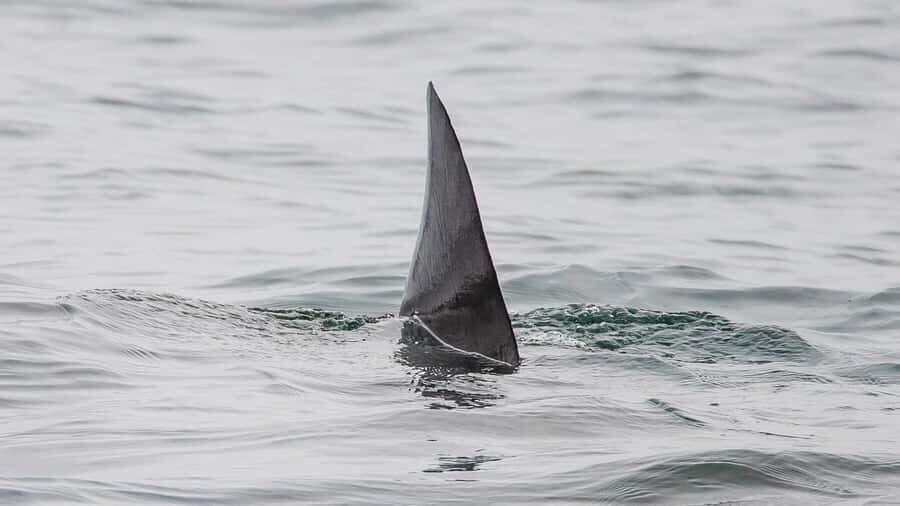
This tour is explicitly described as sustainable and focused on animal welfare. That shows up most clearly in the boat design and propulsion: low emission, ultra-quiet engines meant to reduce disturbance.
What you should take from that, as a rider, is attitude. This is not about getting loud, aggressive, or chaotic on the water. It’s about positioning and observation. The silence of a properly designed vessel matters because the animals are already doing their own thing—your job is to watch without stressing them.
It also helps explain why the crew is so experienced. Whale watching isn’t only eyesight; it’s timing, patience, and knowing how to read water cues. The 30+ years of specialty experience is part of that.
Weather and what to wear: the cold water rule
Here’s the practical truth: even when Long Beach looks pleasant on land, it can turn chilly fast once you’re out of the harbor. Multiple real departures highlight cold and wind, especially after leaving port.
Bring:
- comfortable shoes (you’ll want stability when moving between inside and out)
And strongly consider:
- a windbreaker or warm outer layer
- layers you can peel back if the sun comes out
If you’re the type who runs cold, treat this like a “serious warmth” trip. The best viewing often happens when you’re leaning into the outside area for long stretches.
Price and value: is $45 a fair deal for wildlife watching?
At $45 per person for roughly 150 minutes, the price feels positioned for value, especially because several key elements are included.
What you’re paying for isn’t only time on a boat. You’re also paying for:
- educators from the Aquarium of the Pacific
- seasoned captains and crew specializing in whale watching
- vessel comfort (inside/outside, climate control, panoramic windows, restrooms)
- eco-friendly operational features (low emission, quiet engines)
- a Sealife Guarantee voucher if you don’t see any sealife
The guarantee is one of the most meaningful value levers. Wildlife watching is inherently uncertain, and no operator can control animal behavior. Having a voucher option is a direct way to reduce the risk of a disappointing outing.
Is it perfect value if you want whales no matter what? You still have to accept nature’s rules. But as a balanced package—education, comfort, and a hedge against a no-sightings day—it’s reasonably priced for this part of Southern California.
One thing: food and drinks aren’t included. That’s normal for many cruises, but budget a little so you aren’t making snack decisions while you’re cold and tired.
Who this cruise is best for (and who should pick a different day plan)
This is a strong fit if you want:
- a guided wildlife experience with real explanation
- a comfortable boat ride that still gives you outside viewing time
- a trip that can feel exciting even when conditions are mixed
It’s also good for families. The duration is manageable, the onboard narration keeps things moving, and you’re likely to see something—dolphins, seabirds, seals—even if whale sightings are brief.
Where it might not be the best match:
- If you’re extremely temperature-sensitive and hate wind, you’ll want to plan clothing carefully or consider a different style of sightseeing on a warm-weather day.
- If you’re expecting a guaranteed whale moment like a ticketed attraction, adjust your mindset. This is wildlife watching, with a guarantee that helps, but it’s still nature’s call.
My booking advice: when to go and what to prioritize
If your goal is whales and you want the best odds, treat your booking as both a comfort choice and a wildlife choice.
Prioritize:
- a departure time that gives you daylight viewing (visibility matters)
- warm layers so you can actually stay outside when activity happens
Then prioritize the experience style:
- If you love learning as you watch, the Aquarium of the Pacific educators are the reason to pick this format.
- If you hate uncomfortable boats, lean into the climate-controlled interior and panoramic window viewing between outside checks.
Also, be flexible about the day’s results. Some sailings seem to get big dolphin energy, sometimes with humpbacks appearing strongly. Other days can be quieter on whales but still rewarding with dolphins and birds.
Should you book the Long Beach whale and dolphin cruise?
I’d book it if you want a well-run, wildlife-first Long Beach experience with real marine educators and practical comfort. For $45 and about 2.5 hours, you get a stable catamaran setup, live English narration from Aquarium of the Pacific educators, and a sustainability-minded approach with low emission, ultra-quiet engines.
I wouldn’t book it with the mindset of guaranteed whales. I would book it with the mindset of whale-watching odds plus an included safety net via the Sealife Guarantee voucher. If you dress for wind and cold, you’ll be able to enjoy the ride either way—and the chances of spotting dolphins and other sea life are a big part of why this is such a dependable Long Beach activity.
FAQ
How long is the whale and dolphin watching cruise?
The cruise is about 150 minutes, listed as 2 to 2.5 hours.
How much does the ticket cost?
The price is $45 per person.
What is included in the tour?
Included features are Aquarium of the Pacific educators onboard, live English narration, seasoned captains and crew, inside and outside seating, climate-controlled interiors, panoramic windows, and multiple restrooms. The tour also includes a Sealife Guarantee voucher if you see no sealife.
Do they serve food or drinks onboard?
Food and drinks are not included.
Is parking included?
Parking isn’t included, but there is parking validation from the ticket booth in Long Beach. San Pedro Free Trolley Lot Parking is mentioned as well.
What languages are offered?
The tour narration is in English.
Do I get to see the animals from inside and outside?
Yes. There is inside seating and outside seating, plus large panoramic windows and climate-controlled interiors.
Is the boat wheelchair accessible?
Wheelchair and handicap accessible vessels are available.
Where do I meet for the cruise?
The meeting point may vary depending on the option booked, with two starting choices listed: LA Waterfront Cruises and Harbor Breeze Cruises.
Is cancellation refundable?
Yes, free cancellation is available up to 24 hours in advance for a full refund.