REVIEW · LOS ANGELES
Los Angeles Arts District Bike Tour
Book on Viator →Operated by Handlebar Bike Tours LLC · Bookable on Viator
A bike ride that turns street art into a live lesson. You’ll get live amplified guide storytelling as you cruise through murals, artists’ lofts, and famous walls you usually miss on foot. What I really like is the mostly flat, easy pace that fits most people who can ride in traffic, plus the stop-and-look timing that makes each wall make sense. The main drawback: the tour has no food included, so plan ahead if you get hungry after 2.5 hours.
You’ll start at Handlebar Bike Tours at 312 S Hill St, at a 100-year-old food hall that’s worth checking out before or after. With a maximum group size of 10 and a guide named Jen mentioned in multiple standout reviews, it feels more like a smart neighborhood ride than a rush through Instagram spots.
In This Review
- Quick hits before you ride
- Entering the 100-year-old food hall start at 312 S Hill St
- Live street-art storytelling you can actually hear
- The Arts District stops: murals, graffiti culture, and studio life
- Stop: Handlebar Bike Tours at the 100-year-old food hall
- Stop: Art District alleys and emerging creativity
- Stop: Angel City Brewery area (street art around the edges)
- Stop: Arts District Firehouse Hotel and the street-art mix
- Stop: Hauser & Wirth for an on-your-own gallery window
- Stop: the mural concentration—process, production, and respect
- Stop: The American Hotel—where the modern district began
- Getting to Little Tokyo: the food, the history, and the shared story
- The in-between sights: studios, non-profits, clubs, and film-famous corners
- Bikes, pace, and who this tour fits best
- Price and value: what $82 buys you in real-world terms
- Should you book the Los Angeles Arts District Bike Tour?
- FAQ
- How long is the Los Angeles Arts District Bike Tour?
- How much does the tour cost?
- What’s included in the ticket price?
- Is food included on the tour?
- What should my fitness level be?
- Is there a minimum age?
- What language is the tour offered in and how big is the group?
- Where do I meet for the tour?
Quick hits before you ride
- Small group (max 10) keeps the ride calm and Q&A possible when you want it.
- Included bike and helmet means you can show up and go.
- Live amplified commentary connects murals to the artists, not just the visuals.
- Hauser & Wirth stop gives you about 20 minutes to explore a major gallery on your own.
- Little Tokyo link helps explain how the Arts District grew where it did.
- Mostly free-view stops focus on what you can see up close on the street, with a couple optional paid entries noted along the way.
Entering the 100-year-old food hall start at 312 S Hill St
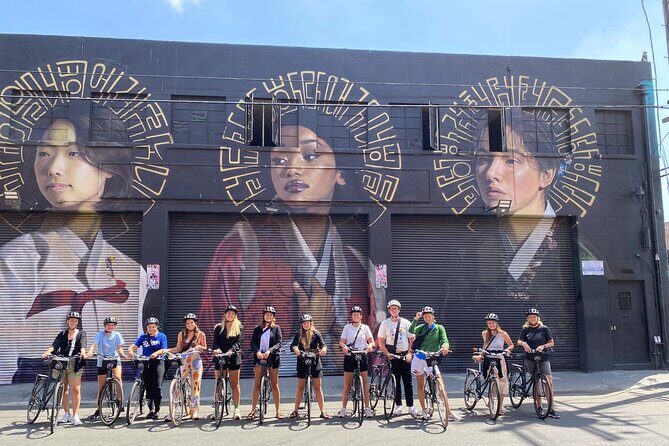
Your tour begins at 312 S Hill St in Downtown LA, at Handlebar Bike Tours. The launch point is inside a 100-year-old food hall with over 45 vendors, so you can grab a quick bite before you roll—or hunt for a snack after you’re done. Even if you come for the bike tour, this area gives you instant context: LA is already mixing food, art, and design in the same block.
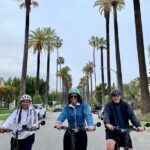
Start time is 2:00 pm, and the ride runs about 2.5 hours. You’ll get a bike and helmet, and then you’re rolling with a guide using a live amplified setup. That matters more than you might think, because street art isn’t just something to look at—it’s something to understand. When the guide can talk clearly while you’re moving, you don’t lose the plot.
This is also a practical tour for city navigation. It’s near public transportation, and the route is built to stay manageable for a range of riders. The key condition: you need to be able to bike and feel comfortable on city streets. If you’re still nervous about steering, braking, or holding a steady line, this may not be the right first try.
You can also read our reviews of more cycling tours in Los Angeles


Live street-art storytelling you can actually hear
The Arts District bike ride works because it slows you down just enough at the right moments. The guide doesn’t just point at walls; they connect what you’re seeing to the people making it and the neighborhood that shaped it. That’s the real value of live amplified guidance: you get context on the spot.
You’ll hear commentary about artists, murals, and galleries as the group moves through alleys and around industrial-looking blocks that can feel tucked away. The tour also keeps a respectful tone about the culture of street art—especially the idea that these murals aren’t decorations. They’re part of local identity, with artists and residents shaping what goes up and what stays.
A recurring detail from the best rides here is pacing. People highlight how the timing feels just right: enough time to view, learn, and ask questions, without the “stand still and wait” feeling that can kill momentum. One review specifically praised Jen for being patient and making the ride comfortable, and that lines up with what you want from a small-group bike tour—someone who keeps people together while explaining what you’re seeing.
The Arts District stops: murals, graffiti culture, and studio life
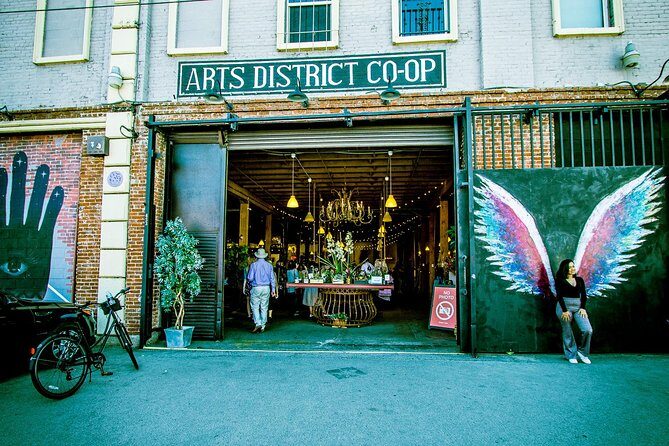
This tour is built like a guided walking tour, except you cover ground by bike. You’ll move from mural-heavy street corners to gallery spaces and artist-area landmarks, with multiple stops designed to show different sides of the district.
Stop: Handlebar Bike Tours at the 100-year-old food hall
Before you leave the starting area, take a moment to soak in the vibe. This isn’t a random parking lot meetup. It’s a working hub with lots of vendors, so you’ll feel like you’re starting in a real neighborhood space, not a staged tour base. If you’re the kind of person who likes to arrive early and “get your bearings fast,” this start makes it easy.
Stop: Art District alleys and emerging creativity
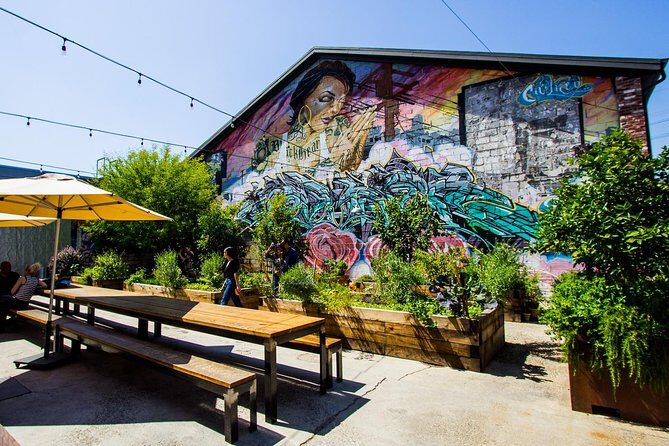
One of the signature moments comes early when you wind through alleyways where graffiti writing and street culture show up in ways most big-bus routes never touch. You’re looking at a side of Los Angeles that often feels quieter on the main streets, even though the creativity is right there.
The advantage of biking here is visibility. You can spot details you’d miss from a distance—tags, layers of paint, and how murals relate to nearby storefronts and industrial structures. The guide helps you read the scene, so it doesn’t turn into random wall-watching.
Stop: Angel City Brewery area (street art around the edges)
Next, you pass by Angel City Brewery, described as an unofficial gateway to the Arts District, decorated with local artist work. The important practical note: the tour notes that admission here is not included. That doesn’t mean you can’t look around from the outside, but it does mean you should expect to pay separately if you want to go in.
Still, even if you skip the interior, this stop helps you see how art becomes part of the district’s public face—on walls, signage, and the brand culture around the neighborhood.
Stop: Arts District Firehouse Hotel and the street-art mix
At the Arts District Firehouse Hotel area, you’ll see more of the graffiti-writing tradition and the broader entertainment influence in the neighborhood. The route also connects this area to Warner Brothers Music and nearby chef-forward restaurants, which helps explain why the Arts District isn’t just one scene. It’s layers: street art, media industry adjacency, and food.
A quick caution: this is one of those neighborhoods where what you can see changes depending on time of day and what’s happening around you. The tour keeps stops timed, but it’s still smart to keep your eyes open for what’s present outside your exact viewing moment.
Stop: Hauser & Wirth for an on-your-own gallery window
Then you hit Hauser & Wirth, with an approx 20-minute break where you can explore on your own. This is a strong pairing with the street-art parts of the tour because it gives contrast. Street murals and formal gallery work are both about artists, materials, and placement—just in different systems.
Admission is marked as free for this stop, so you can usually treat it as a “use the time well” moment rather than a budget question. The best move: don’t sprint. Look for how art is displayed and how the building shapes what you feel in the space.
Stop: the mural concentration—process, production, and respect
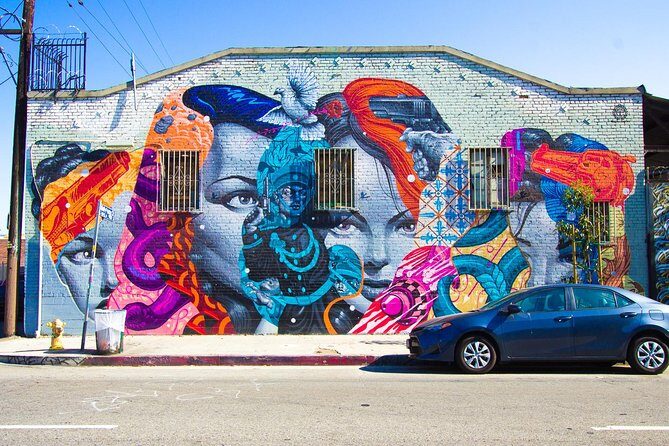
A standout section of the ride is where you see the largest concentration of murals and street art in Los Angeles, with the guide focusing on artists and how pieces are made. This is where you learn that the wall isn’t only the end result. It’s also the process—how production happens, what the artists are thinking about, and how the neighborhood context shapes the outcome.
This stop is also where the tour’s attitude matters. You’ll hear about fostering relationships with artists and residents, with an emphasis on respecting street artist culture. That tone keeps the experience from feeling like exploitation-by-camera.
Stop: The American Hotel—where the modern district began
You’ll also pass the American Hotel area, described as the birthplace of the modern Arts District. This is another “why this place became this place” moment, not just a photo stop. Historical context here is useful because it explains why studios, galleries, and street art can coexist in the same urban footprint.
When you get the story behind the buildings, it makes the mural sections hit harder. The art feels less random and more like a response to the district’s identity.
Getting to Little Tokyo: the food, the history, and the shared story
To reach the Arts District, the tour rides through Little Tokyo. The neighborhood has tons of food potential—sushi, anime, and ramen are part of the picture—plus it serves as a natural reset when galleries are closed. The tour includes a break stop here, which helps you recharge without turning the day into a full-on meal mission.
More importantly, Little Tokyo adds historical context. The route includes stops tied to the Japanese American National Museum area, and the guide explains how the history of Little Tokyo is intertwined with the history of the Arts District and Los Angeles. You’re not just moving between neighborhoods; you’re learning how they connect.
One of the listed features at this point is how the guide explains the Museum of Contemporary Art and the Go For Broke Monument as part of that story. Even with short time windows, having a guide connect landmarks makes the stop feel purposeful rather than rushed.
The in-between sights: studios, non-profits, clubs, and film-famous corners
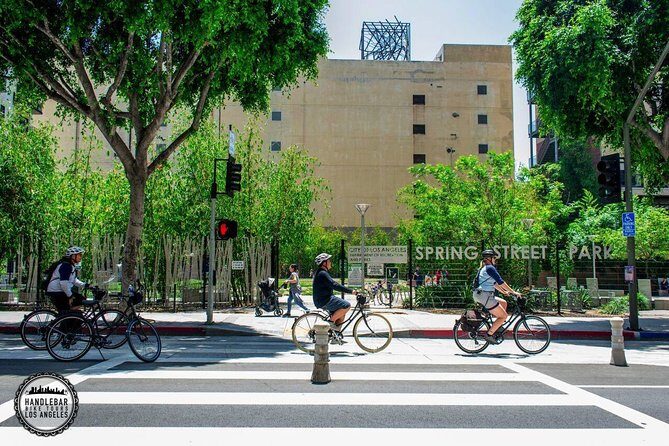
The route also includes a series of shorter pass-by moments that add texture. These are the details that make a neighborhood feel lived-in rather than curated.
- A non-profit listed on the route provides below-market live work studios, which connects directly to why the Arts District has artists in residence rather than only art on display.
- You’ll ride by an under-the-radar cool club in the district, which helps show that the scene isn’t only visual—it’s also nightlife and local culture.
- Willow Studios appears on the route, showing the production side of the neighborhood.
- You’ll also ride by Soho Warehouse, described as a celebrity enclave next to the railroad tracks of East LA. Admission is noted as not included here, so treat it as a visual stop unless you’re planning to pay separately.
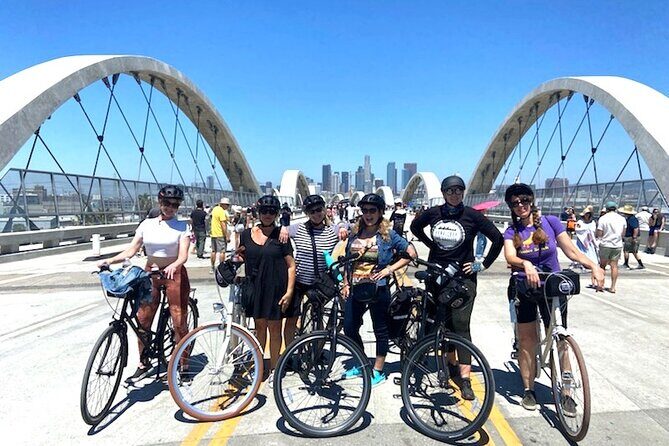
Then there’s the 6th Street Viaduct, an iconic bridge that’s featured in LA film locations more and more frequently. This is one of those moments where the guide can help you read the neighborhood through the lens of film geography—how Los Angeles gets framed, where scenes get shot, and why this kind of infrastructure becomes part of popular imagery.
Bikes, pace, and who this tour fits best
This tour is designed for easy riding and is described as suitable for most people, with a moderate physical fitness level. It’s also explicitly for riders who:
- can ride a bike
- know how to bike on city streets
- are at least 12 years old
Group size maxes at 10, which supports a steady pace and easier communication. It’s not the kind of ride where you get dropped or feel like you’re chasing people along a line of murals. The best reviews emphasize a comfortable, doable ride, and that usually comes from a careful pacing plan.
If you’re traveling with someone who’s new to biking, you’ll want to be honest about confidence first. The tour isn’t positioned as beginner training. It’s more like a guided ride for people who already bike and want a good story while they’re doing it.
Finally, this experience requires good weather. That matters because Los Angeles can swing from sun to wind. If conditions aren’t great, you could be offered a different date or a full refund, so keep an eye on the forecast close to departure.
Price and value: what $82 buys you in real-world terms

At $82 per person for about 2.5 hours, you’re paying for more than transportation. You’re getting:
- a bike and helmet
- a live amplified guide who ties visual art to people and place
- a small-group ride that keeps you moving while still pausing for meaningful looks
- access to a mix of street-art areas and a major gallery stop (Hauser & Wirth) with time built in
A key value point: many stops are free to view from the street or within the tour’s planned access windows. Angel City Brewery and Soho Warehouse are noted as not included for admission, and the tour itself doesn’t provide food. Still, the structure is built to keep the cost focused on guiding and gear, not add-on tickets.
If your LA plan includes seeing murals and you care about context—artists, process, and neighborhood history—this is a strong value play. If your main goal is pure sightseeing with minimal learning and no biking, you might find other options more comfortable. But for an active, guided art tour in two and a half hours, $82 is pretty reasonable.
Should you book the Los Angeles Arts District Bike Tour?
I’d book it if you want an LA experience that mixes art education with movement. This is ideal when:
- you can ride a bike and want a mostly flat, manageable city route
- you want to learn what you’re seeing, not just take photos
- you like small-group tours where the guide can talk clearly the whole way
- you’re curious about how the Arts District connects to Little Tokyo
I’d skip or reconsider if:
- you’re not comfortable biking on city streets
- you hate riding when weather is iffy
- you’re counting on the tour to include food (it doesn’t)
If you like your art with context and your sightseeing with a little pedal power, this one is worth a spot in your schedule.
FAQ
How long is the Los Angeles Arts District Bike Tour?
It runs about 2 hours 30 minutes.
How much does the tour cost?
The price is $82.00 per person.
What’s included in the ticket price?
You get use of the bicycle, a helmet, and a live amplified guide.
Is food included on the tour?
No. The tour does not include any food.
What should my fitness level be?
You should have a moderate physical fitness level, and you need to be able to ride a bike on city streets.
Is there a minimum age?
Yes, the minimum age is 12 years.
What language is the tour offered in and how big is the group?
The tour is offered in English, and it has a maximum group size of 10.
Where do I meet for the tour?
The meeting point is 312 S Hill St, Los Angeles, CA 90013. The tour ends back at the meeting point.