REVIEW · LOS ANGELES
Los Angeles Chinatown and Little Tokyo Walking Tour
Book on Viator →Operated by LA Walking Tours · Bookable on Viator
One of L.A.’s coolest stories is on foot. This Chinatown and Little Tokyo walking tour connects immigration history to what you see on the streets today, guided by a local who can tie the details together fast.
I especially like two things. First, you get a real local guide who explains the culture at each stop, not just a list of sights. Second, the route includes the heart of both neighborhoods, then adds a short Metro hop so you feel how close (and different) these communities are.
The one drawback to plan around: you’ll need to budget for the Metro fare between Chinatown and Little Tokyo, since it’s not included.
In This Review
- Key highlights worth planning for
- Two Neighborhoods, One Guided Story
- Starting Point on North Broadway: Set Your Bearings Fast
- Chinatown Plaza to the Gate Areas: Where Stories Live on the Block
- Movie Location and Artwork Stop: How Pop Culture Meets Community
- Blossom Plaza: The Italian History Connection (Yes, Really)
- The Metro Los Angeles Hop: A Short Ride With Big Context
- Japanese Village Plaza: The Heart of Little Tokyo
- Japanese American Cultural & Community Center: Gardens and the Nisei Festival Setting
- Price and Timing: What $38 Buys You in Real Terms
- What You’ll Be Asking the Guide, and How to Get More From It
- Weather, Comfort, and Pace: The Practical Stuff
- Who This Tour Fits Best
- Should You Book Los Angeles Chinatown and Little Tokyo?
- FAQ
- How long is the Los Angeles Chinatown and Little Tokyo Walking Tour?
- What is the price of the tour?
- Do I need to pay for Metro rail during the tour?
- Where does the tour start and end?
- Is there a mobile ticket?
- Can I cancel for a full refund?
Key highlights worth planning for
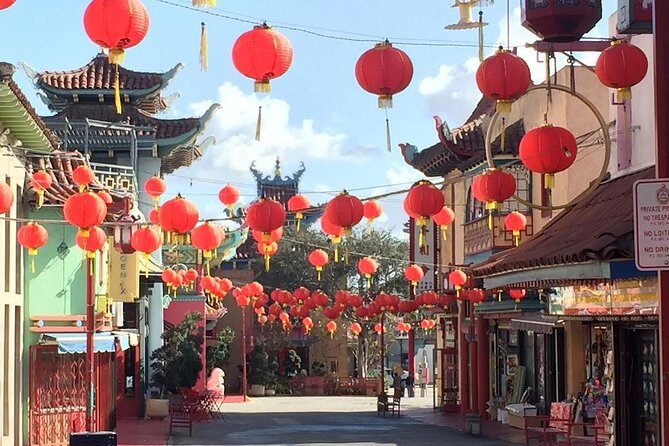
- A guide-led walking route through the core streets of both neighborhoods, with time built in for questions
- Chinatown landmarks like Chinatown Plaza and the East and West Gate areas
- Blossom Plaza stop with the Italian-history context that many visitors miss
- A required Metro rail ride between neighborhoods, with the guide able to help you handle the fare
- Japanese Village Plaza and the Japanese American Cultural & Community Center, including Japanese gardens and the Nisei festival setting
Two Neighborhoods, One Guided Story
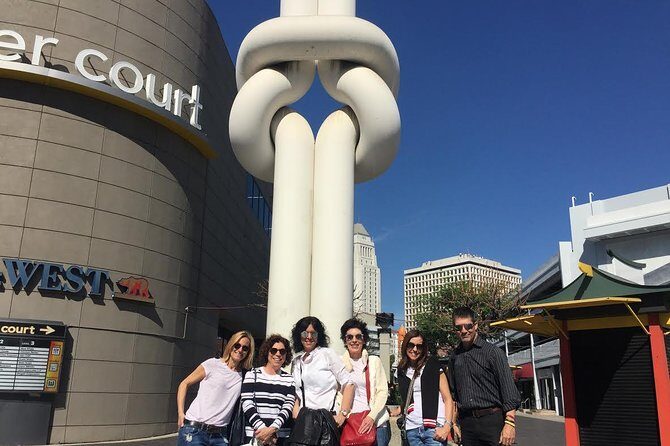
If you only know L.A. from Hollywood angles and beach days, this tour is a quick course-correction. You’ll walk through Chinatown and Little Tokyo, but the goal isn’t photos for photos’ sake. The focus is how Japanese and Chinese immigrant communities shaped these areas, and how today’s policies still affect the people who live and work there.
The tour also has a smart pacing choice. You spend real time on the ground in each neighborhood, then you connect them with a short rail ride. That means you’re not just bouncing between “attractions.” You’re moving between two living neighborhoods that sit close enough to compare, yet distinct enough to feel different in your bones.
And the human element matters. The guides—Chris and Robert are specifically praised—are called out for being informative and patient, which is exactly what you want when you’re learning history while navigating crowds and crosswalks.
You can also read our reviews of more walking tours in Los Angeles



Starting Point on North Broadway: Set Your Bearings Fast
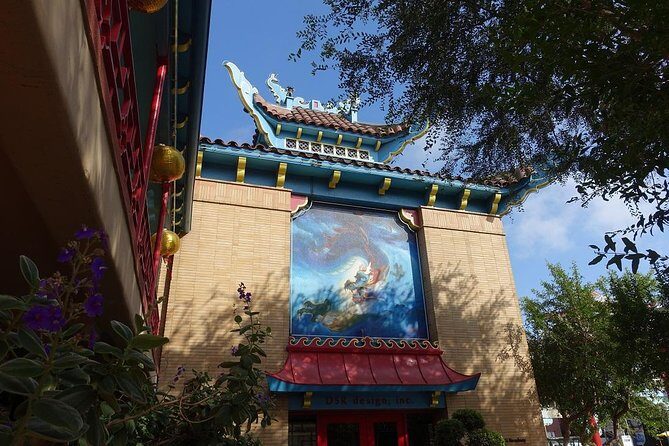
The tour starts at 943 N Broadway (in the Chinatown area). Since it’s a walking tour with a rail transfer and multiple plazas, this is one of those experiences where starting in the right place helps you feel organized from minute one.
You’ll also be moving with a group that stays pretty compact—up to 20 people. That size is big enough to feel like a lively tour, but small enough that questions don’t get lost. If you’re the type who likes to ask what something means, this format works well.
One more detail I appreciate: you’ll use a mobile ticket. For city walking tours, fewer paper hassles means more time paying attention to streets and signs.
Chinatown Plaza to the Gate Areas: Where Stories Live on the Block
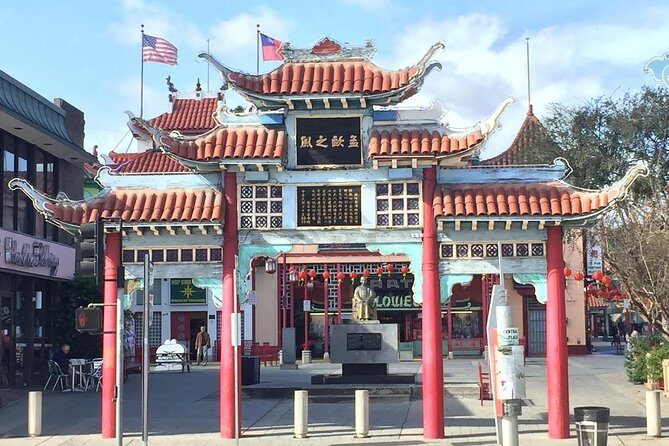
Your first stretch is Chinatown, with a focus on the area’s most recognizable spaces. The tour begins around Chinatown Plaza and works through key landmarks that help you understand how Chinatown functions as a community hub, not just a themed district.
Expect stops that include:
- Chinatown Celestial Dragon
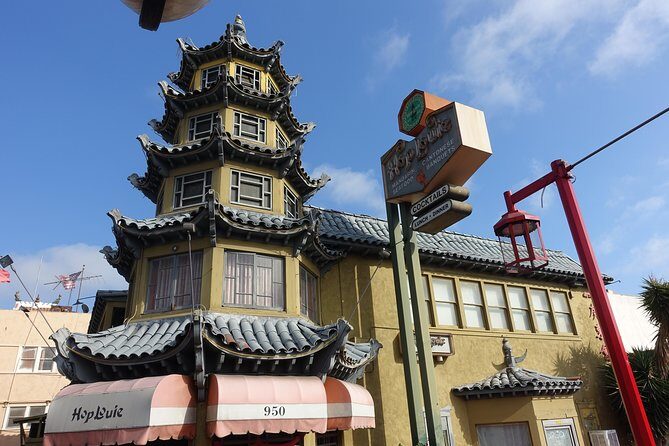
- A visit near Hop Louie restaurant
- A stop around Wonder Bakery
- Time at the East and West Gate areas
Even if you’ve visited Chinatown before, this kind of route changes how you see it. Places like the gates aren’t random decorations. They signal identity, continuity, and how the neighborhood welcomes people in. And landmarks at street level help you notice the everyday mix of old and new that makes Chinatown feel real.
What I’d keep in mind: Chinatown can be busy, and you’ll be walking for about half an hour at the start area. Wear comfortable shoes and don’t plan a long fancy dinner right after—your feet will have earned their rest.
Movie Location and Artwork Stop: How Pop Culture Meets Community
Midway through the Chinatown section, you’ll get a brief stop for a movie location site. The point isn’t to do a trivia contest. It’s to show how Chinatown’s look has traveled through media, and how that connects to real people and real streets.
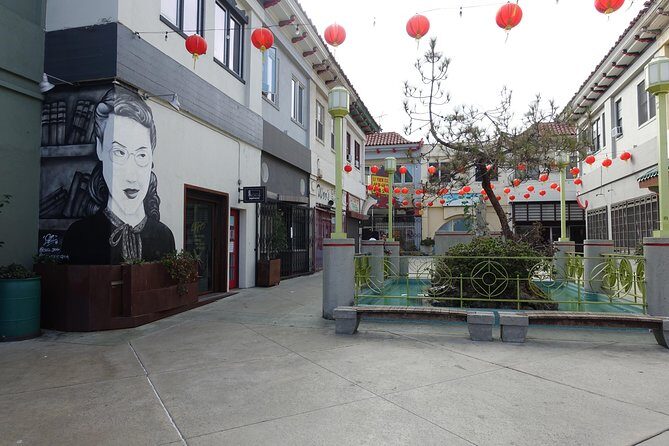
Then the tour includes a stop at artwork by Tyrus Wong. If you’re interested in how culture gets interpreted—by artists, by filmmakers, by signage—this is the kind of moment that makes the tour feel more thoughtful than a quick sight check.
This section is shorter, but it’s also a nice palate-cleanser. You’re not stuck in one “topic mode.” You shift from community identity to interpretation and representation, which keeps your brain engaged.
Blossom Plaza: The Italian History Connection (Yes, Really)
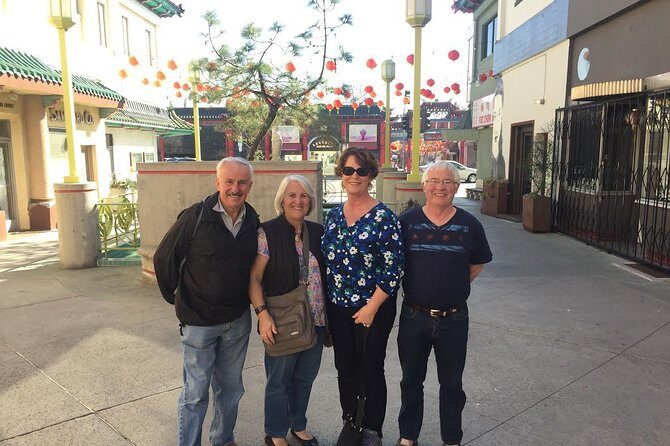
Next comes Blossom Plaza, and the tour makes a point of connecting it to older Little Italy history. That’s a great reminder that L.A. neighborhoods don’t stay the same forever. Communities change, overlap, and leave traces behind.
You’re not going to spend a long time here—just a few minutes—but it’s enough to plant a useful idea: today’s streets carry layers. Even if you never become a “history person,” you’ll start noticing how one wave of neighborhood identity can shape what comes after.




The Metro Los Angeles Hop: A Short Ride With Big Context
To get from Chinatown to Little Tokyo, you’ll take Metro Rail. The required ride is about 10 minutes, and here’s the key detail: rail fare is not included.
Good news: the guide can help you handle acquisition at the time of the tour. So if you’re nervous about figuring out fare on the fly, you’re not left alone to solve it.
This is also where the tour structure works for your brain. You feel the change of neighborhood not as a jump on a map, but as a quick in-between chapter. When you step off the train, Little Tokyo doesn’t feel like a separate world that you traveled too. It feels like the next page in the same story.
Japanese Village Plaza: The Heart of Little Tokyo
Once you arrive, the tour centers on Japanese Village Plaza, the focal point in Little Tokyo. You’ll spend about 15 minutes here, which is a sweet spot: enough time to orient yourself and catch the cultural landmarks, but not so long that you feel like you’re waiting for something to happen.
This stop matters because it’s a natural “anchor” when you’re walking the area. After the rail transfer, you need a place that helps you reset visually and emotionally. Japanese Village Plaza does that.
If you’re someone who likes to understand how public spaces work, watch how people move through the area. Plaza spaces are where communities show up for festivals, daily errands, and casual meetups. That’s part of why this neighborhood feels like a living place instead of a museum set.
Japanese American Cultural & Community Center: Gardens and the Nisei Festival Setting
The final stop is the Japanese American Cultural & Community Center at 244 San Pedro St. You’ll spend about 15 minutes here, and it’s the tour’s most grounded end point.
This center is identified as:
- Home of the Nisei festival
- A place with Japanese gardens
Those two details are the reason this stop lands. Festivals and gardens both signal community in different ways—one more seasonal and social, the other more reflective and everyday. Together, they help you see how cultural identity isn’t only about big events. It’s also about spaces people care for and return to.
When the tour ends, it ends at this location. From there, you’ll take a two-stop Metro ride back toward the starting area. The key point for planning: rail fare isn’t included, but the guide can point you in the right direction so you’re not guessing your way out.
Price and Timing: What $38 Buys You in Real Terms
At $38 per person for about 2 hours, this tour is priced for people who want guided context without committing an entire day. You’re paying mainly for the local guide’s interpretation and the structured route through both neighborhoods.
Two value signals stand out:
- The route isn’t only Chinatown or only Little Tokyo. You get both, with the tour designed to connect them.
- The guide includes stop-by-stop context at multiple named locations, not just general wandering.
The main cost consideration is the one separate expense you’ll want to plan for: Metro fare between neighborhoods. Because it’s not included, the real cost is a bit higher than the headline price.
Still, for what you’re getting—walking time, named stops in both areas, and a guide who’s known for being patient and clear—it can be a solid deal, especially if this is your first visit to either neighborhood.
What You’ll Be Asking the Guide, and How to Get More From It
Because this is a walking tour with short stop times, your best strategy is to come curious. If you’re the kind of traveler who likes understanding how immigrant communities shaped cities, you’re in the right place.
Here are smart questions you can ask that match what the tour is built around:
- How did Chinese and Japanese immigration shape what we see today in these neighborhoods?
- What kinds of current policies affect residents, based on what you notice around here?
- What role do plazas and community centers play beyond festivals?
And if you’re unsure about the rail transfer, ask early. The tour is set up so the guide can help you manage it.
Weather, Comfort, and Pace: The Practical Stuff
This tour requires good weather. If the forecast is rough, you may need to switch dates or get a full refund. Also, it’s primarily outdoors, so light layers help even when the day feels mild.
Comfort-wise, treat it like a normal city walking outing. You’ll be on your feet through Chinatown, then again through Little Tokyo. You don’t need hiking gear, but you do want shoes that won’t punish you after 90–120 minutes of stopping, looking, and moving.
Who This Tour Fits Best
This is a great fit if you want:
- A guided way to learn why these neighborhoods matter, not just where they are
- A walk that includes both Chinatown and Little Tokyo in one morning-style window
- A smaller-group feel (max 20) where you can actually ask questions
It’s also a good choice for visitors who like structured routes. Even though you’re seeing real neighborhoods, the tour is organized enough that you won’t feel totally lost when you’re done.
Should You Book Los Angeles Chinatown and Little Tokyo?
If you’re short on time but you want your L.A. to feel like it has depth, I’d book this. The standout reason is the guided structure: you hit key Chinatown landmarks, then you connect to Little Tokyo with a rail hop, then finish at the cultural center with the gardens and the Nisei festival setting.
Two final decision checks:
- If you don’t want to deal with any extra transit costs, this one might feel annoying because the Metro fare isn’t included.
- If you like learning from a guide who’s praised for clarity and patience, you’re exactly the audience this tour seems built for.
If either Chinatown or Little Tokyo is new to you, this is a clean, efficient way to get oriented fast—and leave with a clearer sense of how these communities shape L.A.
FAQ
How long is the Los Angeles Chinatown and Little Tokyo Walking Tour?
The tour runs for about 2 hours (approx.).
What is the price of the tour?
It costs $38.00 per person.
Do I need to pay for Metro rail during the tour?
Yes. A short Metro rail ride is required between Chinatown and Little Tokyo, and the rail fare is not included. The guide can assist you with acquiring it at the time of the tour.
Where does the tour start and end?
It starts at 943 N Broadway, Los Angeles, CA 90012. It ends at 244 San Pedro St, Los Angeles, CA 90012 at the Japanese American Cultural & Community Center.
Is there a mobile ticket?
Yes, the tour includes a mobile ticket.
Can I cancel for a full refund?
Yes. You can cancel up to 24 hours in advance for a full refund. If you cancel less than 24 hours before the start time, the amount you paid will not be refunded.