REVIEW · LOS ANGELES
O.J. Simpson & Menendez Brothers True Crime Driving Tour of L.A.
Book on Viator →Operated by Grave Line Tours · Bookable on Viator
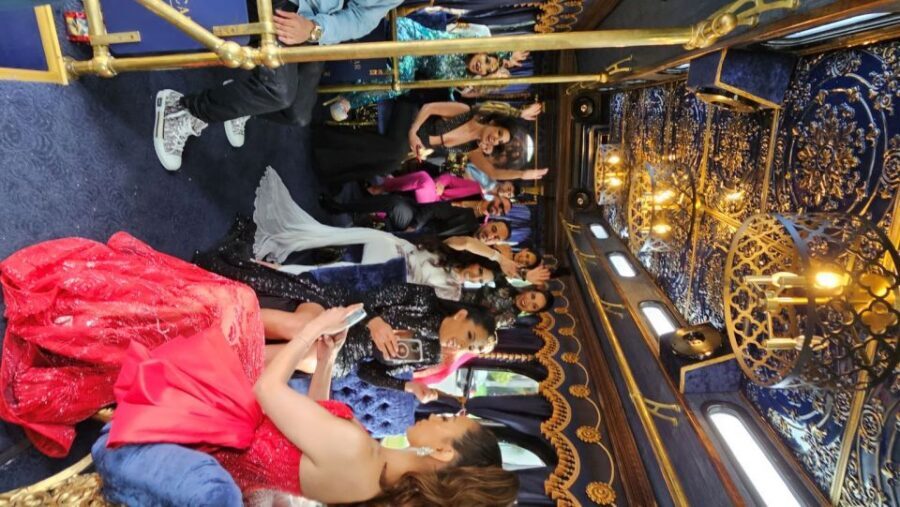
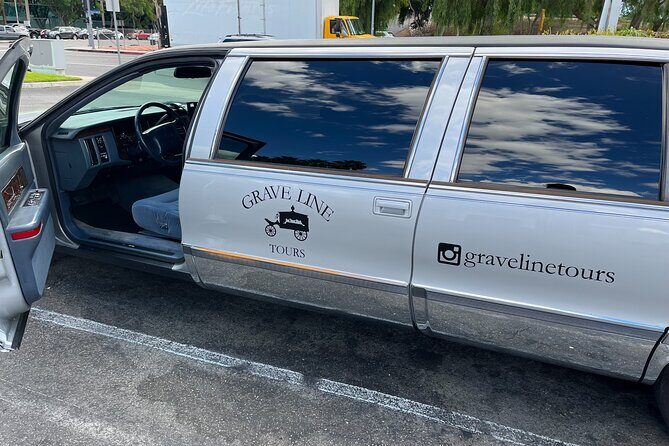
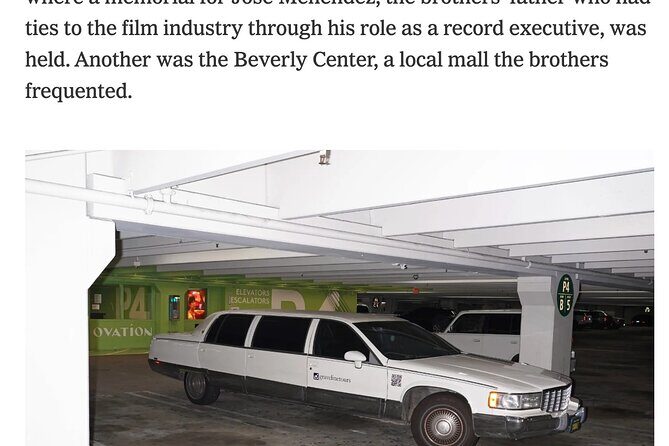
Two cases, one long Westside drive. You’ll ride in a funeral-style limo and stop at places where Hollywood glamour collided with real violence, guided with a steady, serious tone by Blaze. It’s the kind of route that makes the city feel like one connected story, not a list of random addresses.
I especially like how the tour keeps things respectful while still being detailed, with clear explanations of how the Menendez and Simpson narratives link. I also like the practical format: you stay seated most of the time, use smartphone-friendly background visuals, and get a short break mid-tour to reset. One drawback is the subject matter is heavy—this is not the right pick if you get emotionally upset by extreme details.
In This Review
- Key Highlights You’ll Actually Notice on the Route
- What This Tour Feels Like: Two LA Stories Woven Together
- Small-Group Comfort: Ovation Hollywood Start and Smartphone-Friendly Visuals
- Hollywood’s Aftershock: Directors Guild Memorial and the Entertainment World
- Luxury, Status, and the Case Aesthetic: Beverly Center and Rodeo Drive
- Nightlife and Activism Nearby: Tryst, West Hollywood AIDS Years, and a Long-Running Club
- Confessions, Therapy, and the Elm Drive Mansion Sites
- Brentwood’s Everyday Streets: Funeral, Homes, and the Last-Mile Locations
- The Bronco Route: Key Intersection, Freeway Chase, and Surrender
- Price and Value for Three Hours of Real Places
- Should You Book This O.J. and Menendez Brothers Driving Tour?
- FAQ
- How long is the O.J. Simpson & Menendez Brothers True Crime Driving Tour?
- What is the group size for this tour?
- What time and where does the tour start?
- What language is the tour offered in?
- Is food included?
- Is the tour suitable if I’m sensitive to extreme subject matter?
Key Highlights You’ll Actually Notice on the Route
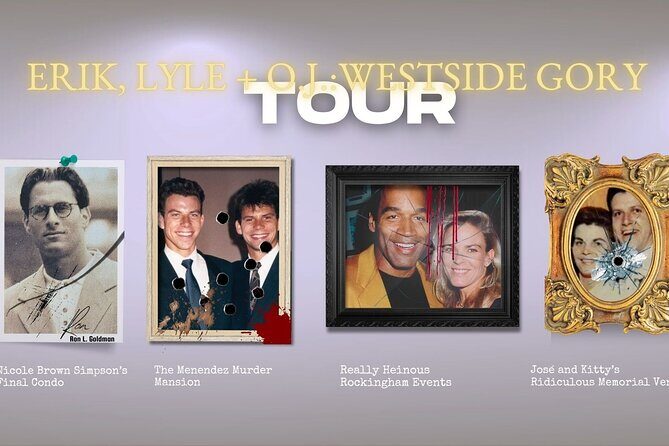
- A small group (max 8), so the guide can pace the story and keep it from feeling rushed
- Smartphone visual materials, which help you track locations and timelines without squinting at maps
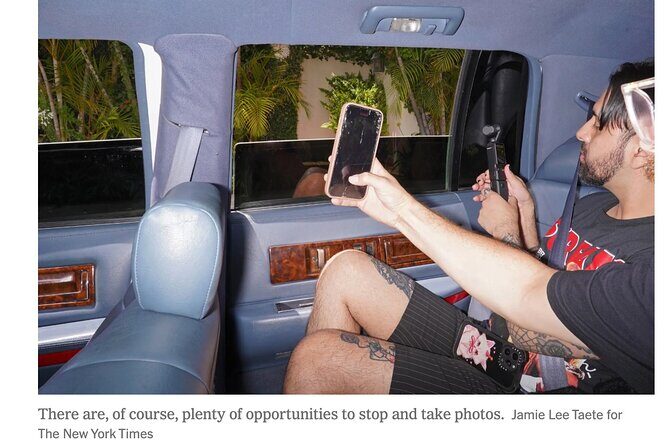
- A limo-first experience, with you spending most of the tour sheltered and comfortable while still getting stops
- Westside links between the two cases, from media-world connections to everyday Brentwood streets
- Guide energy from Blaze, with strong storytelling and media clips timed into the drive
What This Tour Feels Like: Two LA Stories Woven Together
This is a driving tour built around mood and context, not just photo ops. You’ll move through Hollywood, Beverly Hills, West Hollywood, and Brentwood, seeing how Los Angeles shaped both the public image and the private reality behind these cases.
The tour’s rhythm matters. You’re not sprinting between locations. You’re sitting in a limo for long stretches, then stepping out for specific stops where the details help make sense of what happened and why those spots became famous.
If you want true crime that stays human—without turning victims into spectacle—you’ll likely appreciate the tone. It’s also ideal if you like learning how seemingly unrelated places in L.A. connect through people, money, media attention, and power.
You can also read our reviews of more tours and experiences in Los Angeles.
Small-Group Comfort: Ovation Hollywood Start and Smartphone-Friendly Visuals
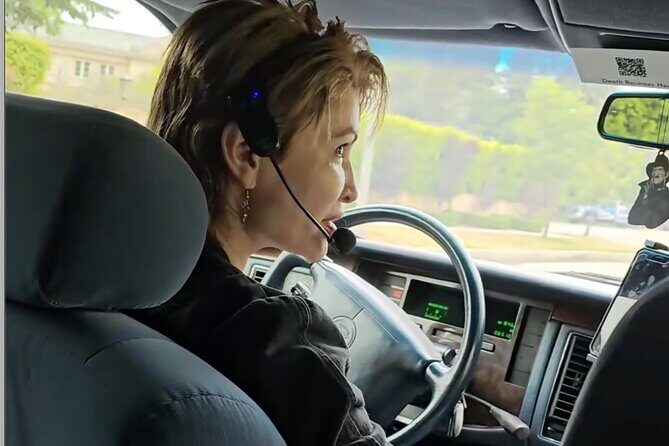
You meet at Ovation Hollywood, 6801 Hollywood Blvd at 10:30 am. The tour ends back at the same meeting point, which keeps it simple at the end of the day.
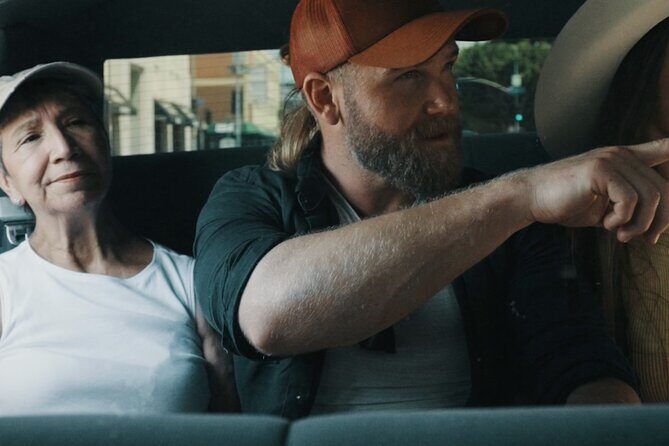
The small cap (up to 8 people) is a big value point. In a group that size, you don’t feel like you’re competing for attention, and the guide can adjust the pace if questions come up. It also helps the drive stay organized in a busy part of L.A.
You’ll receive mobile ticketing, and the experience includes visual background materials you can access with your phone. That matters more than you’d think: instead of trying to memorize street names, you can track what’s being discussed as you pass each site.
One planning note: the tour requires good weather. The limo format is comfortable, but if conditions are poor, it can be changed or refunded.
Hollywood’s Aftershock: Directors Guild Memorial and the Entertainment World
One of the first emotionally charged stops is at the Directors Guild of America theater on Sunset Boulevard. This is where José and Kitty Menendez’s memorial service was held shortly after their 1989 murders, drawing Hollywood industry elites, friends, and family.
Why this stop works: it shows how deeply the case was tied to the entertainment ecosystem. Even if you’re not obsessed with film history, the setting makes one thing clear—Los Angeles didn’t treat this like a distant scandal. It was inside its own industry network, right away.
From there, the tour shifts from public grief to something more procedural and businesslike at an unassuming Hertz Rent a Car location. José Menendez helped reshape sports marketing by signing O.J. Simpson for a groundbreaking national spokesperson and TV commercial deal.
This stop is a clever bridge between the cases. You get the idea that fame wasn’t just an after-effect of tragedy—it was built, packaged, and sold through connections that already existed.
Luxury, Status, and the Case Aesthetic: Beverly Center and Rodeo Drive
You’ll head to the Beverly Center, a major multi-level shopping mall near the Beverly Hills and West Hollywood edge. In the late 1980s and 1990s, it was a celebrity-friendly retail zone.
After the murders, the tour points out that Erik and Lyle Menendez were seen here on lavish shopping sprees. The practical takeaway isn’t gossip—it’s how the prosecution later used this kind of spending pattern to argue motive and character.
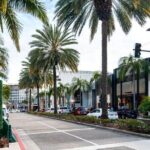
Then you’ll move through Rodeo Drive, the luxury-shopping corridor that represents wealth and excess in a way L.A. practically sells to the world. The tour ties Rodeo to Nicole and O.J. Simpson and José, Kitty, Lyle, and Erik Menendez, noting they frequently moved through this high-status environment.
Two things I like about this segment:
1) you see how a place associated with glamour becomes evidence in hindsight,
2) you connect the emotional storyline to the visual one—palm-lined sidewalks, designer storefronts, and the feeling that money can make people look untouchable.
There’s also a specific flashpoint at the corner of Rodeo Drive and Brighton Way in Beverly Hills, tied to a jealous confrontation Nicole Brown Simpson observed involving O.J. Simpson with two women.
Nightlife and Activism Nearby: Tryst, West Hollywood AIDS Years, and a Long-Running Club
True crime often focuses on the crime scene, but L.A. is bigger than that. One stop at the former Tryst nightclub on La Cienega Boulevard takes you to the early 1990s nightlife scene—an intimate, upscale lounge where Hollywood insiders went out.
This is where the tour places a chilling moment: O.J. Simpson confronting and terrorizing Nicole Brown Simpson and her date Keith Zlomsowitz during a night out. It’s not just a dramatic story beat. It helps explain the stalking/control themes later central to Nicole’s tragic arc.
Then the route turns to West Hollywood and the LGBTQIA+ community during the AIDS crisis, framing it as an area shaped by grief and organized activism. This isn’t about the cases directly. It’s about the context of a nearby city-within-a-city—queer survival, civil rights efforts, and public health advocacy amid staggering loss.
The tour also includes a stop at a long-running West Hollywood gay club that survived from the 1980s and 1990s. Inside that kind of space, queer Angelenos built chosen families and found both sanctuary and visibility while living through intense homophobia and AIDS-era pain.
If you’re hoping for straightforward name-and-date crime facts only, you might find this portion different. I like it because it reminds you the world around these celebrity cases didn’t pause.
Confessions, Therapy, and the Elm Drive Mansion Sites
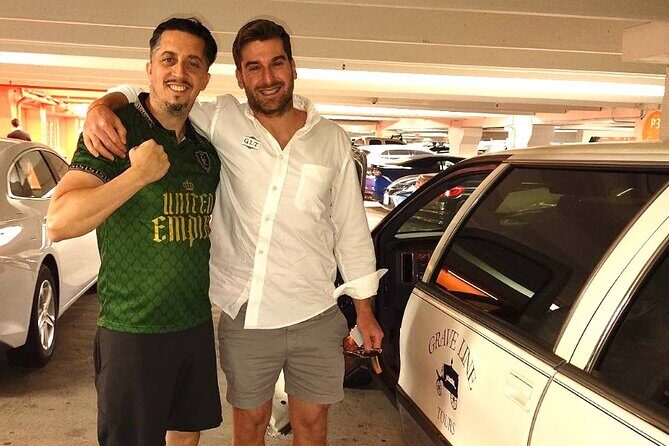
A major pivot point is a small park off Santa Monica Boulevard in Beverly Hills, where Erik Menendez met Dr. Jerome Oziel and later broke down, admitting responsibility for killing his parents (José and Kitty). The idea here is that the story turns from locked-door fear and pressure into something spoken out loud—an admission that shaped later proceedings.
From the bench area, the tour moves to Oziel’s Beverly Hills office at 435 North Bedford Drive, described as a discreet setting in the medical and professional district. The tour explains that pivotal therapy sessions with Erik and Lyle were recorded and that Oziel became a key witness for the prosecution.
This segment can feel intense, but it’s also one of the most clarifying. You understand why the case became so publicly documented: not only through headlines, but through recordings and testimony tied to a medical setting.
You’ll also pass through the story thread of Erik’s UCLA acceptance. The tour notes it became a symbol of independence, but José forced him to commute and forbade him from living in dorms. The message is control, even in something that should have been normal.
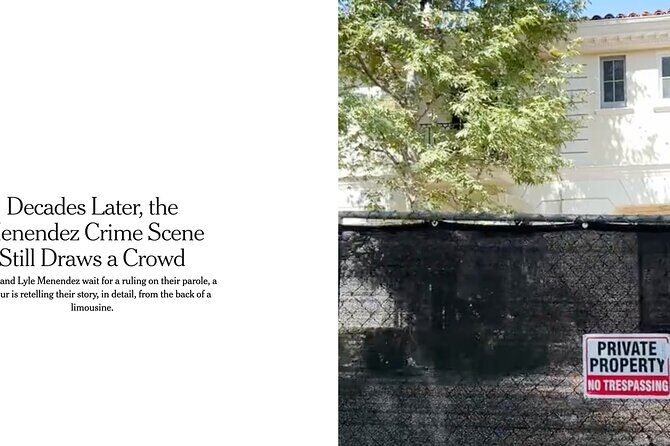
Finally, the itinerary includes the Elm Drive mansion at 722 North Elm Drive, the home where Lyle and Erik Menendez fatally shot their parents in the home’s TV room on August 20, 1989. Today it stands behind gates as a Mediterranean-style 1927 villa, and the tour positions it as the infamous façade that became a symbol of greed, family trauma, and national attention.
Just be ready for the fact that you’re standing in the shadow of a real family home—not a movie set. The tone helps.
Brentwood’s Everyday Streets: Funeral, Homes, and the Last-Mile Locations
After Beverly Hills and Westside LA, the tour shifts into Brentwood, where the narrative feels painfully normal. You’ll stop at St. Martin of Tours Catholic Church on Sunset Boulevard, where Nicole Brown Simpson’s funeral was held with about 200 friends, family, and celebrities under intense media scrutiny. O.J. Simpson attended with their children.
Then you’ll visit the Rockingham estate site at 360 North Rockingham Avenue. The original home was demolished and replaced, but the address remains tied to Simpson’s earlier living situation, police pursuit, and later surrender in the driveway.
The tour also includes Gretna Green Way, where Nicole’s rented Brentwood home became a refuge during separation—and the backdrop for a chilling 911 call where she begged for help as O.J. Simpson raged and pounded outside.
Next comes San Vicente Boulevard, described as their everyday corridor: his office, gyms, an Italian restaurant (Mezzaluna), and familiar daily errands and date-night stops. The tour frames this street as where something ordinary became inseparable from the case’s timeline.
Then you’ll reach a stop for a short reset at a Brentwood Starbucks, marked as a landmark where Nicole and Ron Goldman first met in line and chatted. The itinerary lists a 20-minute stop with admission free, which is a nice break in a tour that’s otherwise heavy.
From there, you’ll stop at 11663 Gorham Avenue, where Ronald Goldman lived in a modest 13-unit apartment building. The tour explains how he returned home to shower and change before heading to return Nicole’s mother’s forgotten glasses—an everyday detour that became part of the collision with tragedy.
You’ll also visit several “last movements” locations:
- the former Mezzaluna Trattoria spot on San Vicente Boulevard, tied to Nicole’s final dinner on the night of June 12, 1994
- the former Ben & Jerry’s ice cream shop location on a Brentwood outing evening shared by Sidney and Justin Simpson
- 875 South Bundy Drive, Nicole’s Brentwood condominium where she and Ron Goldman were killed, their bodies found just inside the front gate area
This section works best if you’re comfortable with emotional weight. The tour doesn’t skirt it, and the proximity to residential streets makes it land.
The Bronco Route: Key Intersection, Freeway Chase, and Surrender
Near the end, you’ll pass by a key West LA intersection where witnesses later reported seeing O.J. Simpson driving his white Ford Bronco recklessly shortly after Nicole Brown Simpson and Ron Goldman were murdered. It’s an intersection stop, but it plays an important role: it puts you at a point along the alleged escape route timeline.
Then comes one of the most recognizable parts of modern pop culture—the low-speed Bronco chase on the 405 freeway. The tour explains that Simpson led a caravan of police cars and news helicopters while millions watched live on television.
Finally, the pursuit ends at Simpson’s Brentwood estate, described as where he surrendered in the driveway. Even if you think you know this story, seeing how the timeline connects from neighborhood streets to freeway corridors is where the tour can feel most useful.
Price and Value for Three Hours of Real Places
At $93.08 per person for about 3 hours, you’re paying for three things you can’t easily replicate on your own:
1) someone else driving you around a cluster of meaningful locations across multiple neighborhoods,
2) guided context that ties those sites into a coherent story,
3) a small-group limo format that keeps the experience moving and comfortable.
The max 8 travelers setup is part of the value. It reduces the “big bus” feel and gives you a better chance to hear details clearly, especially when the guide uses media clips and short background segments.
Coffee and light snacks are available to purchase halfway through the tour. If you’re the type who needs sugar and calm, plan for that stop rather than assuming it’s built in.
And one more practical note: this is a tour where good weather matters. If you’re booking on the edge of forecast risk, it’s smart to weigh how flexible you can be.
Should You Book This O.J. and Menendez Brothers Driving Tour?
Book it if you want a structured Westside route that links two headline stories through place, media-world connections, and the ordinary streets that became case evidence. I’d also recommend it if you appreciate a guide like Blaze—someone who can tell dark stories with accuracy and without turning it into disrespect.
Skip it if the topic is too heavy for you right now, since the itinerary includes details tied to murders, threats, recorded therapy testimony, and the famous chase. This is not a light LA afternoon.
If you’re on the fence, think about what you want from L.A.: a checklist of stops, or a guided connection between them. This tour is built for the second.
FAQ
How long is the O.J. Simpson & Menendez Brothers True Crime Driving Tour?
The tour lasts about 3 hours.
What is the group size for this tour?
The experience has a maximum of 8 travelers.
What time and where does the tour start?
The tour starts at 10:30 am at Ovation Hollywood, 6801 Hollywood Blvd, Hollywood, CA 90028 and ends back at the meeting point.
What language is the tour offered in?
The tour is offered in English.
Is food included?
Snacks are not included, but there will be an opportunity to purchase coffee and light snacks halfway through the tour.
Is the tour suitable if I’m sensitive to extreme subject matter?
It is not recommended if you’re sensitive to extreme subject matter or if you get emotionally upset by disturbing content. Also, the experience requires good weather.