REVIEW · LOS ANGELES
Old and New Downtown Los Angeles Walking Tour
Book on Viator →Operated by LA Walking Tours · Bookable on Viator
DTLA can feel like a mood board, not a map. This walking tour strings together the city’s classic landmarks and the working neighborhoods around them, from Grand Central Market to the Bradbury Building and onward to Pershing Square. I love that it’s a short, manageable 2-hour walk that still gives you real context for how Downtown became what it is today, and I also love that the guide experience (often Phil) makes the buildings feel personal, not just photographed.
One thing to consider: a couple of stops have admission not included, so you may want a little extra cash or plan to pay on site for the theater district and Clifton’s Republic.
In This Review
- Key things I’d put on your radar
- A Downtown LA walk that links streets to stories
- Price and value: what $38 gets you in 2 hours
- Your route in plain English: where you start and where you end
- Stop-by-stop: what each place adds to the big picture
- Shortcut to Downtown history: Grand Central Market (since 1917)
- The Historic Theater District: pre-WWII grandeur, with time to look
- Bradbury Building: the oldest office building stop where the movie magic feels real
- Old Bank District and Spring Street of the West: where money shaped the street
- Artistic bookstore stop: a quick palette cleanser
- Jewelry District: America’s largest jewelry district
- Spring Arcade Building: boutique dining in a classic setting
- Clifton’s Republic: an iconic cafeteria pause (with admission not included)
- Biltmore Los Angeles: the grand hotel finale before the walk ends
- Pershing Square: your easy exit point
- Pace, comfort, and who this fits best
- The guide matters more than people expect
- Should you book the Old and New Downtown Los Angeles Walking Tour?
- FAQ
- FAQ
- How long is the Old and New Downtown Los Angeles Walking Tour?
- What does the tour cost?
- Where do I meet, and where does the tour end?
- Is the ticket mobile?
- Are there admission fees during the tour?
- How big is the group?
- Do I need good weather?
Key things I’d put on your radar
- Small group focus (max 20) means you can actually ask questions without being rushed.
- Orientation for first-timers: you’ll see how Downtown LA evolved from the late 1800s into today.
- Grand Central Market (since 1917) sets the tone with a real taste of Downtown life.
- Bradbury Building access is a standout because you step into one of LA’s oldest surviving office buildings.
- Old Bank District and the Spring Street story help you connect streets to the era that built them.
- Finish at Pershing Square gives you an easy way to continue exploring nearby.
A Downtown LA walk that links streets to stories
The best Downtown trips do two things at once: they show you iconic places and they explain what those places meant. This one does both. You’re not just ticking off sights. You’re walking through a compact section of DTLA’s older core, then threading through areas that still function today—markets, arcades, restaurants, and the jewelry district.
The vibe is friendly and low-stress. The route is built for a real walking pace, and with a guide like Phil (who’s repeatedly praised for being approachable and relaxed), the experience feels like you’re getting a local’s version of the city—not a lecture that ends with you checking your phone for the next stop.
You can also read our reviews of more walking tours in Los Angeles



Price and value: what $38 gets you in 2 hours
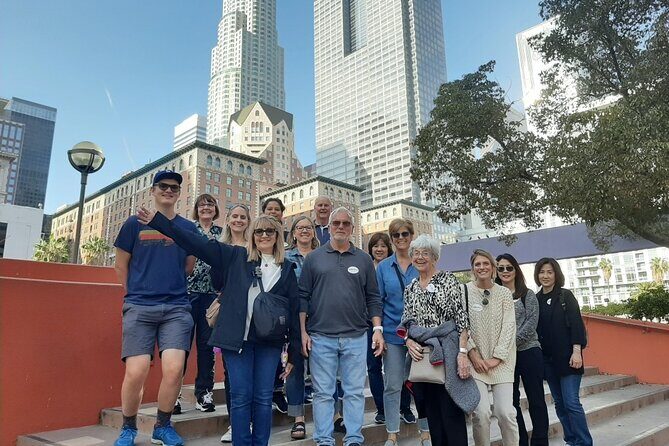
At $38 per person for about 2 hours, you’re paying for two main things: expert storytelling and the time-savings of having someone point out what matters in each block. That value gets stronger because several stops are free to view (like Grand Central Market, Bradbury Building, the Old Bank District, the Jewelry District, Spring Arcade Building, Biltmore Los Angeles, and Pershing Square).
Two stops have admission not included: the Historic Theater District and Clifton’s Republic. If those are priorities for you, you’re likely to enjoy the tour even more because you’ll already understand what you’re looking at when you choose to pay to go inside or stop for food.
So the math is pretty straightforward: for most people, the guided route + multiple free highlights is a good deal, and the only extra you might face is optional spending at the two not-included stops.
Your route in plain English: where you start and where you end
You start at 349 S Hill St, Los Angeles, CA 90013, and the tour begins at 1:30 pm. You finish at 532 S Olive St, Los Angeles, CA 90013, right by Pershing Square, where the guide can point you in the right direction for the next step. It’s roughly a 5-minute walk back to the starting area, depending on where you’re coming from and where you want to go afterward.
This ending matters. Pershing Square is one of those natural hubs in Downtown LA. When the walk is done, you’re not stranded across town—you can keep exploring nearby or head toward transit without the stress of re-planning your day.
Also, you get a mobile ticket, which is handy in LA when you’re hopping between places on foot and public transport.
Stop-by-stop: what each place adds to the big picture
Shortcut to Downtown history: Grand Central Market (since 1917)
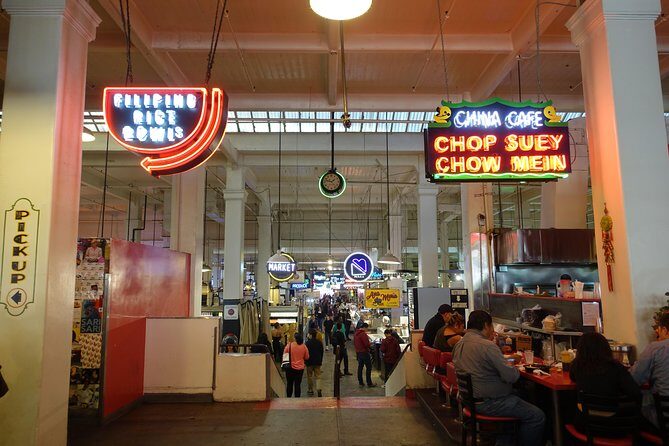
Grand Central Market is where the tour wakes you up. It’s historic (dating back to 1917), and it’s not a museum vibe. This is a working market, so you feel like you’re looking at Downtown through the lens of everyday life.
Even if you don’t buy anything, you’ll learn fast why markets like this helped anchor Downtown growth. It also works as a strong first stop because it’s easy to orient yourself. You can start noticing street patterns, building styles, and the way businesses cluster around foot traffic.
A nice practical win: this stop is admission free, and it’s only about 10 minutes, so you get context without losing time.


The Historic Theater District: pre-WWII grandeur, with time to look
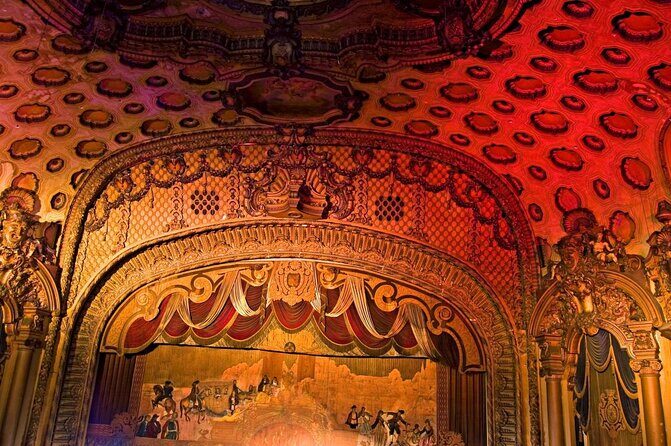
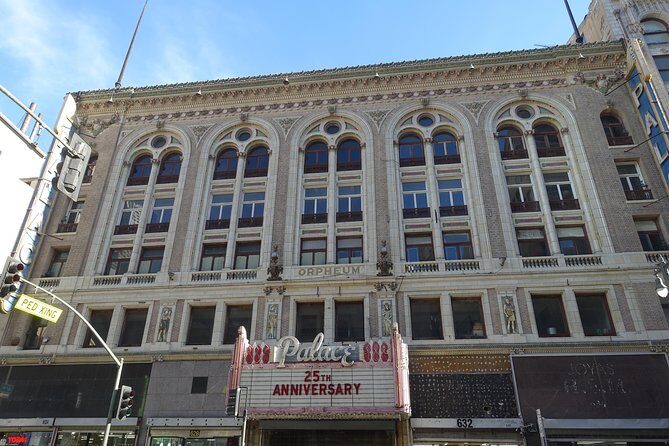
Next comes the Historic Theater District, where the tour focuses on LA’s classic entertainment buildings. This area is described as the largest collection of pre-WWII theaters in America, and you’ll see how that era shaped Downtown’s architecture and pedestrian flow.
This is a great place for people who like architecture, street photos, and that feeling of walking past something that’s older than most modern neighborhoods. The only catch is that admission isn’t included here, so if you want to go inside a specific theater, you may need to pay separately.
The stop is about 20 minutes, so expect to do more outside viewing and quick landmark spotting than long indoor wandering.
Bradbury Building: the oldest office building stop where the movie magic feels real
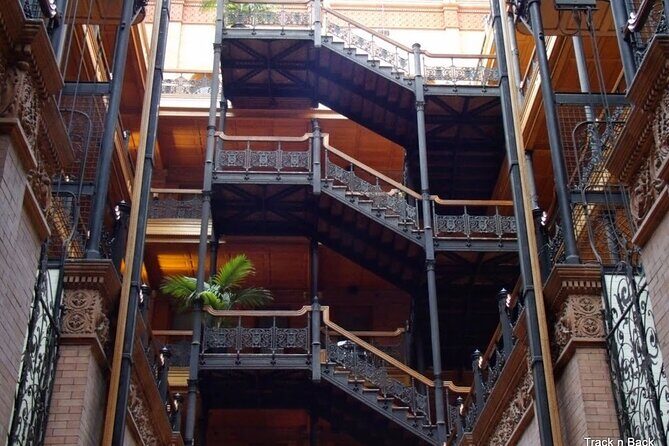
The Bradbury Building is the tour’s signature “wait, wow” moment. You’re told it’s the oldest standing office building of Los Angeles, and the way the stop is described suggests you’ll actually step into the building, not just stand across the street.
Why this matters: when you experience an older interior space, the stories become physical. You see how the building’s design guided movement, light, and attention long before modern Downtown renovations. It also shows how LA’s “old Downtown” wasn’t just about warehouses and banks—it was also about workplaces and the people who moved through them.
This stop is admission free and about 10 minutes. If you care about architecture, this is the one you’ll remember later.
Old Bank District and Spring Street of the West: where money shaped the street
From the Bradbury Building, the walk moves into the Old Bank District, often associated with Spring Street of the West. This is where the tour helps you connect the dots between financial power and the physical city.
Think of it like this: if you want to understand why Downtown looks the way it does, you can’t skip the era when banks, offices, and speculative development drove construction. The tour’s focus here is on that transformation—what was built, why it was built, and how Spring Street became a kind of symbol.
This stop is about 25 minutes, admission free, and it’s long enough that the guide can explain what you might otherwise miss—details in facades and the way street-level design reflects that old economic purpose.
Artistic bookstore stop: a quick palette cleanser
There’s also a brief stop at an artistic bookstore. It’s shorter, more of a wandering break than a deep historical stop, but it’s a good change of pace. Downtown LA days can feel like a test of your attention span. This kind of small detour helps you reset.
Time here isn’t specified in the itinerary beyond being listed as a stop, but in a 2-hour tour, it’s likely meant to be quick: enough to glance, maybe grab a book, then keep moving.
Jewelry District: America’s largest jewelry district
Then you hit the Jewelry District, described as America’s largest jewelry district. This is where Downtown feels practical and active. The tour approach here shifts from landmark storytelling to a more working-neighborhood feel—what the district does today and how that connects to Downtown’s history as a place of commerce.
This stop is about 10 minutes and admission free. If you like seeing how Downtown still functions beyond being photographed, you’ll appreciate this part. It helps the tour feel less like a theme park and more like a real block-by-block snapshot.
Spring Arcade Building: boutique dining in a classic setting
Next is the Spring Arcade Building, with the tour highlighting boutique restaurants inside the arcade space. Arcades are the kind of architecture that feels easy to overlook if you’re rushing through Downtown, so I like that the route explicitly includes it.
The practical benefit: if you’re the type who likes planning future meals, this stop gives you a shortlist of places to return to later. It’s also admission free and about 10 minutes, so you get the architecture and the vibe without it turning into a long detour.
Clifton’s Republic: an iconic cafeteria pause (with admission not included)
Clifton’s Republic is a recognizable kind of Downtown stop: an iconic cafeteria setting first associated with 1932. This is one of those places where you might want a snack, a break, or just time to soak in the feel before you walk again.
The trade-off is that admission isn’t included. If you just want the visual cue and quick explanation, you can treat it like a short photo and storytelling stop. If you want the food experience, you’ll likely pay on site.
Stop length is about 5 minutes, which signals it’s meant as a quick classic Downtown moment rather than a full meal break.
Biltmore Los Angeles: the grand hotel finale before the walk ends
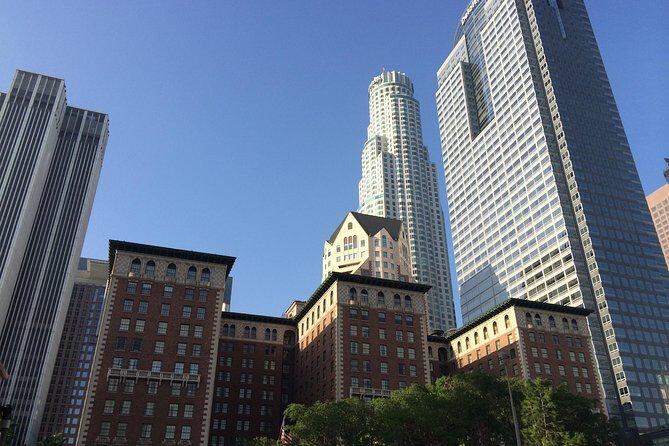
The route continues to the Biltmore Los Angeles, described as the grandest hotel in Los Angeles. Even if you don’t go in, the exterior and surroundings matter because it shows how Downtown hospitality and prestige played a role in LA’s growth.
This stop is admission free and about 10 minutes. It’s a nice emotional reset before the tour ends. You go from markets and commerce to a more ceremonial, “Downtown at its formal best” feeling.
Pershing Square: your easy exit point
Finally, you reach Pershing Square, where the tour ends. Pershing Square is LA’s central square, and ending here makes a lot of sense. You’re in a place where it’s easy to keep moving: transit, rideshare pickup, nearby attractions, and just general Downtown energy.
This stop is about 10 minutes and admission free. The guide can point you the right way afterward, and you’re only about a 5-minute walk back toward the starting area.
Pace, comfort, and who this fits best
This is listed as most travelers can participate, and it’s also described as family-friendly and stress-free. The stop durations are short enough that most people don’t feel dragged along, and the pacing seems designed to keep you from overheating or losing focus.
One review theme that’s worth listening to: the guide makes an effort to plan for shade and seating opportunities, which is a real comfort factor in LA. If you’re older, bringing kids, or you just don’t want a marathon walk, this format sounds like the right kind of walking tour for you.
A smart packing tip: wear comfortable shoes. It’s only about 2 hours, but it’s still Downtown—lots of curb edges, short bursts of standing, and continuous walking.
The guide matters more than people expect
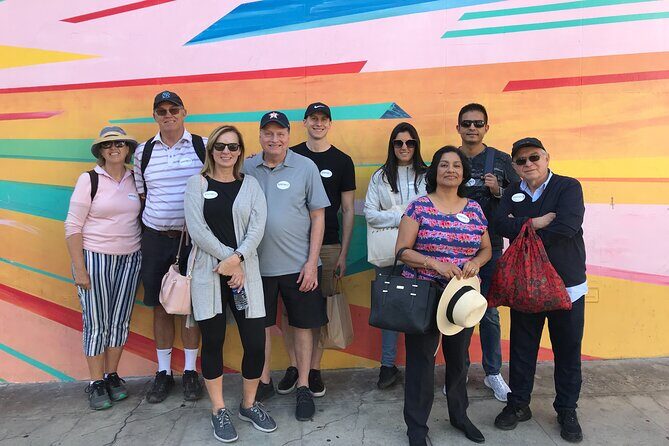
The reason this tour keeps landing near-perfect ratings is simple: the guide makes the architecture understandable. Phil in particular is repeatedly described as friendly, approachable, and deeply passionate about LA’s history and buildings.
That kind of guide energy matters at places like the Bradbury Building and the Old Bank District, where details aren’t obvious unless someone points them out. On a self-guided walk, you can get photos. With a guide, you also get the why.
Should you book the Old and New Downtown Los Angeles Walking Tour?
If you’re visiting LA for the first time, or you want a fast way to get your bearings, I’d book it. For $38, you get a structured walk through Downtown’s most famous “old LA” landmarks, plus working neighborhoods like the Jewelry District—so you leave with a sense of both the past and the present.
I’d also book if you like architecture and street-level storytelling, because the itinerary is built for exactly that. And if you’re traveling with family, the short stops and relaxed pacing make it easier for kids and adults to stay engaged.
Skip or adjust expectations if you’re looking for a tour that’s mostly inside buildings with long admission-time breaks. This tour includes several outdoor viewing moments and quick entry stops, and a couple of places have admission not included—so your total spend may rise if you want to go deeper at the theater district or Clifton’s Republic.
FAQ
FAQ
How long is the Old and New Downtown Los Angeles Walking Tour?
It’s about 2 hours.
What does the tour cost?
The price is $38.00 per person.
Where do I meet, and where does the tour end?
You start at 349 S Hill St, Los Angeles, CA 90013, and end at 532 S Olive St (near Pershing Square), where the guide can point you in the direction.
Is the ticket mobile?
Yes, the tour uses a mobile ticket.
Are there admission fees during the tour?
Some stops are free, but the Historic Theater District lists admission not included, and Clifton’s Republic also lists admission not included.
How big is the group?
The tour has a maximum of 20 travelers.
Do I need good weather?
Yes. The experience requires good weather, and if it’s canceled due to poor weather, you’ll be offered a different date or a full refund.