REVIEW · LOS ANGELES
Ghost Hunt in Hollywood: Self-Guided Haunted Puzzle Walk
Book on Viator →Operated by Questo · Bookable on Viator
Boo, but make it self-paced. This no-guide ghost hunt has you solving Hollywood puzzles while you wander landmark after landmark. You can start any time, pause when you want, and even play offline.
What I like most is the phone-only setup: there’s no human contact, which keeps the experience comfortable and avoids the usual crowd-pressure. I also like the flexibility—your pace controls everything, and you can take breaks without losing your place. One drawback to keep in mind: the game can run long for some people, and a few clue sections may feel frustrating if the prompts don’t match what you’re seeing in the moment.
In This Review
- Key Highlights at a Glance
- Ghost Hunt in Hollywood Without a Guide: A Different Kind of Night Out
- Price and Timing: Is $7.18 Worth Your Time?
- Start Anywhere, Pause Anytime: How the App Experience Works
- Where You Begin and Where You Finish (and Why the Ending Matters)
- Stop 1: Hollywood and Vine and the Challenge to Look Around
- Stop 2: The Hollywood Knickerbocker Hotel Story Behind the Spanish Revival Look
- Stop 3: Hollywood Boulevard’s Prospect Avenue Past
- Stop 4: Pantages Theatre and the Idea of the Last Big Venue
- Stop 5: Grauman’s Egyptian Theatre and the First Hollywood Premiere
- Stop 6: El Capitan Theatre and Spoken Drama Fever
- Stop 7: Musso & Frank, the Old Hollywood Restaurant Stop
- Stop 8: Grauman’s Chinese Theatre (TCL Chinese Theatre) on the Walk of Fame
- Stop 9: Hollywood Roosevelt Hotel and the VIP-Builder Connection
- Stop 10: Catherine Hardwicke’s Tribute to Multi-Ethnic Women
- Stop 11: Lucky Strike Hollywood for a Historical Bar Break
- Stop 12: Parisian Florist, the Route’s Finish Line Since 1924
- Best Time to Go: Night Walking Makes the Spooky Part Feel Right
- What Can Go Wrong: Pace, Clues, and the Need for Patience
- Who Should Book This Self-Guided Ghost Hunt?
- Bottom Line: Should You Book This Ghost Hunt in Hollywood?
- FAQ
- Do I need an in-person guide?
- Can I play this offline?
- How long does the Ghost Hunt take?
- Can I start at any time and pause?
- Where do I start and end?
- What language is it in?
Key Highlights at a Glance
- Self-guided with no physical guide so you control the pace and the mood
- Offline play means you can explore without hunting for cell service
- Start any hour, pause anytime with a flexible app flow
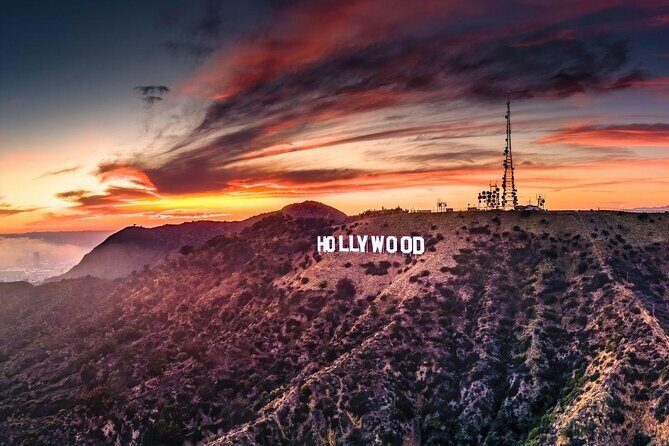
- Hollywood landmark route spanning movie palaces, historic hotels, and classic streets
- Night-friendly experience that helps you dodge harsh daytime sun
- Puzzle-based storytelling that turns iconic buildings into answers, not just photos
Ghost Hunt in Hollywood Without a Guide: A Different Kind of Night Out
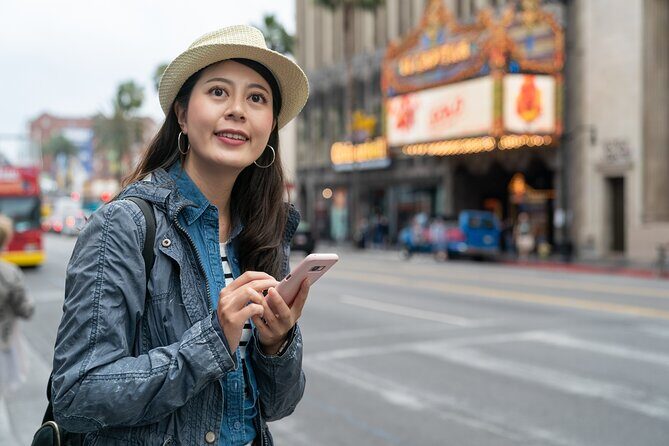
This is the kind of Hollywood activity that doesn’t rely on someone herding you from stop to stop. Instead, you use your phone to follow step-by-step directions and answer prompts hidden around key places in Hollywood. The spooky theme is the wrapper; the real fun is the slow, curious walk as you piece together what you’re looking at.
Because there’s no tour guide, the experience feels casual. You can take a minute to read, backtrack, or just stand and look up at facades and signage. That matters in Hollywood, where the details are often on the buildings themselves—not in a big open-air museum way.
And since the activity is designed for offline play, it’s easier to treat it like a real walk through a real neighborhood. You’re not stuck waiting for coverage.
You can also read our reviews of more walking tours in Los Angeles



Price and Timing: Is $7.18 Worth Your Time?
At $7.18 per person, this is priced like an impulse-friendly add-on, not a major-ticket production. For that money, you’re buying two things: a route through well-known spots and a puzzle format that keeps you moving with purpose.
Time-wise, it’s listed at about 1 hour 30 minutes, but you should plan for it to stretch. In practice, your pace controls everything. If you read closely, stop for photos, or get stuck on a clue, it can take longer. Some people even report it running close to four hours, so don’t schedule tight dinner plans right after.
If you want a quick Hollywood hit and you enjoy interactive scavenger-hunt style challenges, the value is strong. If you’re the type who wants a strict, narrated itinerary and you dislike troubleshooting puzzles, you might feel a little underpowered here—there’s no guide to rescue you on the spot.
Start Anywhere, Pause Anytime: How the App Experience Works
The Questo app is the engine here. You get a mobile ticket, and you’re guided step by step to the finish point. The key practical perks are:
- You can start when you like and keep going at your own pace
- You can take a break and resume later
- The experience is available 24/7, every day
- You can play offline, so you don’t need constant data while walking
This setup is great if you’re juggling jet lag, a late arrival, or you just don’t want your vacation day sliced into someone else’s schedule. It also helps if you’re traveling with people who have different comfort levels with walking time—one of you can pause while the other keeps going, as long as you both stay within your app progress.
One more practical note: your phone is your map, your game board, and your progress tracker. Keep it charged and consider a small power bank if you’re doing this at night.
Where You Begin and Where You Finish (and Why the Ending Matters)
You start at 1704 Vine St, Los Angeles, CA 90028. That’s in the Hollywood and Vine area, right where Hollywood Boulevard and Vine Street feed into the star-studded corridor.
You finish at Parisian Florist, 7133 W Sunset Blvd, Los Angeles, CA 90046. That ending location is meaningful because it’s not just another “back to the same spot” close. You’re effectively walking a route across multiple movie-era landmarks and landing in a more lived-in pocket of Hollywood rather than the busiest intersection.
Do note: some people describe the finish as a little odd or unexpected. If you like clean round-trips, plan your ride or next activity with the ending point in mind, not the starting one.
Stop 1: Hollywood and Vine and the Challenge to Look Around
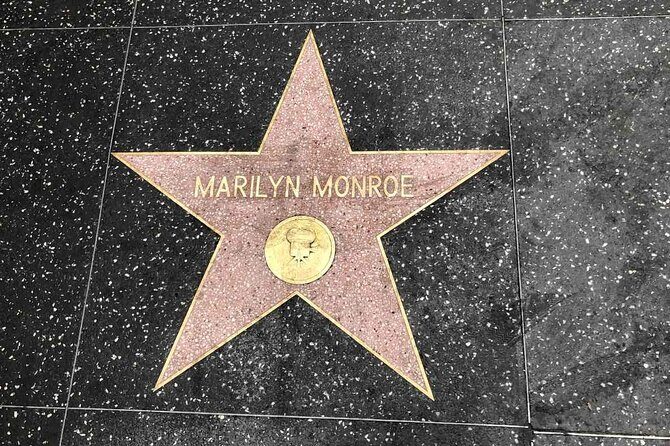
You begin around Hollywood and Vine, the intersection tied to the 1920s wave of radio and movie-related businesses. It’s also the center area for the Hollywood Walk of Fame.
Here’s what the puzzle format changes: instead of strolling for photos, you’re forced to slow down and scan. That’s when you start noticing how Hollywood’s fame machine is built into the street layout—what’s close together, what’s visible from the sidewalk, and what you’d miss if you were only passing through.
Tip: at your first stop, keep your eyes moving between building details and street-level cues. Early puzzles are where you learn the game’s rhythm.
You can also read our reviews of more guided tours in Los Angeles






Stop 2: The Hollywood Knickerbocker Hotel Story Behind the Spanish Revival Look
Next you’re headed to a building tied to the Security Apartments project. It was designed in 1923 by architect E.M. Frasier in the Spanish Colonial Revival style. It never opened as intended, but it was completed in 1929 and rechristened the Hollywood Knickerbocker Hotel in June 1929.
This stop is a good example of how the game turns a “pretty building” into an answer location. You’re not just walking past a facade—you’re looking for the story embedded in the place.
Practical idea: if you’re stuck, don’t only scan one face of the building. Many street puzzles can be solved from a specific angle, so try shifting your position slightly rather than giving up.
Stop 3: Hollywood Boulevard’s Prospect Avenue Past
Hollywood Boulevard had an earlier identity: it was originally named Prospect Avenue until 1910, when Hollywood (created by H.J. Whitley) was annexed by Los Angeles.
That annexation changed street numbering—from 100 Prospect Avenue at Vermont Avenue to 4600 Hollywood Boulevard.
This kind of trivia might sound dry in a normal tour. In a puzzle, it’s different. The point becomes: Hollywood’s modern fame sits on top of older planning decisions, and the street name itself is part of the mystery.
If you like history but hate lecture-style delivery, this stop is your sweet spot.
Stop 4: Pantages Theatre and the Idea of the Last Big Venue
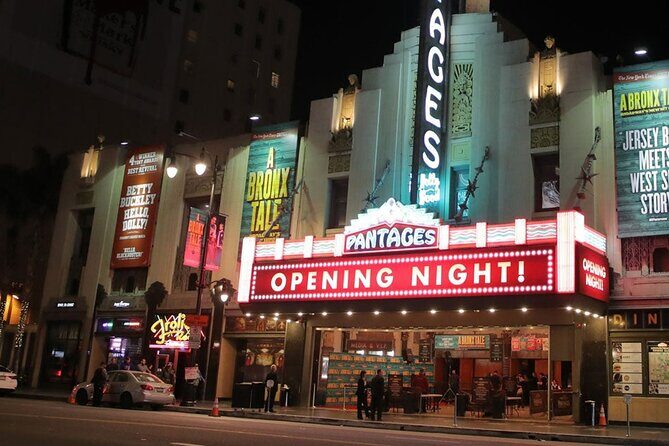
Then you reach the Pantages Theatre, which opened on June 4, 1930. It has a couple of “lasts” tied to Hollywood’s entertainment boom: it was the last movie palace built in Hollywood and also the last venue erected by vaudeville circuit owner Alexander Pantages.
In real life, movie palaces tend to look grand from the outside, but you might not know what era you’re standing in. This puzzle push helps you connect the architecture to the timeline.
If you do this at night, you’ll likely get better photos too, since marquee and facade lighting tends to look more dramatic after dark.
Stop 5: Grauman’s Egyptian Theatre and the First Hollywood Premiere
At Grauman’s Egyptian Theatre (6706 Hollywood Blvd), you’re looking at a theater that opened in 1922 and is an early example of the lavish movie palace style. It’s also noted as the site of the first-ever Hollywood film premiere.
This is one of those places where the exterior details are the whole game. Egyptian-themed design is distinctive, and you’ll naturally pay attention because the building wants your attention.
If you’re doing this in heat, taking a slower look here is worth it. The Egyptian Theatre stop is a good place to re-orient yourself and confirm your app cues.
Stop 6: El Capitan Theatre and Spoken Drama Fever
The El Capitan Theatre opened on May 3, 1926, debuting with The Charlot Revue of 1926. The opening made headlines, including a Los Angeles Sunday Times banner: Dazzling Opening For Hollywood’s First Home of Spoken Drama. The venue went on to produce more than 120 live productions.
The puzzle format helps you do something many people skip: you stop and consider what “spoken drama” meant in that era. A theater wasn’t just a building—it was a technology shift and a social event.
When you pause here, do it for a minute. This stop rewards patience.
Stop 7: Musso & Frank, the Old Hollywood Restaurant Stop
You then hit the restaurant opened in 1919, named for Joseph Musso and Frank Toulet. It’s described as the oldest restaurant in Hollywood, sometimes called the genesis of Hollywood.
This is the only food-flavored cultural stop in the route. Even if you don’t go in, it gives you a natural break point. If you’re doing this in the evening, a restaurant stop can also make the experience feel more like a night out than a chore.
If you’re in a hurry, just know that a longer game plus a quick drink or bite could nudge you past the 1.5-hour expectation.
Stop 8: Grauman’s Chinese Theatre (TCL Chinese Theatre) on the Walk of Fame
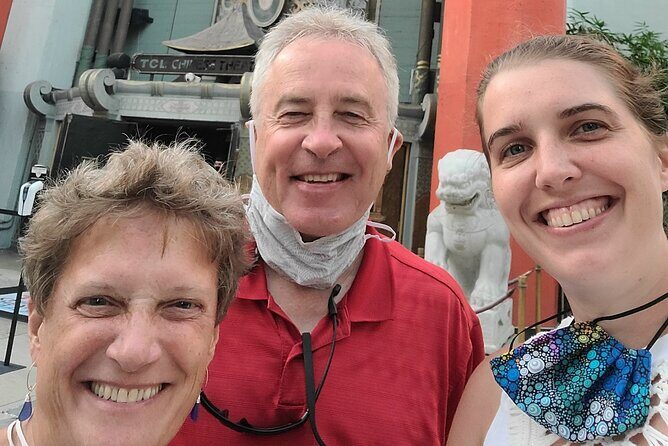
Next is Grauman’s Chinese Theatre, also branded as TCL Chinese Theatre, at 6925 Hollywood Blvd. The original Chinese Theatre was commissioned after the success of the nearby Grauman’s Egyptian Theatre.
This stop is a “recognize it instantly” moment. The puzzle angle is useful because it shifts you from landmark admirer to detail-seeker. That’s what makes the haunted theme work without needing any actors or scripted jump scares.
Practical move: if you want cleaner photos, step slightly back from the densest area and then re-approach based on where the app is prompting you to look.
Stop 9: Hollywood Roosevelt Hotel and the VIP-Builder Connection
At the Hollywood Roosevelt Hotel, the details are celebrity-adjacent in a real way. It opened May 15, 1927, financed by a group including Douglas Fairbanks, Mary Pickford, and Sid Grauman. The hotel is named for President Theodore Roosevelt and has hosted generations of VIPs from the Golden Age to modern stars.
This stop is valuable because it adds a human storyline to all the architecture. Hollywood’s movie palaces and hotels weren’t just buildings; they were part of the network that made fame possible.
In a self-guided format, that kind of story helps you feel like you’re learning something instead of just completing steps.
Stop 10: Catherine Hardwicke’s Tribute to Multi-Ethnic Women
You’ll also encounter a tribute originally designed by Catherine Hardwicke for the idea of a tribute to the multi-ethic women of Hollywood.
The puzzle here turns a public art message into a reason to slow down. If you enjoy modern interpretive pieces and not only classic-era architecture, this stop balances the route.
Because the exact structure name isn’t provided in your route details, approach it as a “look around and identify what the game is asking about” moment rather than trying to pre-label it in your head.
Stop 11: Lucky Strike Hollywood for a Historical Bar Break
Then you reach Lucky Strike Hollywood, described as a great place to grab a drink because the bar is considered a piece of Hollywood history.
Even if you skip the drink, this stop signals that you’re getting closer to the finish. It’s also a good moment to decide if you’re continuing at full pace or switching to a slower wander.
This is where the ghost theme can feel fun rather than stressful: you’re finishing the walk, and the “spookiness” becomes part of the overall vibe of Hollywood at night.
Stop 12: Parisian Florist, the Route’s Finish Line Since 1924
Finally, the hunt ends at Parisian Florist. The route notes it as a Hollywood-based flower shop with historical roots, proudly serving since 1924.
Finishing at a working business has a nice realism. You’re not ending at a museum gate or an empty plaza. You’re ending in an actual storefront world, which makes the last steps feel grounded.
If you’re planning transportation, this is the critical point: get your rideshare or transit plan aligned with Sunset Blvd near the finish, not with Vine Street.
Best Time to Go: Night Walking Makes the Spooky Part Feel Right
One clear practical tip: this works better at night. A review highlights that a nighttime visit helps you avoid walking under summer’s scorching sun. That makes sense here because you’re out on sidewalks for long enough that heat can change the experience from fun to fatigue.
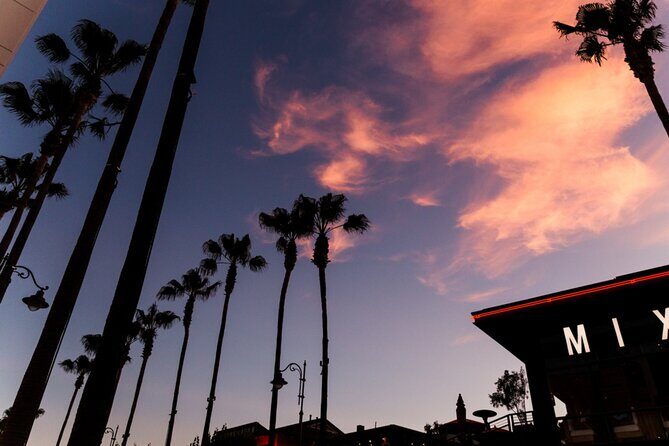
Night also suits the theme. Without actors and without a guide, the spooky vibe relies on the city feeling like itself after dark—lights, shadows, and that Hollywood “something’s happening” atmosphere.
If you can, plan for early night hours so you’re not rushing through the puzzle while dark catches you by surprise.
What Can Go Wrong: Pace, Clues, and the Need for Patience
This activity is low-contact and flexible, which is great. But puzzles can be unpredictable, and that comes up in the feedback.
A key consideration is that the experience may take longer than the estimate. If you’re the kind of person who reads every detail and enjoys photos, give yourself extra time. Build in buffer so the game doesn’t end up feeling rushed.
Another issue to watch for: some clue sections can be spotty. One negative experience describes clues needing an update and the game not being finishable, requiring contact with support. That doesn’t mean it will happen to you, but it does mean you should start with the mindset that you’re solving a puzzle in a real outdoor environment, not playing a flawless indoor escape room.
To protect your evening:
- Start with a charged phone
- Give yourself more than 90 minutes
- If something feels off, try changing your walking angle and viewpoint before assuming the clue is broken
- Stay calm and treat it as part of the adventure
Who Should Book This Self-Guided Ghost Hunt?
Book it if you want:
- A cheap, interactive way to see Hollywood landmarks
- A self-paced experience that fits your timing
- An option that avoids crowds since there’s no guide and no group herding
- A puzzle format that turns the street into the story
Skip it (or think twice) if you:
- Hate puzzles and want straight narration
- Need a guide to fix confusion in real time
- Have very limited time and can’t afford a potentially longer route
Bottom Line: Should You Book This Ghost Hunt in Hollywood?
For the price, this is a fun experiment in seeing Hollywood as a puzzle, not a checklist. I like that it stays phone-simple with offline play and flexible timing, and it’s a smart choice if you prefer to wander on your own schedule.
I’d only hesitate if you’re extremely time-limited or if you know you get stressed when clues don’t match what’s in front of you. If that sounds like you, plan extra time and treat the route as a flexible night walk with brain-teasing stops.
If you want an easygoing haunted adventure through classic movie landmarks—without booking a guide—this one fits.
FAQ
Do I need an in-person guide?
No. This is a self-guided experience with step-by-step instructions through the app and no physical tour guide involved.
Can I play this offline?
Yes. The experience can be played offline, so you do not need an internet connection while exploring.
How long does the Ghost Hunt take?
It’s listed at about 1 hour 30 minutes, but your personal pace can make it shorter or longer.
Can I start at any time and pause?
Yes. You have full flexibility to start any hour, take a break, and resume later.
Where do I start and end?
Start: 1704 Vine St, Los Angeles, CA 90028.
End: Parisian Florist, 7133 W Sunset Blvd, Los Angeles, CA 90046.
What language is it in?
The experience is offered in English.