REVIEW · LOS ANGELES
Downtown Los Angeles History and Architecture Walking Tour
Book on Viator →Bookable on Viator
DTLA doesn’t move slowly. It grows in layers, and this walking tour reads those layers like a story. The guide uses architecture and film history together, so you stop seeing buildings as backdrops and start seeing them as clues about how Los Angeles changed.
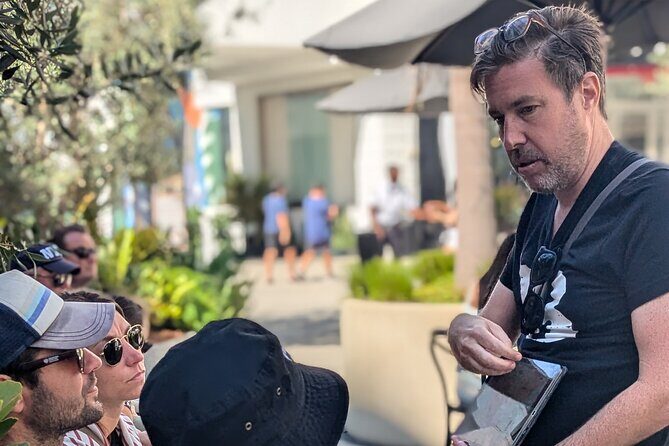
I especially like the small-group feel—you can ask questions and compare ideas as you walk. I also love the design-and-story approach, where the walk connects practical urban details (space, style, repurposing) to the movie-world that made the area famous.
One thing to think about: this is a lot of walking with limited sit-down time, and downtown streets can be noisy. If you prefer long photo breaks or frequent rest stops, plan your timing and stamina before you go.
In This Review
- Key things you’ll notice on this walk
- DTLA in 150 Minutes of Architecture and Film Lore
- Grand Central Market and Angels Flight: LA’s Everyday Rhythm
- Pershing Square and Bunker Hill Steps: From Civic Center to City Symbol
- Broadway’s Theater District: Where Movie Palaces Shaped the World
- Bradbury Building and the Interior-Loving Stops
- Continental Building and El Dorado Lofts: Beaux-Arts Meets Art Deco
- The Last Bookstore, Clifton’s, and Why DTLA Keeps Reinventing
- Los Angeles Theatre and the Tower Theatre Talkies Era
- Spring Street to the Arcade: Radio, Retail, and Small-Scale Industry
- Jewelry District and Fashion District: Craft Work and Creative Output
- Eastern Columbia Lofts and Hotel Per La: Style You Can Walk Through
- Price, Pace, and Who This Tour Fits Best
- Tips to Get More From the Walk (Without Burning Out)
- Should You Book This Downtown DTLA Architecture and Film Tour?
- FAQ
- How long is the Downtown Los Angeles History and Architecture Walking Tour?
- How much does the tour cost?
- What language is the tour offered in?
- How many people are on the tour?
- Where does the tour start and end?
- Is admission included for the stops?
- Is parking included?
- What’s the cancellation/refund approach if plans change?
- Does it require good weather?
Key things you’ll notice on this walk
- A guide with global perspective: Belgian background and years living in China, plus a DTLA podcast mindset
- Movie-palace history on the street, tied to specific buildings you can actually see
- Architecture explained in plain language, focused on how forms and spaces shape real life
- Repurposing is the theme, from theaters turned retail to lofts turned residences
- Mostly free stops like Grand Central Market, Bradbury Building area sights, and iconic theater exteriors
- Max 15 people means more chance to talk than on big group buses
DTLA in 150 Minutes of Architecture and Film Lore
Downtown Los Angeles is hard to “get” from a car window. On foot, you notice how neighborhoods re-arrange themselves—old civic spaces, new commerce, and the occasional building that refuses to fade. This tour leans into that reality by linking architecture to the film industry and the city’s constant reinvention.
What makes it work is the guide’s way of talking about places. The focus isn’t a wall of dates. It’s how style, street layout, and building purpose shape what happens next—culturally and economically.
And yes, you’ll still get plenty of storytelling about the movie world. But it’s not only about Hollywood fame. It’s about how DTLA became a production-ready backdrop, then how those same spaces survived long after the cameras moved.
You can also read our reviews of more walking tours in Los Angeles



Grand Central Market and Angels Flight: LA’s Everyday Rhythm
You start at Grand Central Market, a food hall that opened in 1917 and still feels like a local meeting point. The tour frames it as LA’s melting pot in microcosm: tacos next to Japanese ramen, pupusas alongside Jewish pastrami. Even if you don’t eat, it sets the tone—this city runs on mixing cultures, not isolating them.
From there, you head toward Angels Flight. It’s often described as the world’s shortest railway, built in 1901. The funicular is small—more like a charming neighborhood lifeline than a major transit system—but it carries big emotional weight because it connects to the Bunker Hill community’s past.
Practical note: you’ll likely get a short moment to appreciate the ride as a piece of city engineering history. Don’t expect a long stop with lots of lingering. This is a pacing tour, not a hangout.
Pershing Square and Bunker Hill Steps: From Civic Center to City Symbol
Pershing Square is the next mindset shift. The walk treats it like more than a park with events—it’s a public square that keeps changing, like other major gathering points across the world. The comparisons made on the walk (think Puerta del Sol in Madrid or Tiananmen Square in Beijing) help you notice that plazas are political tools as much as they are social spaces.
Then you move into the Bunker Hill area. Those iconic steps are explained as a metaphor for LA’s climb: a wealthy residential zone that transformed into a cultural and financial district. The point isn’t that the story is sad or happy. It’s that LA keeps reassigning meaning to the same streets.
If you like cities where the present feels layered, this segment is a good payoff. You start to see why Downtown’s skyline and sidewalk scenes can feel both glamorous and awkward in the same hour.
Broadway’s Theater District: Where Movie Palaces Shaped the World
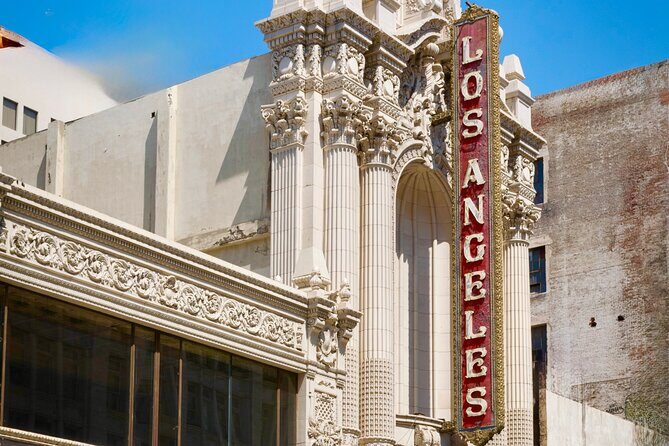
The Historic Theater District is the tour’s film highlight stretch. Broadway’s concentration of movie palaces is explained as a time capsule of Hollywood’s early years—LA’s version of London’s West End or New York’s Broadway, but with its own architectural personality.
One stop centers on Sid Grauman’s early movie palace connection: the Million Dollar Theater. The emphasis here is on the idea that architecture sold the experience, not just the plot. Lavish design and clever concept made cinemas feel like destinations, and that influence traveled well beyond Los Angeles.
You’ll also get a look at the Broadway area’s big-ticket interiors from the outside perspective. Even when you can’t wander freely inside, the storytelling makes it feel less like a drive-by and more like stepping into an era.
This is a good moment to bring your “cinema brain.” Watch for how the buildings frame the street. That framing is a big part of why theaters became so powerful.
Bradbury Building and the Interior-Loving Stops
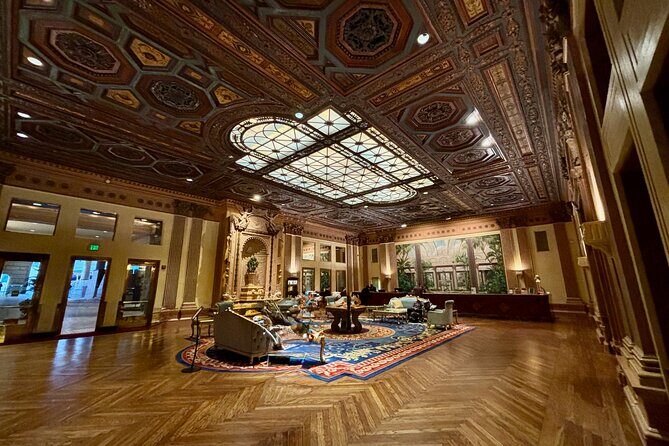
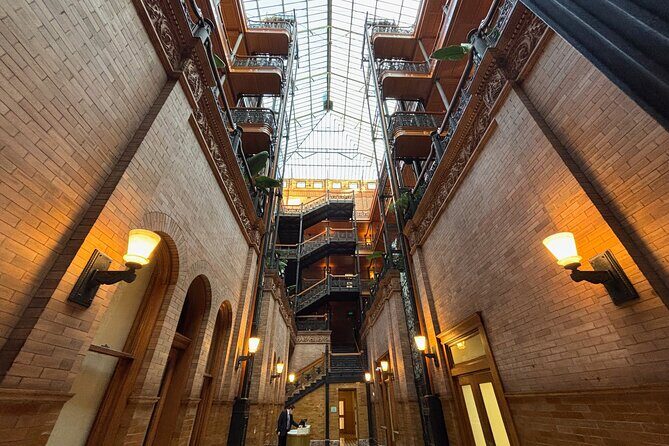
The Bradbury Building is one of those places that makes you slow down without trying. The tour highlights its open atrium, wrought-iron staircases, and that ghostly light effect that’s been used in films like Blade Runner. The architecture here is the show, even before you talk about movies.
You don’t need to be an architectural historian to enjoy it. The guide’s point is visual: the building’s structure creates movement, sightlines, and a sense that the city has a second world inside it.
From there, the walk heads into the Old Bank District on Spring Street. This portion is Beaux-Arts grandeur in a business setting—often compared to Wall Street imagery. The tour positions it as ambition made visible, plus proof that finance and design grew up side-by-side in early Downtown.
If you’ve only seen DTLA from modern billboards, this section helps you rebuild the mental map.
You can also read our reviews of more historical tours in Los Angeles
Continental Building and El Dorado Lofts: Beaux-Arts Meets Art Deco
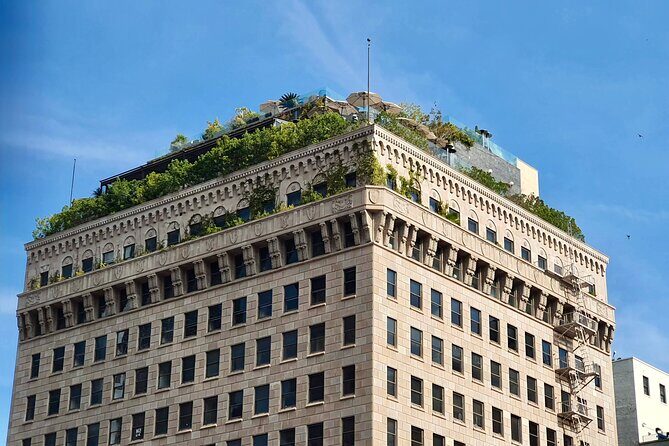
The Old Bank District also sets up two distinct “era languages.”
The Continental Building (completed in 1904) is tied to LA’s early skyscraper push. The guide emphasizes Beaux-Arts architecture and why those early high-rises mattered. They weren’t just tall—they were statements that Downtown wanted to compete with older East Coast financial centers.
Then the tour shifts to El Dorado Lofts, originally built as a luxury hotel in 1913. This is where the architectural style storytelling gets fun: Art Deco and Nouveau elements, ornate terra cotta with floral and geometric patterns, and a link to the wider global Art Deco movement. The comparisons used during the walk help you place LA’s design within a bigger international trend.
One of the most useful ideas here is repurposing. The same exterior that once sold luxury to hotel guests now frames loft living. You’re learning how the city saves its skins and changes its inside purpose.
The Last Bookstore, Clifton’s, and Why DTLA Keeps Reinventing
You’ll reach The Last Bookstore, opened in 2005. It’s described as part library, part art installation, with floor-to-ceiling shelves and that book tunnel that people love for photos. The tour doesn’t treat it as only an Instagram stop; it frames it as a creative space that mixes rare books, vinyl records, and local art.
Next comes Clifton’s. The tour shares the origin story: Clifton’s Cafeteria started in 1931 and helped during the Great Depression by offering free meals to anyone in need. Today it’s themed and playful—tree decor, enchanted forest style, and hidden tiki bars.
The practical value of this stop is how it teaches you to read culture in a building’s behavior. Food halls and themed restaurants can still carry historical meaning. They’re not just entertainment; they’re community memory in a modern wrapper.
Los Angeles Theatre and the Tower Theatre Talkies Era
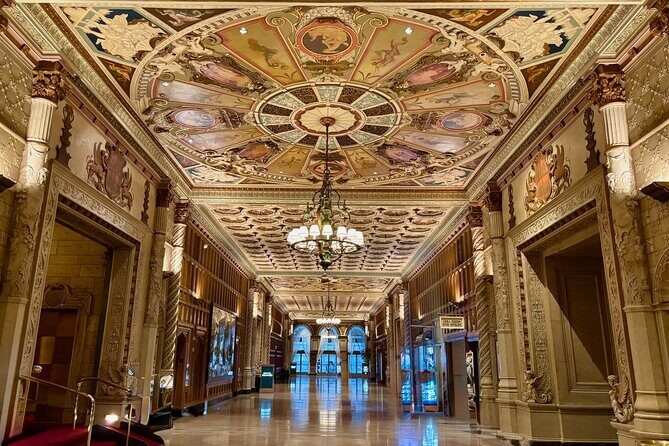
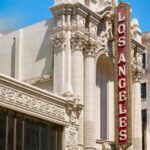
The Los Angeles Theatre is one of those venues where you feel the “movie premiere” idea in your body. Built in 1931 for the premiere of Charlie Chaplin’s City Lights, it’s presented as a Golden Age crown jewel with crystal chandeliers, gold leaf accents, and grand marble stairs. The guide compares the effect to European opera houses like the Palais Garnier, which is a useful mental shortcut.
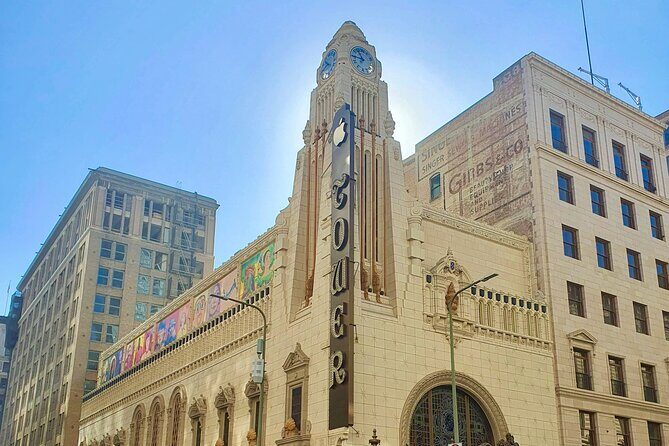
Then you move to the Apple Tower Theatre area, built in 1927. This stop is all about talkies: it was the first Los Angeles theater designed to screen synchronized-sound films, with The Jazz Singer mentioned as the debut film that changed movie-going forever.
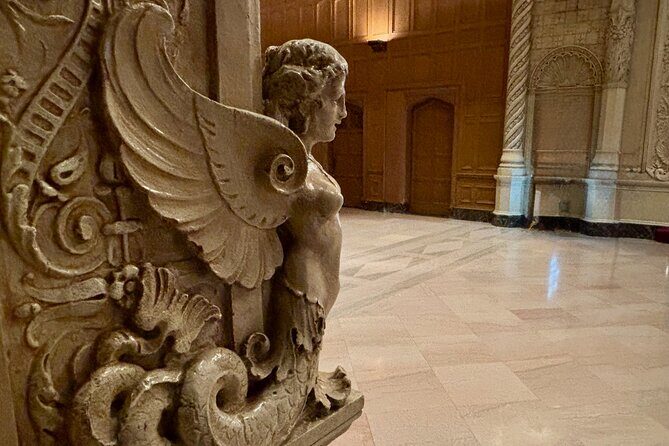
The tour also connects the space to film language. The Spanish Renaissance Revival design—stained glass, carved details, vaulted ceilings—gets tied to the Silencio scene in David Lynch’s Mulholland Drive. The point isn’t just trivia. It’s how theatrical architecture can shape mood and perception so strongly that movies reuse it as a kind of dream machine.
Today the space is an Apple flagship store. That adaptive reuse is a huge theme of the tour, and it’s one you’ll carry into the rest of the walk.
Spring Street to the Arcade: Radio, Retail, and Small-Scale Industry
Another useful pivot is the Arcade Building, completed in 1924. The tour describes it as a shopping arcade that once housed studios and offices tied to LA’s radio industry. Today it’s a mix of trendy eateries and boutiques, but the guide points out why that history matters.
You get to see how Downtown shifts sectors without deleting buildings. Even when the tenant changes, the interior rhythm—corridors, arcade feel, foot traffic patterns—keeps doing its job.
This is also where the tour’s pace stays intense. Stops are short, so keep an eye out for details as you pass. If you want photos, plan to take them quickly and move on.
Jewelry District and Fashion District: Craft Work and Creative Output
Downtown’s economy isn’t only finance and film. The tour swings into the Jewelry District, described as covering 12 blocks and being the largest jewelry district in the United States. The roots trace back to the 1920s, and the guide’s Antwerp diamond connection adds an interesting human angle.
This isn’t presented as glitter alone. The explanation centers on craftsmanship, entrepreneurship, and how the district fits into the global jewelry trade.
Then you roll into the Fashion District. The tour positions it as the backbone of LA’s design industry for decades. It’s less about postcard glamour and more about textiles and streetwear creativity—design work that starts in a block and later shows up everywhere.
If you’re a style person, you’ll enjoy this segment because it treats fashion as labor, not just aesthetics.
Eastern Columbia Lofts and Hotel Per La: Style You Can Walk Through
The Eastern Columbia Lofts are the stop where color and iconography do most of the talking. Built in 1930 in an Art Deco style with turquoise terracotta tiles and a clock tower, they’re compared to the Chrysler Building. The guide adds celebrity intrigue through well-known residents, including Johnny Depp.
Then you finish at Hotel Per La, an Autograph Collection property. The building’s origin story is tied to the Bank of Italy era, later evolving into Bank of America. The tour frames the structure as a symbol of Italian immigrant aspirations and success in America, which makes the building’s grandeur feel personal rather than just decorative.
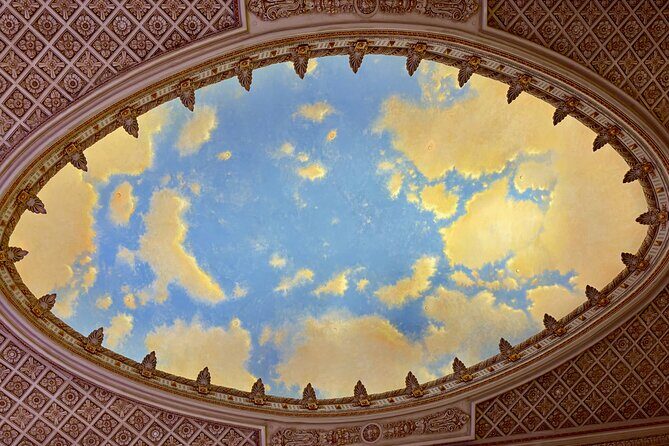
Now the space operates as a boutique hotel with a restored gold ceiling and marble columns in the lobby. For many people, this last stop turns the tour’s theme into a practical takeaway: adaptive reuse can preserve beauty while giving the building a new daily purpose.
You end near the 7th Street / Metro Center area, one block from the Metro station serving Metro lines A/B/D/E. That’s a convenient way to keep your day moving once the walk finishes.
Price, Pace, and Who This Tour Fits Best
This costs $35 per person, running about 2 hours 30 minutes. With a group maximum of 15 and a local guide included, it’s a value play for people who want architecture and film storytelling without paying for a private van or a museum ticket spree.
Most stops listed are ticket-free experiences, so you’re mainly paying for interpretation and guided context, not entry fees. That helps the price pencil out, especially if you’re the type who likes to learn while you walk rather than sit in one place.
The pace is best for people with at least moderate physical fitness. You’ll cover a lot of Downtown terrain in one go, and the schedule doesn’t sound built around long rests. It’s also worth knowing that the guide avoids microphone amplification, because a mic can add noise downtown; that choice can matter if you have trouble hearing in crowded streets.
English is the offered language, and service animals are allowed. If you’re planning your day around public transit, this tour’s start and finish connect well with Downtown Metro access.
Tips to Get More From the Walk (Without Burning Out)
1) Wear shoes you trust. This is a long sidewalk day, not a short stroll.
2) Plan one bathroom buffer. The tour includes many quick stops, and you may not get much time for breaks.
3) Bring your “photo speed.” For iconic interiors and facades, you’ll want to shoot, then move.
4) Give the guide your questions early. Small group size means you can steer the conversation a bit.
5) If you care about cinema references, keep a small note of the films mentioned. City Lights, Blade Runner, and Mulholland Drive appear in the story thread.
One more thought: downtown can be loud. If you’re sensitive to noise or have hearing needs, consider arriving a bit early so you’re in position for clearer conversation.
Should You Book This Downtown DTLA Architecture and Film Tour?
Book it if you want a walking route that connects architecture, urban change, and film history without turning DTLA into a lecture. The stops are varied—food hall, funicular, plazas, theater district, interiors like the Bradbury Building, then artsy and commercial districts—so the day doesn’t feel one-note.
Skip it if you’re mainly chasing technical architecture detail, a long museum-style sit-down experience, or a route with frequent rest breaks. A few people may find the hearing and long-walk pace challenging in downtown noise.
If you like cities as living documents—where buildings get reused, identities shift, and movie culture leaves physical fingerprints—this tour is a strong match.
FAQ
How long is the Downtown Los Angeles History and Architecture Walking Tour?
It’s about 2 hours 30 minutes (approx.).
How much does the tour cost?
The price is $35.00 per person.
What language is the tour offered in?
The tour is offered in English.
How many people are on the tour?
It has a maximum of 15 travelers.
Where does the tour start and end?
It starts at Grand Central Market Parking Garage, 308 S Hill St, Los Angeles, CA 90013, and ends at Hotel Per La, Autograph Collection, 649 S Olive St, Los Angeles, CA 90014.
Is admission included for the stops?
The stop descriptions list admission ticket free for the locations on the route.
Is parking included?
Parking fees are not included.
What’s the cancellation/refund approach if plans change?
Free cancellation is available up to 24 hours in advance for a full refund. If canceled less than 24 hours before the start, the amount paid is not refunded.
Does it require good weather?
Yes, it requires good weather. If it’s canceled due to poor weather, you’ll be offered a different date or a full refund.