REVIEW · LOS ANGELES
The History and Architecture of Downtown Los Angeles
Book on Viator →Operated by See LA in a Day · Bookable on Viator
Angels Flight flips your mental map of LA. This tour is built around DTLA’s history and architecture, with a tight route that links Bunker Hill, the Civic Center, the Historic Core, and Little Tokyo. I especially love that you start with an included ride on Angels Flight, then keep rolling into major landmarks without wasting time.
The other thing I like: you actually get to eat your way through the story, with a traditional snack stop at Fugetsu-Do and a final visit to Grand Central Market’s food hall vibe. One thing to consider is that the route focuses heavily on the Japanese and downtown development arc; if Plaza Olvera and early Spanish/Mexican history are high on your must-see list, you may feel the gap.
In This Review
- Key things I’d circle before you book
- Why Angels Flight sets the tone for Downtown LA
- What you get for $39.20 in 3 hours
- Bunker Hill’s art stops: MCA and The Broad
- Gehry’s curves at Walt Disney Concert Hall
- City Hall and Grand Park: how LA grew up
- Little Tokyo: the food and the markers you’d miss
- St. Vibiana, Movie Palaces, and the Bradbury’s magic light
- Spring Street’s bank district: walking an architectural timeline
- The Last Bookstore and the old vault story
- Grand Central Market to end strong
- Is the guide the real reason this works?
- Should you book this Downtown LA history and architecture tour?
- FAQ
- How long is the Downtown Los Angeles history and architecture tour?
- What is the price, and what’s included?
- Where does the tour start?
- How big are the groups?
- Is the tour offered in English?
- Are the museum stops free?
- Is the tour affected by weather?
Key things I’d circle before you book
- Angels Flight ride included to set the stage for Bunker Hill’s Victorian story
- Free art stops in Bunker Hill (MCA and The Broad) plus big-architecture storytelling
- Frank Gehry’s Walt Disney Concert Hall explained in plain terms
- Little Tokyo snack time at Fugetsu-Do with mochi tied to local history
- Historic movie palaces + classic LA interiors (Million Dollar Theater, Bradbury Building)
- Food finish at Grand Central Market plus a peek into an old bank building at The Last Bookstore
Why Angels Flight sets the tone for Downtown LA
The best part of this tour is how it trains your eyes. You start at Angels Flight Railway, LA’s short and steep funicular that connects to Bunker Hill’s older Victorian neighborhood life. In a few minutes, the guide connects the little ride to the bigger city pattern: how this area changed shape, class, and ambition over time.
From there, you’re not just looking at buildings. You’re learning what kind of LA each street wanted to become next. That matters in downtown, because it can feel like you’re seeing random structures unless you have a guide threading the timeline.
Also, starting at 341 S Hill St keeps things simple. It’s an easy launch point for a walk-heavy day, and the tour ends right back where it began.
You can also read our reviews of more historical tours in Los Angeles
What you get for $39.20 in 3 hours
This isn’t a huge-ticket tour, and the pricing makes sense because a couple of the stops would cost money on their own. You pay $39.20 per person, and the Angels Flight admission is included, along with a snack stop in Little Tokyo. On top of that, several major stops are listed as free-entry during the walk.
So you’re really paying for context and routing, not just for doors opening. A good downtown architecture tour is like a map for your camera: you learn what to look for, where the “why” lives, and which details are worth slowing down for.
Timing is tight by design. Expect about 3 hours total with short, purposeful stops. The group size is capped at 15, so you’re not stuck in a giant herd.
Bunker Hill’s art stops: MCA and The Broad
Bunker Hill is where downtown flexes its brain. After the Angels Flight ride, you head up the hill to two major art stops with free entry: the Museum of Contemporary Art and The Broad.
The Museum of Contemporary Art visit is short, but it’s aimed at one big idea: the architecture itself. You’ll hear about the Pritzker Prize-winning architect behind the building and how that architect’s early challenges shaped their thinking. Even if contemporary art isn’t your thing, the building story gives you a reason to pay attention.
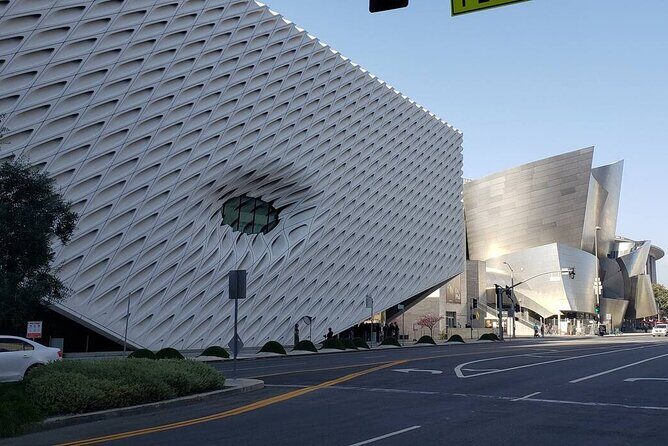
Then you move to The Broad, another free-entry stop with standout pop art collections. You’ll also get the pronunciation lesson—yes, really—because downtown guides know that small things help you remember the big ones. The guide also talks about what’s planned next for the museum, so you’re not just seeing the present.
A practical note: these stops are brief, so bring curiosity, not deep museum stamina. This tour is about connecting dots, not doing a full gallery day.
Gehry’s curves at Walt Disney Concert Hall
Next comes one of LA’s most recognizable architectural signatures: the Walt Disney Concert Hall. The guide’s focus here is straightforward—Frank Gehry’s style and why the building looks the way it does.
This stop works even if you’re not an architecture nerd. The story behind the making of the hall is described as just as interesting as the building itself, which is a smart approach for most people. You get the “how” and “why,” not only the photo-op.
And because Gehry is Gehry, you’ll probably find yourself looking at the metal surfaces and angles longer than planned. That’s the point: downtown rewards attention, but only if someone tells you what your eyes should be hunting for.
City Hall and Grand Park: how LA grew up
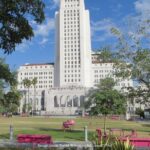
The tour then shifts from art to civic identity at City Hall, walking right through Grand Park. This section is where you start understanding downtown as a political and administrative engine—not just a backdrop.
You’ll learn how LA grew from a small town (the tour uses the figure of 44) into a city of millions. That number matters because it explains why downtown’s scale can feel so intense: these buildings weren’t added slowly as a hobby. They were built because the city’s role changed fast.
If you’ve ever wondered why some places feel power-heavy while others feel mostly commercial, this is the stop that answers it in plain terms.
Little Tokyo: the food and the markers you’d miss
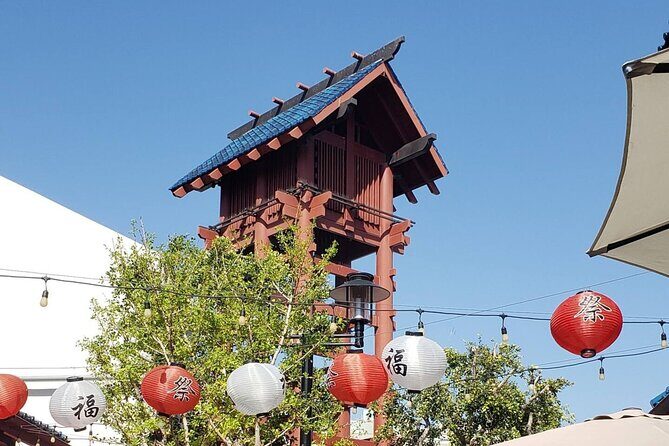
Little Tokyo is the part of the tour that makes downtown feel human. You spend about 30 minutes here, and the guide points out legacy businesses, historic markers, and strong restaurant picks. The goal is simple: leave with an understanding of how Japanese communities shaped California and how that history shows up in the neighborhood today.
The highlight is the stop at Fugetsu-Do, a family business that opened in 1903 and has lasted through major upheavals. You’ll sample mochi here, and the story connects the snack to the endurance of a real local institution—not just a food brand.
This is also where the guide’s personality shines. In past tours, the guide was described as funny and upbeat, and he’ll answer questions. If you like asking why things are where they are, Little Tokyo is a good time to do it.
One more small tip: wear something comfortable. You’ll be walking, and you’ll want your energy for the snack and marker stops.
St. Vibiana, Movie Palaces, and the Bradbury’s magic light
The tour then moves into older downtown bones and movie-era glamour.
First is Vibiana—St. Vibiana’s Cathedral from 1876. It’s a quick stop, but it’s an eye-opener: the tour shares that when it was built, nearly one-fifth of LA’s population could fit inside. That scale helps you picture how city life used to center around downtown religious and civic spaces.
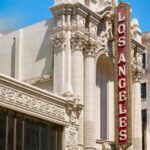
After that comes the Million Dollar Theater, described as part of Broadway’s collection of historic movie palaces still standing in the United States. You’ll hear about premieres hosted there, including Hollywood legends like Charlie Chaplin. Even if you don’t care about silent film trivia, the building’s grandeur makes sense once you understand its original purpose: downtown entertainment was a big deal.
Then you reach the Bradbury Building, a 1893 masterpiece. This is one of those places where the details make the whole experience. The guide focuses on the building’s story, and it’s the kind of stop where you’ll take longer photos than you expect.
Spring Street’s bank district: walking an architectural timeline
Downtown’s financial history is best read on foot, and this tour uses Spring St. like a textbook. As you progress, the building styles shift in ways that feel like time travel: iron and steel, then Beaux Arts, then Art Deco.
The tour frames it as LA’s early-20th-century wealth and ambition. That context helps you see why certain facades look the way they do. You stop treating architecture like decoration and start treating it like language.
If you like noticing transitions—materials changing, ornament changing, height changing—this stretch is where you’ll feel most rewarded.
The Last Bookstore and the old vault story
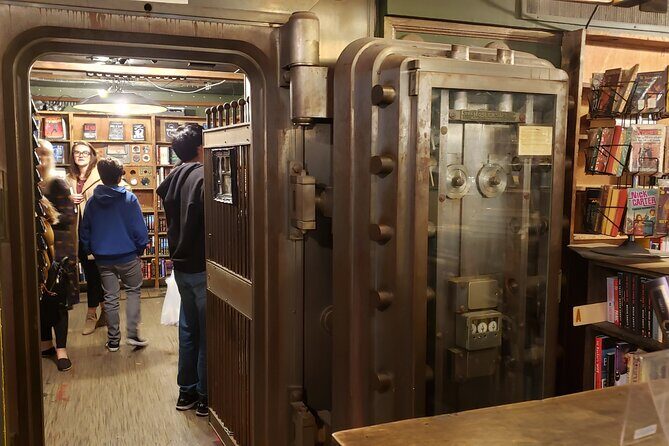
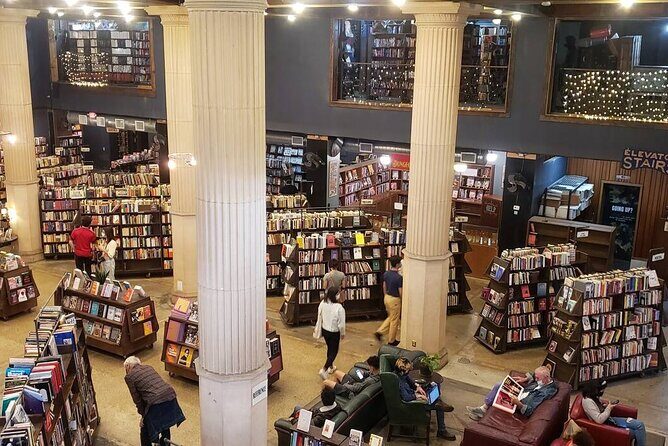
Next is The Last Bookstore, and this stop has two jobs: it’s a reader’s paradise, and it’s also a living piece of downtown history. You’ll learn that it was in an old bank building, and the tour shares secrets about the original vault.
Even if you’re not shopping for books, this is a great pause. It gives you a break from pure sightseeing while still connecting you to the city’s past. The stop also includes time for photos, which is useful because the building layout gives you angles you might not notice on your own.
Grand Central Market to end strong
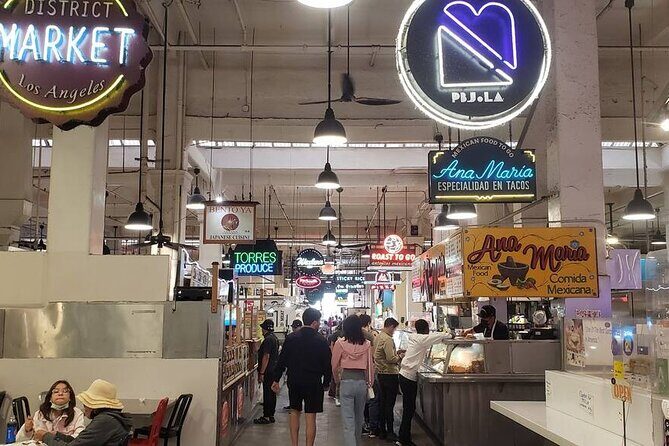
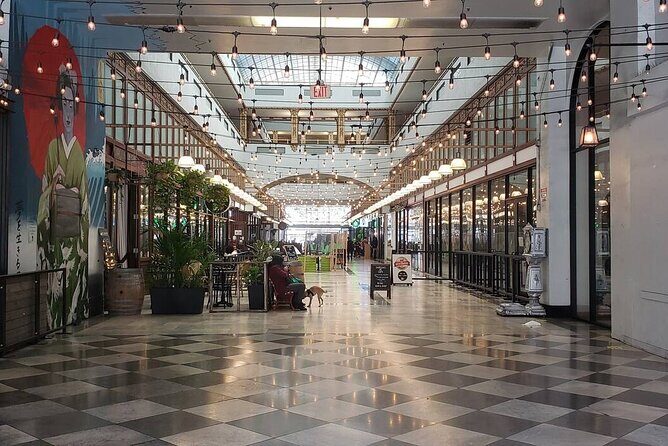
To finish, you head to Grand Central Market, a historic food hall operating for over 100 years. This is the right ending because it shifts from “history lesson” to “taste the present.” You get a short window to explore the stalls and enjoy the kind of food atmosphere that locals and visitors actually stick around for.
If you’ve been taking photos all afternoon, this is also a good reset. You can slow down, snack, and talk with the guide if you still have questions. The tour is structured with short museum-style stops, but the market stop is where you can breathe.
Is the guide the real reason this works?
This tour earns its high ratings largely because of the guide’s style. Past reviews describe Chris as friendly, high-energy, and willing to answer questions. You also get the sense that he tells the story in layers—using pictures and even humor to make details stick.
There’s also a very practical rhythm to the walk: stopping in the shade when needed, keeping a comfortable pace, and making sure everyone can keep up. That matters more than people think. A downtown architecture tour is only fun if you’re not constantly feeling rushed or stranded.
Should you book this Downtown LA history and architecture tour?
Book it if you want downtown to make sense fast. In about 3 hours, you’ll see Angels Flight, major civic buildings, free art stops, a classic church, historic movie palaces, the Bradbury Building, plus Little Tokyo food time and a Grand Central Market ending. The price is reasonable for what’s included, and the group size stays small enough to ask questions.
Skip it or pair it with something else if Spanish/Mexican-era downtown history is your top priority—this route is clearly weighted toward Japanese community history and the downtown development arc. You’ll still learn plenty about how LA grew, but you may not get the specific story you had hoped to focus on.
If you’re visiting LA for the first time (or you’re local but feel you only know the postcard version of downtown), this is one of the best ways to get your bearings on foot—then enjoy the neighborhood with smarter eyes.
FAQ
How long is the Downtown Los Angeles history and architecture tour?
The tour is about 3 hours.
What is the price, and what’s included?
The price is $39.20 per person. The Angels Flight Railway cost is included, and you’ll also have a traditional Japanese snack stop in Little Tokyo.
Where does the tour start?
The tour starts at 341 S Hill St, Los Angeles, CA 90013, and it ends back at the meeting point.
How big are the groups?
The tour has a maximum of 15 travelers.
Is the tour offered in English?
Yes, it is offered in English.
Are the museum stops free?
The Museum of Contemporary Art, The Broad, and the other listed museum-related stops are marked as free-entry during the tour.
Is the tour affected by weather?
Yes. The experience requires good weather. If it’s canceled due to poor weather, you’ll be offered a different date or a full refund.