REVIEW · LOS ANGELES
Los Angeles: Battleship Iowa Museum Ticket
Book on GetYourGuide →Operated by Battleship IOWA Museum · Bookable on GetYourGuide
Big guns, small spaces, real presidential history. The Battleship USS Iowa Museum gives you a close-up look at the ship behind the Battleship of Presidents nickname, plus a fun Vicky the Dog scavenger hunt that turns a history stop into an activity.
I especially love how you can stand near the hardware—like the turret area with a 16-inch 50-caliber Mark 7—then walk level by level to see how sailors lived. The second big win is the mobile app route, which makes it easier to follow what matters without feeling rushed. One consideration: expect lots of steps, ladders, and narrow passageways, so it may feel tight if you have mobility or stamina limits.
In This Review
- Key Things That Make This Ticket Worth Your Time
- Battleship of Presidents: What You’re Really Touring
- Getting There in San Pedro: Where You Start and What to Expect
- Boarding the Ship: Safety Briefing and the First Views
- Turret One Up Close: The 16-inch Mark 7 Moment
- Captain’s Cabin and FDR’s Bathtub: History With a Human Reason
- 03 Level Flag Bridge and Conning Tower Armor
- 05 Level CIWS Replicas and the Ship’s Defensive Thinking
- Main Deck Fantail Views and Outdoor Wildlife Stops
- Vicky the Dog App Scavenger Hunt: How to Use It Well
- Comfort and Practical Tips: Shoes, Steps, and a Sane Pace
- Who This Works Best For
- Should You Book the Battleship USS Iowa Museum Ticket?
- FAQ
- How long is the Battleship Iowa Museum experience?
- Is this a self-guided tour?
- What is the Vicky the Dog scavenger hunt?
- Do I need headphones for the app?
- What shoes are allowed?
- Is the museum open rain or shine?
- Are indoor areas open right now?
- Where is the meeting point?
Key Things That Make This Ticket Worth Your Time
- Battleship of Presidents context that actually connects the dots as you move around the ship
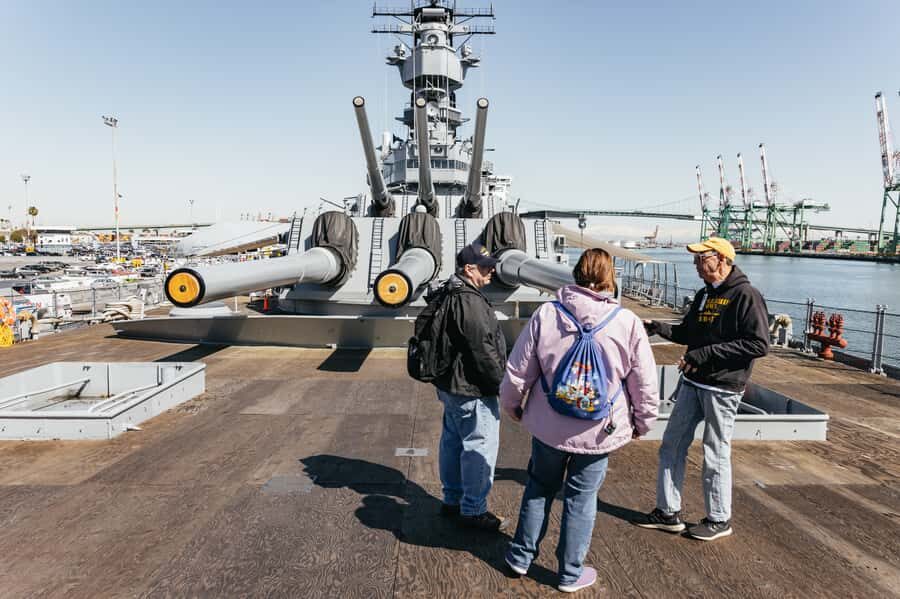
- Up-close views of major armament, including the 16-inch 50-caliber Mark 7
- Stops that personalize history, like Franklin D. Roosevelt’s custom-built bathtub
- A route that’s easier to follow thanks to floor guidance like yellow arrows
- Vicky the Dog adds a scavenger hunt layer for kids and adults who like puzzles
- Outdoor water-views where you might spot seals, ducks, and possibly dolphins
Battleship of Presidents: What You’re Really Touring

The USS Iowa is famous for one simple reason: it’s tied to presidents in a way that sticks in your head. You’ll hear that story while you’re on board, and the route is arranged so the ship’s roles make sense as you go—weapon systems, command areas, and daily life all sit next to each other instead of feeling like separate exhibits.
I like that you don’t just read plaques. You get to stand where things happened. The quarter deck start gives you a feel for scale and structure right away. As you move forward on the sloped deck and notice the ship’s graceful, narrow lifted bow, you start understanding how this machine was built for impact at sea, not just display on land.
And because this is self-guided with a built-in app scavenger hunt, you control your pace. If you’re a WWII buff, you’ll savor the details. If you’re traveling with kids, you can keep them pointed toward the next clue instead of trying to hold their attention through hallways of text.
You can also read our reviews of more tours and experiences in Los Angeles



Getting There in San Pedro: Where You Start and What to Expect

Your day begins at the Battleship IOWA Museum at 250 S Harbor Blvd, San Pedro, CA 90731. The ship sits in a working harbor setting, so your visit has that “real place, real history” feel instead of a theme-park vibe.
A practical tip: the on-site parking is reported as large and easy to find, which matters in a busy area. Once you arrive, plan your time so you don’t feel rushed before you even step onboard. The ship visit is best when you can slow down at key areas—especially turret views, command spaces, and the spots where the app prompts you to look closer.
Also note the museum is open rain or shine, so bring a light layer even in mild weather. The experience can be calm and educational on a drizzly day, and you won’t have to scrap your plan.
Boarding the Ship: Safety Briefing and the First Views
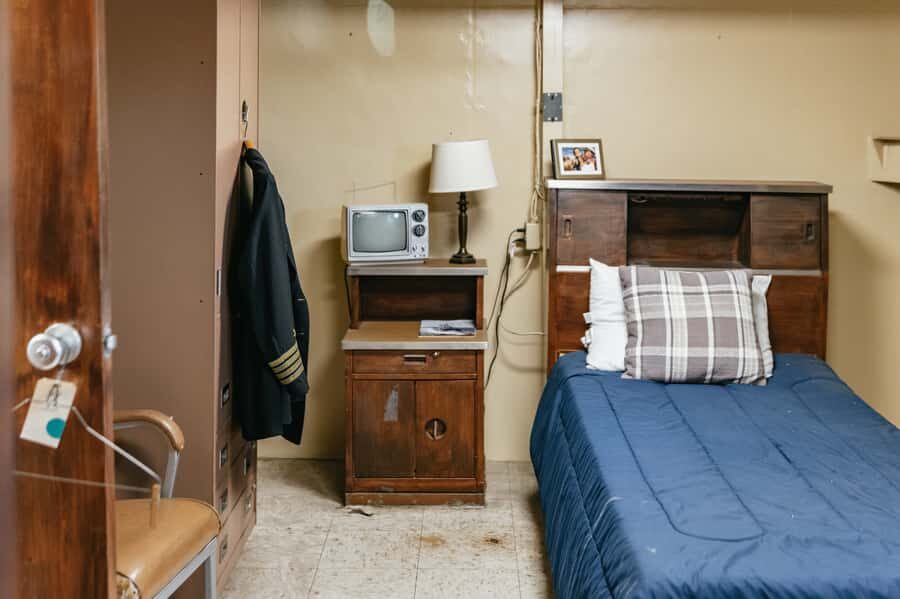
When you step onboard, you’re greeted on the quarter deck and given a safety briefing. That’s a big deal on a ship tour, because the layout is not like a museum building. You’ll be walking decks, passing railings, and moving through levels with changing ceiling heights and tight spaces.
This is also where you’ll start noticing the ship’s design choices: narrow walkways, sharp corners, and how the decks slope and step. That “tight but purposeful” feel makes the tour more realistic. It helps you understand why sailors trained the way they did and why certain areas were kept for specific roles.
After the briefing, the tour routes you forward to appreciate the bow shape and then toward a major focal point.
Turret One Up Close: The 16-inch Mark 7 Moment

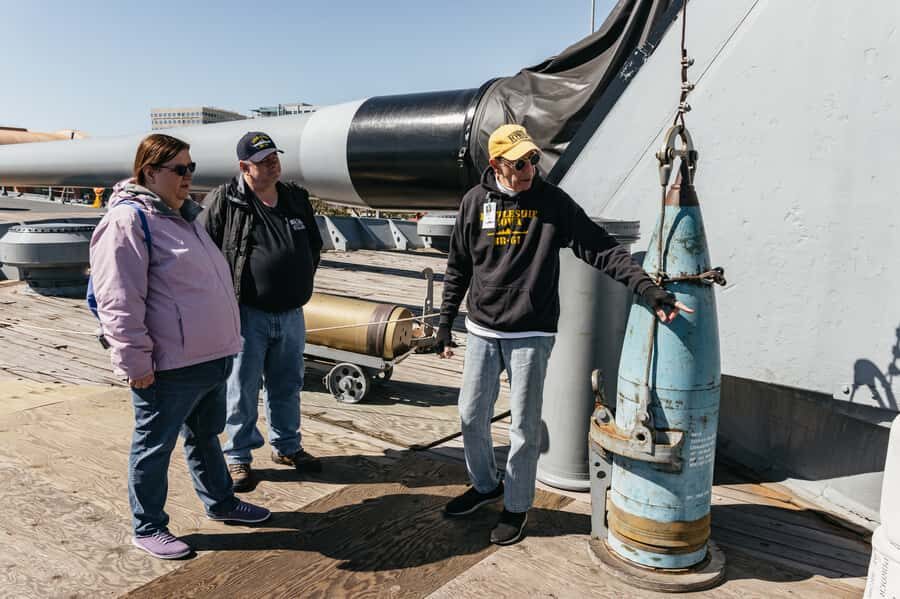
One of the best stops is standing in front of turret one for an up-close look at the barrel of a 16-inch 50-caliber Mark 7. It’s the kind of sight that changes your understanding instantly. You stop thinking of it as a picture or a concept, and start thinking of it as weight, engineering, and consequence.
If you’re the sort of person who likes to build mental “scale models,” this is your moment. You’ll be close enough to feel how huge the system is, which makes the rest of the ship’s layout easier to interpret. Even if you don’t know naval jargon, your eyes can do the learning here.
If you’re visiting with kids, this stop is often the anchor point for excitement. It gives them something concrete to point at while the rest of the tour brings in context.
Captain’s Cabin and FDR’s Bathtub: History With a Human Reason
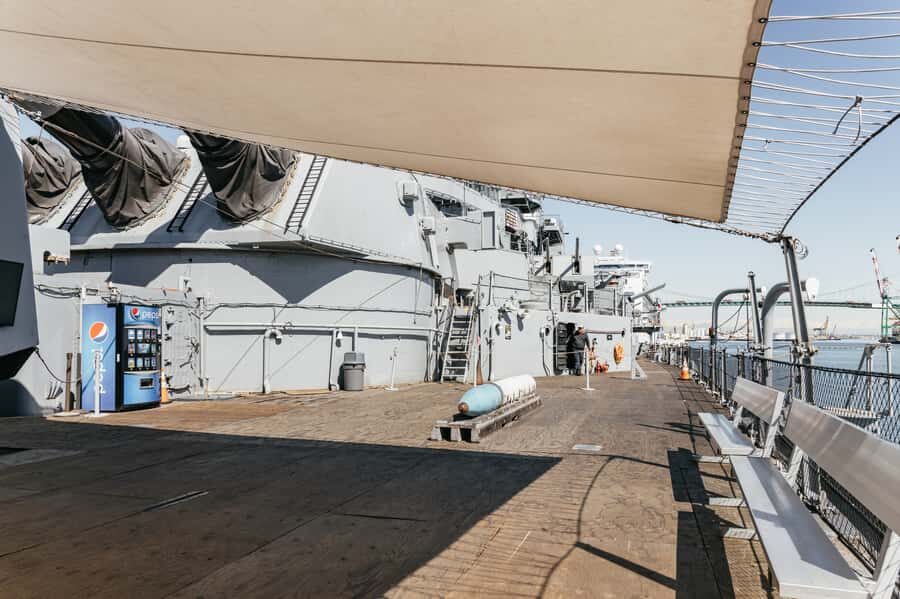
As you continue, the route leads you level above the main deck and into the captain’s cabin. This is where the museum shifts from hardware to people. You’ll also learn about president Franklin D. Roosevelt’s custom-built bathtub—the first aboard a USN vessel designed for him—built because he couldn’t take showers due to polio.
That detail matters because it makes the ship’s presidential connection feel personal instead of ceremonial. You’re not just hearing names; you’re seeing what someone needed to function while on board.
This section also helps you appreciate how command areas weren’t only about paperwork and maps. They were built around the reality of who was on the ship and how they lived with the ship’s constraints.
You can also read our reviews of more museum experiences in Los Angeles





03 Level Flag Bridge and Conning Tower Armor
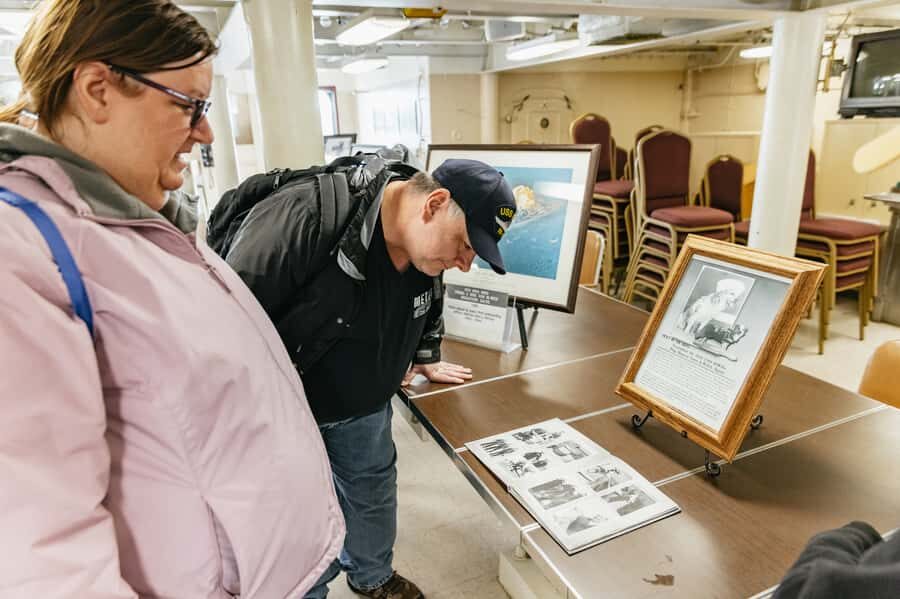
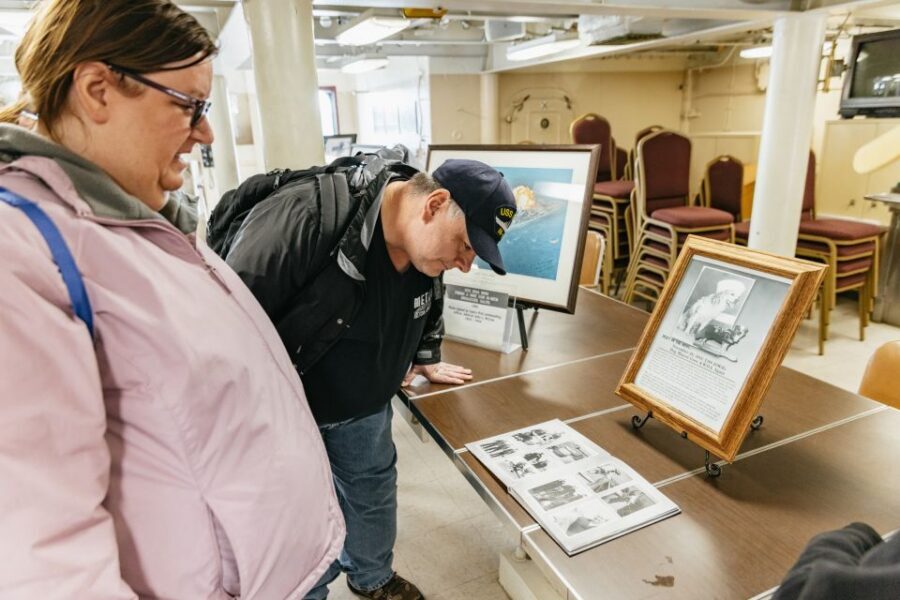
Next, you move to the 03 level flag bridge, where you’ll hear history of the ship and how command worked. You’ll also learn a standout detail: only Iowa’s 03 level conning tower was armored among the four ships of her class.
That kind of comparison is valuable because it turns the tour from “this ship has cool things” into “this ship had specific upgrades.” It gives you a reason to look harder at what you’re seeing. When you know that something is unique, you notice it instead of skimming past it.
Even if you’re not a technical history person, the command story tends to click, because you can connect it to the physical spaces you’ve already walked through—stairs, railings, and levels that would matter during operation.
05 Level CIWS Replicas and the Ship’s Defensive Thinking
As you head toward the stern on the 05 level, the museum brings you to replicas of the 20mm Phalanx CIWS guns. These sections are an important counterpoint to the big-gun fascination. They show the ship’s layered approach to defense, not just its dramatic offensive firepower.
If you’re used to seeing naval warships reduced to one iconic weapon, this part helps balance the picture. It teaches you that modern defense systems aren’t only about one moment. They’re about rapid response, constant readiness, and multiple layers working together.
From there, the route continues down to a narrower deck behind one of the 5-inch gun mounts. That narrowness is part of the learning. It’s a reminder that ships weren’t built for comfort. They were built for function.
Main Deck Fantail Views and Outdoor Wildlife Stops
When you reach the main deck, you’ll be able to walk around the large fantail. This outdoor space is a nice breather after the tighter interior sections. It’s also where the harbor setting adds an extra layer to your day.
The tour highlights include the chance to see seals, ducks, and possibly dolphins in the water. You shouldn’t count on wildlife, but if you’re there at the right time or the water is active, it can make the history feel even more real. You get to see the ship against the environment it was built for.
One more practical note: due to Covid-19, only the outdoor areas are accessible. So if you’re expecting to go everywhere indoors, adjust your expectations and focus on the decks and outdoor stops that are open.
Vicky the Dog App Scavenger Hunt: How to Use It Well

The self-guided tour includes free use of the award-winning mobile app and the Vicky the Dog scavenger hunt. This is more than a gimmick. It gives structure to your walking route and encourages you to notice things you might otherwise miss.
To get the most from it, come with a charged phone and plan to use headphones. Headphones are not included, so bring your own if you don’t want to miss audio prompts and added info. The app can also help keep kids engaged, turning the ship into a game of finding and learning.
If you like collecting small souvenirs or keepsakes tied to scavenger hunts, this experience can be especially satisfying. The museum has employed knowledgeable veterans in roles onboard, and that kind of firsthand explanation can make the human side of the ship feel more immediate—especially if a question pops up and someone answers on the spot.
Comfort and Practical Tips: Shoes, Steps, and a Sane Pace
This museum is a ship, not a carpeted walking tour. Expect lots of steps and ladders to reach different decks. That can be a challenge for anyone who needs more space, steadier footing, or fewer stairs.
Two other “don’t-get-caught” notes:
- Bring headphones since they’re not provided for the scavenger hunt app.
- Avoid open-toed shoes. The museum doesn’t allow them.
Also keep an eye on your energy level. It’s easy to burn out if you try to see every deck at full speed. My advice: pick your priorities. If your top goal is big weapons, spend more time around the turret stop and related areas. If it’s presidential history and command, slow down around FDR’s cabin and the flag bridge/conning tower areas.
If you’re sensitive to crowds, visit when you can take breaks. The ship’s layout doesn’t feel like one long line; it’s multiple pinch points and steps, so spacing out your pace helps.
Who This Works Best For
This ticket is a strong fit if you want hands-on history. You’ll get the most satisfaction if you enjoy:
- seeing real scale, especially around major weapon areas
- learning through physical layout, not only reading
- making history fun for kids with the app scavenger hunt
It also works well for families, because there’s a clear structure to follow and an activity layer that keeps younger visitors moving toward answers. It can be equally good for adults who are WWII history buffs, because the route gives you specific details at key stops instead of generic museum narration.
If you have mobility limits, plan carefully. The museum is listed as wheelchair accessible, but the ship environment still includes small spaces and ladders. If you’re bigger in stature or need wide paths, expect the going to be tight. This is one of those places where “accessible” and “easy” don’t always mean the same thing.
Should You Book the Battleship USS Iowa Museum Ticket?
If you want a memorable, educational day on a real ship, this ticket is good value for $29 per person. You’re paying for more than entry—you get a self-guided route, the Vicky the Dog scavenger hunt app, and a tour that keeps connecting big-picture history to specific, physical locations on the vessel.
Book it if you’re the type who likes to look closely, read what matters, and enjoy a bit of a walking challenge. Skip it or scale expectations if you can’t handle steps and ladders comfortably, or if you were hoping for a fully indoor, fully open ship experience (only outdoor areas are currently accessible due to Covid-19).
If you’re staying in Los Angeles and want one standout San Pedro stop that doesn’t feel like a quick photo opportunity, this is one of the better bets.
FAQ
How long is the Battleship Iowa Museum experience?
The ticket is valid for 1 day, and the tour is self-guided. Plan to use a good chunk of your day so you can slow down at the turret area and the presidential and command stops.
Is this a self-guided tour?
Yes. You explore the ship on your own, and the visit includes free use of the mobile app and the Vicky the Dog scavenger hunt.
What is the Vicky the Dog scavenger hunt?
It’s an app-based scavenger hunt included with your general admission. It adds prompts and information to help you follow along and make the visit more interactive.
Do I need headphones for the app?
Yes. Headphones are not included, and you should bring your own to use the scavenger hunt app.
What shoes are allowed?
Open-toed shoes are not allowed. Stick with closed-toe footwear you can walk in comfortably.
Is the museum open rain or shine?
Yes. The museum is open rain or shine.
Are indoor areas open right now?
Due to Covid-19, only the outdoor areas are accessible.
Where is the meeting point?
You start at the Battleship IOWA Museum, 250 S Harbor Blvd, San Pedro, CA 90731, USA.