REVIEW · LOS ANGELES
Self guided Driving Tour between LA and San Diego
Book on Viator →Operated by Tripvia Tours · Bookable on Viator
Six hours of coastal lore, at your pace. This self-guided LA-to–San Diego drive strings together coastal stops and quick, bite-size storytelling—without a clock forcing you along. You’re free to pause for whatever catches your eye, whether that’s a scenic pull-off or a quick photo break.
I particularly like the flexible pacing. You’re not tied to timed entry windows or a group herd. And at each stop, the narration keeps things moving with facts and little quizzes, so you’re not just staring at a map while the miles go by.
One consideration: the route following works best inside the tour app. If you try to use an external navigation app for faster highways, you can end up skipping the tour’s intended points.
In This Review
- Key highlights worth knowing
- How to Run the Tour App Like a Pro (and avoid route headaches)
- 4 to 5 Hours, Zero Time Pressure: Planning Your Stops
- LAX to El Segundo to Manhattan Beach: Name stories before the ocean views
- Redondo Beach, Torrance, and Louis Zamperini: A road trip through different eras
- Palos Verdes and the Queen Mary: Views, legends, and an oceanliner in port
- Long Beach shoreline to Seal Beach ecology: Beach towns and habitats in one run
- Surf City to pirates to Newport: Huntington’s identity, then the romantic chaos of the sea
- Crystal Cove, Laguna Beach, Monarch Beach: From 1874 beginnings to wildlife trails and big money
- Dana Point, San Clemente, and San Onofre: Dolphins, Spanish names, and real-world infrastructure
- Oceanside, Carlsbad, Encinitas, Cardiff, and Torrey Pines: Flowers, trees, and conservation acreage
- Price and logistics: Why $11.99 per group is unusually good value
- Should you book this LA to San Diego self-guided drive?
- FAQ
- How much does the LA to San Diego self-guided driving tour cost?
- How long does the tour take?
- Do I have to follow a strict schedule or time limits?
- Is the tour audio available in English?
- Do I need mobile signal or data during the tour?
- What device do I need to use the tour?
- Can I use my own navigation app instead of the tour directions?
- When does the tour run?
- What if I need to cancel?
Key highlights worth knowing
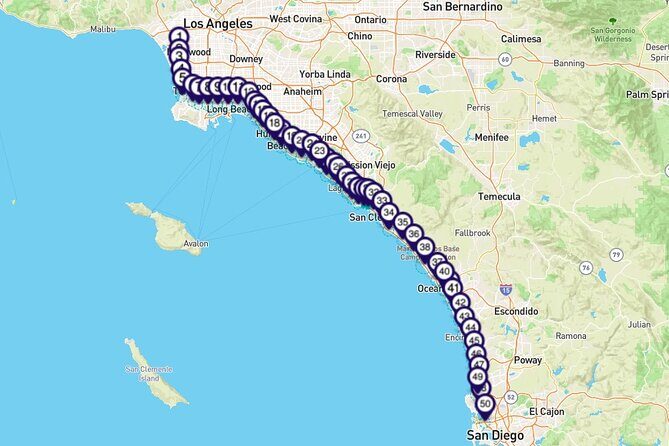
- $11.99 per group (up to 15 people) makes it a rare budget-friendly way to do a full coastal day
- No time constraints means you can stretch it from 4 to 5 hours into a longer, more relaxed drive
- Download first, then go signal-free during the tour
- Facts and quizzes keep the drive from feeling like a lecture
- One booking per vehicle fits families and friend groups well
- English narration only, so plan accordingly if you want another language
How to Run the Tour App Like a Pro (and avoid route headaches)
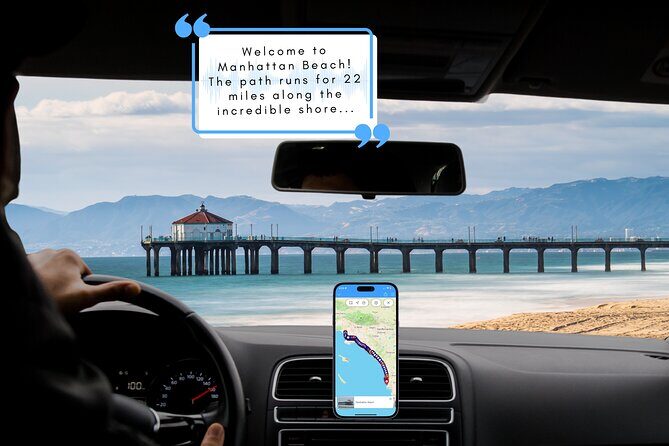
This is a self-guided driving tour, so your phone is the guide. Before you leave, make sure you have a good mobile or WiFi connection to download the tour content. The nice part: during the drive, the tour is designed to work without needing signal or data.
That offline setup matters because the LA-to–San Diego corridor can be spotty for service. If your phone battery is low, you’ll feel it fast—so charge up before you start.
The other practical point is routing. The tour relies on the live map inside the app, which is built to route you through the tour’s actual points of interest. If you plug in the tour stops using an outside navigation app, it may send you via faster freeways and you can wind up off-route and missing stops. My advice: commit to the tour app’s directions once you begin.
You can also read our reviews of more guided tours in Los Angeles


4 to 5 Hours, Zero Time Pressure: Planning Your Stops
The tour is listed at about 4 to 5 hours, but the bigger value is that there are no time constraints. That changes how you should plan. Instead of thinking of it as a strict checklist, treat it like a choose-your-own-coastline day.
Here’s how I’d pace it:
- Plan for a couple of short stops you can do quickly (stretch, restrooms, a view).
- Leave room for one longer pause for lunch.
- If you’re prone to stopping for photos, accept that you’ll be closer to the upper end of the time window (or beyond).
A nice bonus of this format is how easy it is to pair with a simple local plan. People have used the same drive as a staycation-style day: find a good meal near the ocean, walk a bit, then keep rolling.
LAX to El Segundo to Manhattan Beach: Name stories before the ocean views
Your drive starts in Los Angeles, and early on you’ll pass by Los Angeles International Airport. The tour gives you a quick explanation of the name LAX and why it’s written that way. It’s not a museum stop, but it’s the right kind of warm-up: short context, then back to the road.
Next is El Segundo, where the narration covers how the name came to be and what major industries are based there. This is one of those stops that helps you understand what you’re actually seeing—commercial zones, work hubs, and the industrial side of the coast—not just the postcard beach front.
Then comes Manhattan Beach with a story behind the name. Even if you don’t get out of the car, you’ll get a better sense of how place names often reflect history, ownership, and how communities branded themselves over time.
If you do step out, keep it simple: one photo, one look at the shoreline, then back in. This is best enjoyed as momentum, not as a series of long hikes.
Redondo Beach, Torrance, and Louis Zamperini: A road trip through different eras

As you continue along the coast, you’ll hear why Redondo Beach has a notorious past. Even without time for deep reading, the tour gives you enough framing that later, if you notice references in signage or local lore, you’ll know what they’re pointing at.
Then the tour shifts to Torrance, where you’ll learn how the city became the right spot for a Japanese automobile maker’s North American headquarters. That kind of detail is helpful because it connects the coast to American industry and global manufacturing—not just scenery.
After that, there’s a stop tied to Louis Zamperini, highlighting his perseverance and resilience. It’s a fast version of a huge story, but it’s exactly the right length for a driving tour—something you can remember without needing a whole hour.
This segment works especially well if you like variety. The route keeps changing gears: beach towns, industrial realities, and human stories in the same afternoon.
Palos Verdes and the Queen Mary: Views, legends, and an oceanliner in port
One of the standout-feeling parts of this drive is how it handles Palos Verdes. You’ll hear the legend that Native Americans blessed the land there, described as among the most beautiful places on Earth. Even if you treat it as folklore, it adds meaning to what you see: cliffs, overlook points, and that classic Southern California light.
Next, you’ll get the story of RMS Queen Mary, the retired British oceanliner that once sailed on the North Atlantic and later came to be located here. This is the kind of stop where even a quick look can stick with you. The ship is a strong visual anchor, and the narration helps you place it in a bigger world, not just as a parked attraction.
Then the route moves on to Long Beach, starting with its history and original inhabitants. After that, you’ll hear about famous alumni who called the local university their own. If you like seeing how cities grow around institutions, this part does that quietly, with enough detail to feel grounded.
You can also read our reviews of more tours and experiences in Los Angeles





Long Beach shoreline to Seal Beach ecology: Beach towns and habitats in one run

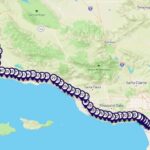
The tour continues with Seal Beach, including the story of how it became a gambling destination. It’s another reminder that coastal towns often had chapters that don’t match today’s family-friendly image.
After that, you’ll learn about an ecological refuge with four different habitats, supporting a variety of species. The tour explains the habitats and the long path involved in protecting the reserve. This is a good time to slow down mentally, because the scenery can look effortless while the conservation work behind it isn’t.
Then you’ll hit a classic tone again: a quintessential Southern California beach town vibe. The narration keeps you moving, but the driving itself becomes the “experience”—you get that slow coastal rhythm, with occasional stops to reset.
Surf City to pirates to Newport: Huntington’s identity, then the romantic chaos of the sea

As you approach Huntington Beach, you’ll hear why it’s called Surf City. That identity is more than marketing when you’re there—it’s a street-level feeling. Even from the car, the tour’s framing helps you understand why surf culture became part of the town’s brand.
Then the narration shifts to a more complicated combo: Huntington Beach and oil, tourists, and politics. That mix gives you a balanced lens. It’s not just waves and boardwalks; it’s also livelihoods, public debate, and competing priorities.
After that, there’s a stop connected to Santa Catalina Island, with the story of why it became so popular with pirates. Even if pirates aren’t a daily topic in your life, this is exactly the kind of odd historical angle that makes a driving tour memorable.
Then comes Newport Beach. The narration frames it as a seaside city now known for sandy beaches and ocean fun, but with earlier life that involved a large number of people tied to the past. You’ll also hear about the Balboa Peninsula—including how Balboa Island began as a mudflat surrounded by swampland. That transformation is a great reminder: today’s coastline is often the result of changes, engineering, and time.
Crystal Cove, Laguna Beach, Monarch Beach: From 1874 beginnings to wildlife trails and big money
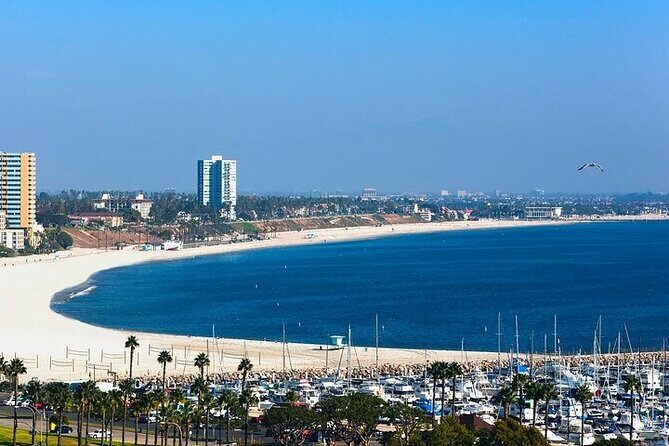
The tour loops past signs for Crystal Cove State Park, starting with a timeline clue from 1874 and a founder/land-owner origin story. This is a useful stop even if you don’t plan to enter right then, because it tells you what you’re looking at and why the area matters.
Then you’ll reach Laguna Beach, presented as a scenic resort city. The narration points to how the isolated coastline and hills attracted people for a long time, which helps explain why Laguna feels like it has a different personality than the more straightforward beach towns.
Next is a stop tied to an important regional wildlife preserve, with trails for hiking, mountain biking, and horseback riding. It also includes some geological interest. If you like to swap from “driving views” into “walking views,” this is one place where you might consider stepping out—if time allows.
After that, the route passes Monarch Beach, described as a luxury and affluent neighborhood. It’s not a lecture. It’s a tone shift. You’ll see how the same coastline can feel totally different depending on where you are and how the local economy developed.
Dana Point, San Clemente, and San Onofre: Dolphins, Spanish names, and real-world infrastructure
The tour calls out Dana Point as the dolphin-and-whale capital of the world, with a note about the density of dolphins in the waters. Even if you don’t spot wildlife from the road, the narration gives you a reason to look for them when you’re near the water.
Then you’ll hear about San Clemente, described as the Spanish Village by the Sea. The name itself gives you a quick cultural lens, and the tour uses the coastal drive to reinforce that identity.
A key stop later involves San Onofre State Beach, where you’ll get the note about nuclear power plant and nearby facilities. The narration specifically teases that there’s more later, and it frames the coastline as a place where nature and major infrastructure can overlap.
This segment is great if you’re tired of one-note beach sightseeing. You get story, culture, and the realities that shape modern coastal California.
Oceanside, Carlsbad, Encinitas, Cardiff, and Torrey Pines: Flowers, trees, and conservation acreage
As you head toward San Diego County-adjacent territory, there’s a stop called Vista Point—a simple rest and view break that makes the drive feel less like a grind.
Then comes Oceanside, with a folklore-style explanation of the naming: people in ranch-era days supposedly used a phrase for the area, and the name stuck. It’s the kind of quick story that makes you pay attention to names as you drive.
In Carlsbad, the tour highlights the Flower Fields, with the note that they bloom seasonally. If you’re going at the right time, this can turn the drive into something extra special; if not, you still get context for why the area is famous.
Next is Encinitas, named for its trees, plus a mention of Gaspar de Portola’s Spanish expedition passing through. Then you’ll get Cardiff State Beach, described as good for swimming, beachcombing, and exploring.
Finally, the tour lands on Torrey Pines, pointing to conservation land with 1,750 acres devoted to wildlife and waterfowl. This is a strong closer for the whole drive because it shifts you from town-to-town storytelling into protection and stewardship.
Price and logistics: Why $11.99 per group is unusually good value
At $11.99 per group (up to 15 people), this tour is positioned for low cost per person, especially for families or friend groups traveling in one vehicle. You’re not paying per seat. You’re paying per car load.
The narration and stop content also justify the price in a practical way. You’re getting structured storytelling across a long coastal drive—meaning you don’t need to research or build your own list of historical name origins and beach-town tidbits. And because the tour works with no signal needed after download, you aren’t constantly burning data.
What you do need is simple:
- a smartphone or tablet (not included)
- the ability to download the tour content at the start
- a willingness to follow the in-app directions
If you like road trips and you want the drive to feel like more than just transportation, the value is strong.
Should you book this LA to San Diego self-guided drive?
I think you should book it if you want a low-cost, flexible coastal day with short stories, quick quizzes, and the freedom to stop when you feel like it. It’s a solid choice for couples, families, and groups in one vehicle—especially if you’re doing this as a staycation or you like to mix driving with short walks.
I’d skip it if you’re expecting a human guide or you hate app-based navigation. If your plan is to rely on your usual external GPS and ignore the in-app map, you may feel frustrated and end up missing stops.
If you can keep your phone charged and commit to the tour app’s directions, this is an easy way to make the LA-to–San Diego drive feel like a real experience, not just time on the road.
FAQ
How much does the LA to San Diego self-guided driving tour cost?
It costs $11.99 per group, up to 15 people.
How long does the tour take?
Plan on about 4 to 5 hours on average.
Do I have to follow a strict schedule or time limits?
No. There are no time constraints, and you can take as long as you like to complete the tour.
Is the tour audio available in English?
Yes, it’s offered in English.
Do I need mobile signal or data during the tour?
No signal is required and no data is used during the tour after the initial download.
What device do I need to use the tour?
You’ll need a smartphone or tablet, but the device is not included.
Can I use my own navigation app instead of the tour directions?
The tour needs to rely on the live map inside the app to route you through the tour points. Using external navigation apps can send you on different routes and cause you to miss stops.
When does the tour run?
It’s available Monday through Sunday from 12:00 AM to 11:30 PM.
What if I need to cancel?
You can cancel up to 24 hours in advance for a full refund.