REVIEW · LOS ANGELES
Beverly Hills and Rodeo Drive: A Self-Guided Audio Tour
Book on Viator →Operated by VoiceMap Audio Tours · Bookable on Viator
Rodeo Drive plus real LA stories? Yes. This self-guided GPS audio tour strings together Beverly Hills Garden Park, Rodeo Drive, and a handful of standout architecture stops, with audio that tells you what you’re looking at as you walk.
Two things I really like: the offline audio and maps (so you’re not stuck hunting for signal), and the way the tour connects shopping sights to bigger stories—post office to performing arts, a Wright-designed mini-complex, and Hollywood-era film-set history.
One drawback to consider: because it’s GPS-triggered, planning gets a bit more “per device” than you might expect—especially if you’re hoping one phone can handle everyone’s audio.
In This Review
- Key Highlights at a Glance
- A Flexible GPS Walk Through Beverly Hills and Rodeo Drive
- Price and Value: What $14.99 Actually Buys
- Getting Started at the Beverly Hills Sign (and Downloading Offline)
- Beverly Hills Garden Park: Your 1.9-Mile Intro
- Wallis Annenberg Center: The Post Office Turned Performing Arts
- Visitor Center Shield and Rodeo Drive’s Retail Power
- Anderton Court Shops: Frank Lloyd Wright’s Spiral Detour
- The Speedway Site and a World-Championship Race Memory
- Church of the Good Shepherd: Mission Revival Meets Hollywood Legends
- 516 North Walden Drive: From Film Set to Real Home
- How the GPS Audio Works for Groups (and Avoiding the Headphone Trap)
- Who This Tour Suits Best
- Should You Book This Tour?
- FAQ
- How much does the Beverly Hills and Rodeo Drive audio tour cost?
- How long does the tour take?
- What language is the tour available in?
- Where does the tour start and end?
- Do I meet anyone, or is it fully self-guided?
- What do I need to bring?
- Does it work without mobile data?
- Do I get access after I book?
- Is it private?
- Can I cancel for a refund?
Key Highlights at a Glance
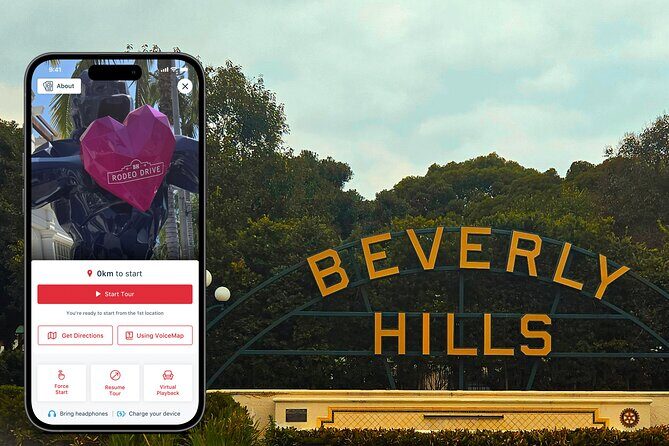
- GPS-triggered audio that plays when you’re in the right spot, letting you pause without breaking the flow
- Offline access for audio, maps, and geodata, which is a lifesaver for limited data situations
- Frank Lloyd Wright stop at Anderton Court Shops, with Streamline Moderne and Art Deco details
- Architecture-led route from an Italian Renaissance former post office to a Mission Revival church
- LA film history at 516 North Walden Drive, starting as a studio set and later moved as a home
A Flexible GPS Walk Through Beverly Hills and Rodeo Drive
This is a walking tour with zero check-in energy. You show up at the start point, press play in the app, and let the audio guide you block to block. It’s built for people who like control: stop for photos, skip ahead, or slow down when a building detail catches your eye.
The route is tightly focused: you’re not trying to cover “all of LA.” Instead, you get a smart slice of Beverly Hills culture, from landscaped park space to luxury retail streets, then into quieter corners where buildings have stronger backstories than their storefronts.
If you like walking with context—rather than just passing famous places—this format usually fits well.
You can also read our reviews of more guided tours in Los Angeles
Price and Value: What $14.99 Actually Buys
At $14.99 per person, you’re paying for the audio program, not a live guide. That can feel steep if you’re comparing it to a free walking day. But the value improves if you’ll use it like a tool: headphones on, audio downloaded, and you actually listen while you walk.
The biggest “value lever” is the lifetime access. The tour is available in English before your booking date and after it too, so you can come back later—or reuse it on another device if you need to.
One more practical point: the tour does not include a smartphone or headphones, so factor that into your real-world cost. If you already travel with them, you’re golden.
Getting Started at the Beverly Hills Sign (and Downloading Offline)
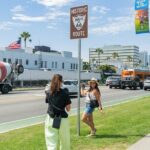
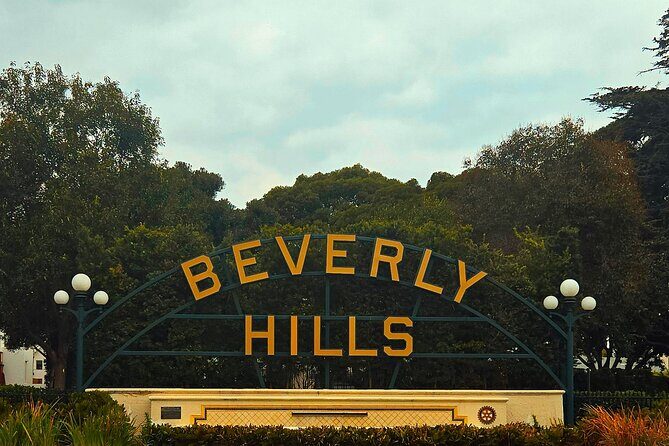
You begin at the Beverly Hills Sign on Park Way (1300–1398 Park Way, Beverly Hills). Your tour ends in front of the Church of the Good Shepherd at 504 N Roxbury Dr.
Hours are listed as open essentially all day, which matters for flexibility. You can choose a time that matches your energy level and light for photos, without feeling locked into a narrow window.
Before you set out, do one simple thing: make sure your app has the offline audio, maps, and geodata ready. Since the tour is GPS-triggered, offline support reduces the chance of awkward pauses if your phone doesn’t like the signal in a dense downtown-ish area.
Beverly Hills Garden Park: Your 1.9-Mile Intro
Your walk starts with an easy warm-up: Beverly Hills Garden Park, a 1.9-mile linear stretch along Santa Monica Boulevard from Wilshire to North Doheny Drive. This isn’t just a scenic “leftover green.” It’s a clean way to get bearings before you hit the retail intensity of Rodeo Drive.
Why it works: linear parks naturally guide your direction. You’re less likely to wander in the wrong place, and GPS-triggered audio tends to behave better when you’re moving along the intended path.
Practical note: this is still a walk. Wear comfortable shoes, and give yourself a little buffer time so you’re not rushing when the tour gets more photo-friendly.
Wallis Annenberg Center: The Post Office Turned Performing Arts
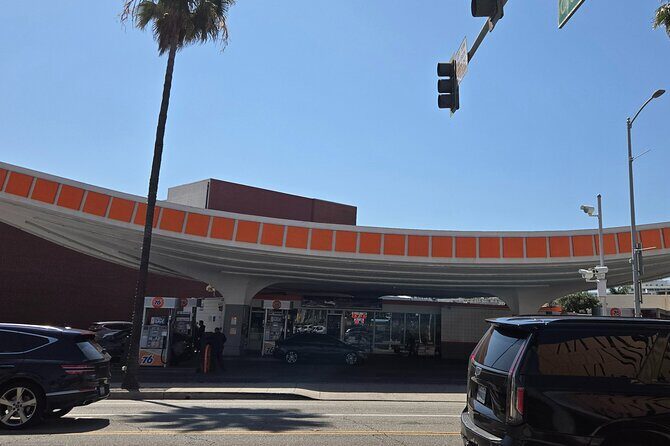
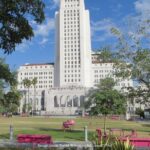
Right along the way, you’ll see the Wallis Annenberg Center for the Performing Arts. The tour explains that this building originally served as the main Beverly Hills Post Office and was built in an Italian Renaissance style, opening in 1934.
This stop is a good example of how the audio makes the walk smarter. Instead of seeing a handsome building and moving on, you’re told why it looks the way it does and what role it played in the town.
If you like architectural “before-and-after” stories, this is one of the more satisfying pauses. I also love that it ties in influence from Honorary Mayor and comedian Will Rogers, since the Beverly Hills vibe can sometimes feel like it arrived fully formed. This brings it back to people and politics.
You can also read our reviews of more tours and experiences in Los Angeles
Visitor Center Shield and Rodeo Drive’s Retail Power
Next up is the Beverly Hills Visitor Center, recognizable by its distinctive shield: a half-height replica of the street signs marking city entrances on major thoroughfares. The audio notes that this iconic look is recognized worldwide.
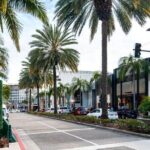
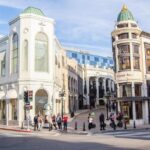
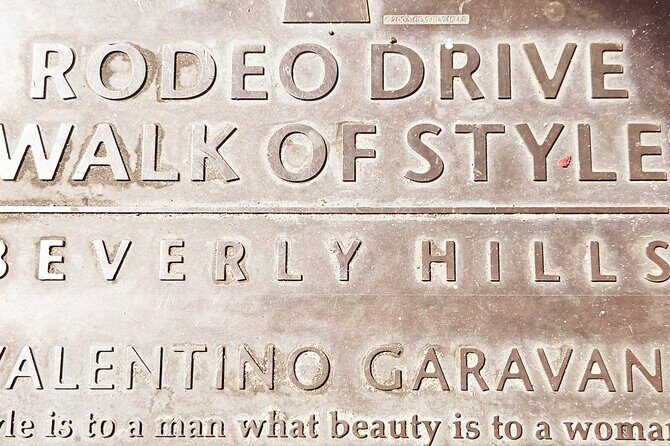
Then you roll into Rodeo Drive, one of the most important retail spots in Los Angeles. The audio gives you a name to remember: Richard Carroll, who originally established the street as a place to buy men’s clothing. And it places today’s big-brand presence in that longer thread—mentioning stores like Tommy Hilfiger and Brooks Brothers.
What I like about this section is that it’s not only starry-eyed. You get a sense of how a shopping street becomes a brand itself. You’ll also have time to read the details of shopfronts and window displays without the tour forcing you to “just keep moving.”
Anderton Court Shops: Frank Lloyd Wright’s Spiral Detour
If you only do one “architecture detour” on Rodeo Drive, make it Anderton Court Shops at 332 N Rodeo Drive. Here’s the standout: it’s described as the only retail structure designed by Frank Lloyd Wright.
The audio also points out features you can actually see from street level and on the grounds: Streamline Moderne and Art Deco spires, a spiral ramp, and a central light well.
Why this stop is worth your attention: it gives you contrast. Rodeo Drive can feel like “look but don’t touch.” Anderton Court feels like a pocket of intentional design, where the building itself is part of the experience.
Tip: slow down here. The whole point is noticing how the forms guide your eye and movement, not just taking one quick photo and leaving.
The Speedway Site and a World-Championship Race Memory
A little further along, the audio shifts gears into motion and motorsports. You’ll see a landmark hotel situated on the northeast corner of the former Beverly Hills Speedway site, and the tour connects it to the past: a world championship car race held in 1926, with 70,000 spectators.
That’s a jolt of perspective. Today the area reads as polished and upscale. Learning that massive race energy once played out right here makes the street feel less “frozen in glamour” and more like an LA place that keeps changing roles.
This is also a quick stop that doesn’t require you to enter anything. It works well if you want a story beat without a long detour.
Church of the Good Shepherd: Mission Revival Meets Hollywood Legends
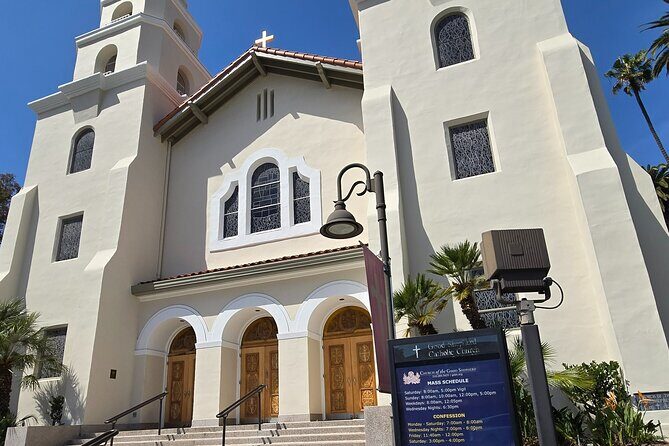
Near the end of your route, you’ll come to the Church of the Good Shepherd on North Roxbury Drive. The audio describes it as a charming Mission Revival-style church, founded in 1923.
This is where the tour leans into Hollywood mythology. The narration frames it as a place where Hollywood royalty comes to pray and confess, and even hints at divine intervention for a next big movie role. Whether you take that literally or as storytelling flavor, it sets the tone: this is a quiet counterpoint to Rodeo Drive.
Also, since the tour ends right there, it’s a natural finish line. You’ve got a calm location to decompress, and the timing tends to work well after walking and shopping windows all afternoon.
516 North Walden Drive: From Film Set to Real Home
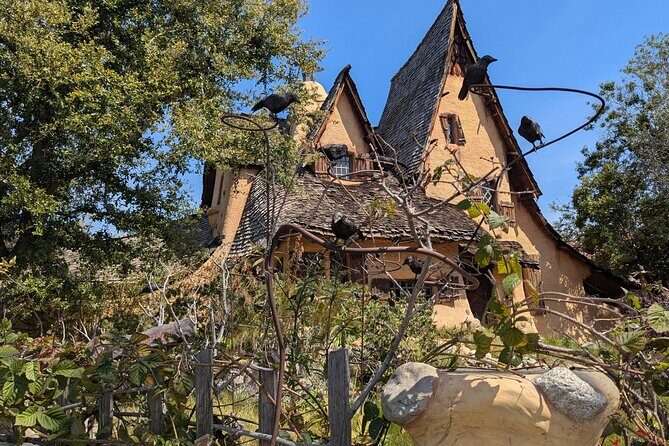
The final stop you’ll hear about is at 516 North Walden Drive. The tour describes it as a whimsical property that began in 1921 as a film studio set in Culver City.
The audio names the designer: Harry Oliver, a Hollywood art director. It also explains the origin purpose: it started as offices and dressing rooms. Then in 1926, it made the Cinderella move—turning into a real home and relocating to Beverly Hills.
This stop is for people who love LA’s behind-the-scenes logic: how sets become structures, and temporary things become permanent. Even if you’re not a film-nerd, it’s a fun way to see the city as a machine that repurposes ideas.
One caution: because the tour is GPS-triggered, don’t assume you’ll find it instantly if you’re walking quickly. Use the app’s cues, and take a second to align yourself with where the audio expects you to be.
How the GPS Audio Works for Groups (and Avoiding the Headphone Trap)
Here’s the practical reality: this is self-guided GPS audio, not a live guide walking beside you. That means your phone does the timing.
Because it’s GPS-triggered, you shouldn’t expect one purchase on one device to magically control audio for multiple people at once. The tour’s own guidance emphasizes that each person should purchase their own copy for best results, since GPS triggers audio on the device that’s running the tour.
If you’re traveling with kids or a family, this is the moment to set expectations early. Also, remember the tour does not include headphones. So if you want everyone comfortable and listening, plan on having headphones for each device.
The upside: once you’re set up, you get real flexibility. You can go at your pace. You can stop. You can restart from wherever you left off on the device you’re using.
Who This Tour Suits Best
This tour is ideal if you enjoy:
- walking without a strict group pace
- learning what you’re seeing as you go (architecture and origin stories)
- offline-first planning, since the tour includes offline audio and maps
It also fits couples, solo walkers, and small groups who are comfortable managing their own devices.
It may not be ideal if you strongly prefer a live guide telling you what to look at, or if you’re hoping to share one smartphone-and-headphone setup for multiple people. The GPS-triggered nature makes that harder than it sounds.
If you’re the type who likes to browse streets slowly—rather than check off landmarks like a checklist—this route will feel satisfying.
Should You Book This Tour?
Yes, book it if you want an easy, focused Beverly Hills and Rodeo Drive experience with offline GPS audio and real place-based stories—from the former Beverly Hills post office to Wright’s Anderton Court and the Mission Revival Church of the Good Shepherd.
Skip it (or rethink it) if you’re expecting a guided tour with a person leading you, or if your group plan depends on one device doing everything. With GPS-triggered audio, planning for each person’s listening setup is part of the deal.
If you’re traveling with your own phone and headphones already, this is one of those buys that can turn a famous street into a much more personal walk.
FAQ
How much does the Beverly Hills and Rodeo Drive audio tour cost?
The price is $14.99 per person.
How long does the tour take?
It’s listed as about 1 hour 15 minutes to 1 hour 30 minutes.
What language is the tour available in?
The tour is offered in English.
Where does the tour start and end?
It starts at the Beverly Hills Sign (1300–1398 Park Way, Beverly Hills) and ends in front of the Church of the Good Shepherd (504 N Roxbury Dr, Beverly Hills).
Do I meet anyone, or is it fully self-guided?
It’s a self-guided GPS tour, so you don’t meet a guide.
What do I need to bring?
You need your own smartphone and headphones. The tour is delivered through an app for Android and iOS.
Does it work without mobile data?
You get offline access to audio, maps, and geodata, so you can use it without relying on mobile data.
Do I get access after I book?
Yes. You get lifetime access to the tour in English before your booking date and after it.
Is it private?
Yes. It’s a private activity, and only your group will participate.
Can I cancel for a refund?
Yes. You can cancel for a full refund if you cancel at least 24 hours before the experience’s start time. Free cancellation is available.