REVIEW · LOS ANGELES
Oscar History and Film Set Studio Tour at the Biltmore Hotel
Book on Viator →Bookable on Viator
A Biltmore hotel tour that feels like a movie set. In about an hour, you’ll walk through landmark rooms while augmented-reality smart glasses layer in Oscar moments and famous film scenes right where they happened. I particularly like the real-space visuals (photos and footage stacked onto the hotel’s interiors) and the clear, room-by-room flow through DTLA’s most storied building. One thing to consider: it’s a short, guided walk inside the hotel, so if you’re hoping for big outdoor views or lots of free time, this isn’t that kind of tour.
To me, the best part is how the tour turns architecture into a time machine. You’re not just hearing stories about Hollywood; you’re seeing the same ballrooms and corridors used for major events and film sets—then watching classic clips appear on top of the rooms as you move.
In This Review
- Key Highlights You’ll Actually Feel During the Tour
- A One-Hour Time Machine at DTLA’s Millennium Biltmore
- Price Check: Is $25 a Good Value for This AR Hotel Tour?
- The Smart-Glasses AR Setup: What You Should Expect
- Meeting at 507 S Olive: Easy DTLA Starting Point
- Stop-by-Stop: Music Room to Historic Corridor (Where Oscar Lore Shows Up)
- Music Room: Cherubs, Italian Renaissance Details, and Early Hollywood Glam
- Galleria Corridors: Painted Passages With a Real Named Artist
- Historic Corridor: The First Academy Awards Connection
- Crystal Ballroom and Gold Room: Film Galas and Prohibition Secrets
- Crystal Ballroom: A Stage for Hollywood Galas
- Gold Room: Prohibition-Era Speakeasy Story
- VIP Olive Street Entrance, Chinatown Connection, and the Moorish Finish
- VIP Olive Street Entrance: Featured in Chinatown
- Rendezvous Court: Moorish-Inspired Grandeur
- Who This Tour Fits Best (And Who Might Skip It)
- Tips to Get the Most Out of Your $25
- Should You Book This Oscar History and Film Set Tour at the Biltmore?
- FAQ
- FAQ
- How long is the Oscar History and Film Set Studio Tour at the Biltmore?
- How much does the tour cost?
- Where does the tour start and end?
- Is the tour inside the hotel?
- Is admission included?
- What language is the tour offered in?
- How big is the group?
- Do I need a ticket on my phone?
- When should I book?
- Can I cancel for a refund?
- Is the activity suitable for most people?
Key Highlights You’ll Actually Feel During the Tour
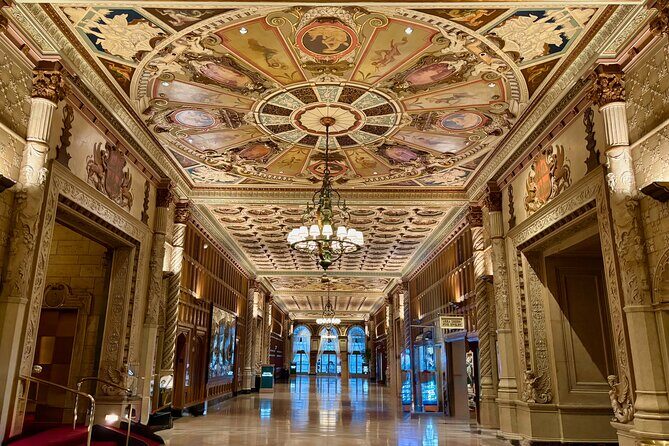
- Smart-glasses AR in real rooms: historical scenes and movie clips show up in place, not on a screen miles away.
- Oscar history in the building where it happened: you’ll visit areas tied to the first Academy Awards.
- Film-set moments across eras: the experience connects classic ceremonies, Prohibition secrets, and modern pop culture scenes.
- Room-by-room structure: Music Room, Galleria, Historic Corridor, Crystal Ballroom, Gold Room, and more, all in one tight route.
- Small group size: capped at 10 people, so the guide can keep things moving without chaos.
A One-Hour Time Machine at DTLA’s Millennium Biltmore
This is a 1-hour walking tour through the Millennium Biltmore Historic Hotel, focused on how the building became part of Hollywood storytelling. The pacing is tight but not rushed—you move from room to room, learning how different spaces were used for major events, filming, and famous nights out.
The tour’s hook is the AR smart-glasses setup. You don’t just listen to the guide. You watch history line up with the exact ceiling, corridor, or ballroom you’re standing in. It turns architecture into something you can read, not just look at.
And yes, this is Los Angeles, so the film connections feel almost inevitable—but the tour does the work for you. It points you to specific rooms and details, then shows you why they mattered on set and on the awards circuit.
You can also read our reviews of more historical tours in Los Angeles


Price Check: Is $25 a Good Value for This AR Hotel Tour?
At $25 per person for about an hour, the value comes from two things: (1) you get access to the hotel’s key interiors, and (2) the AR glasses add production-level storytelling.
If you’re used to paying similar prices for generic guided walks, this one spends the money on the main experience: smart glasses that overlay footage and scenes directly onto the rooms. That’s the core difference. You’re not paying for a lecture. You’re paying to stand in a real location and see it transformed.
A few practical tips based on what you’re likely to feel during the tour:
- The tour sells out because it’s capped at 10 people, so plan ahead.
- It’s best if you like movie history and want to match scenes to physical spaces rather than just collect trivia.
The Smart-Glasses AR Setup: What You Should Expect
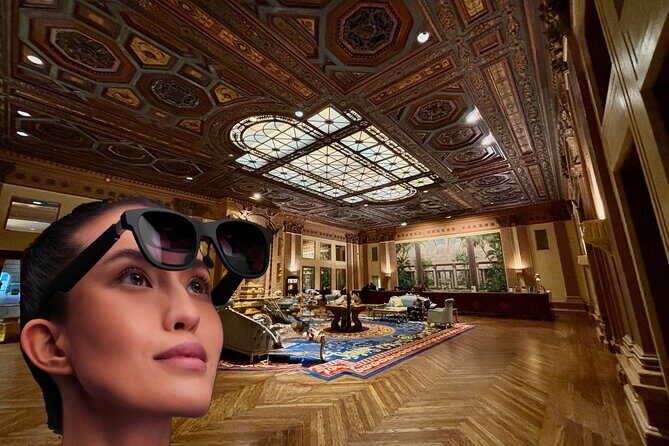
Before you start moving, the tour uses smart glasses (augmented reality). As you walk, the guide triggers AR layers—historical photos, footage, and movie clips—so you can see how the Biltmore looked and functioned in different eras.
In practice, that means the experience changes as you change rooms. One moment you’re staring at decorative details. The next moment, the same spot is used as a backdrop for a famous scene. The effect is practical, too: it helps you remember what you saw, because your brain tags the room plus the image together.
You’ll likely see connections across time periods, including:
- Oscar-linked moments connected to the hotel’s role in early Academy Awards.
- Prohibition-era storytelling tied to a hidden-feeling room experience.
- Film and pop culture references that connect the hotel to recognizable titles, from Ghostbusters and Beverly Hills Cop to scenes referenced with modern videos (including Taylor Swift and Jisoo).
The guides I’ve seen leading these tours include Eloi and Mark, and the common thread is showmanship plus structure. They keep you moving and make the AR layers feel intentional instead of random.
Meeting at 507 S Olive: Easy DTLA Starting Point
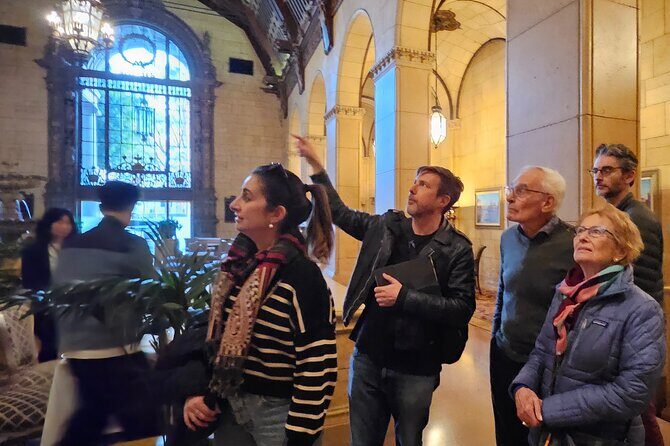
The tour starts back at the hotel: Millennium Biltmore Historic Hotel, 507 S Olive St, Los Angeles, CA 90013. It also ends back at the same place.
That matters because DTLA can be a little noisy and confusing on foot. This route doesn’t require you to figure out multiple transit hops or remote meeting points. You’re staying within a concentrated area in the city’s core.
Also, the activity is marked as being near public transportation, which is a lifesaver if you’re not driving or you don’t want to fight for parking.
Stop-by-Stop: Music Room to Historic Corridor (Where Oscar Lore Shows Up)
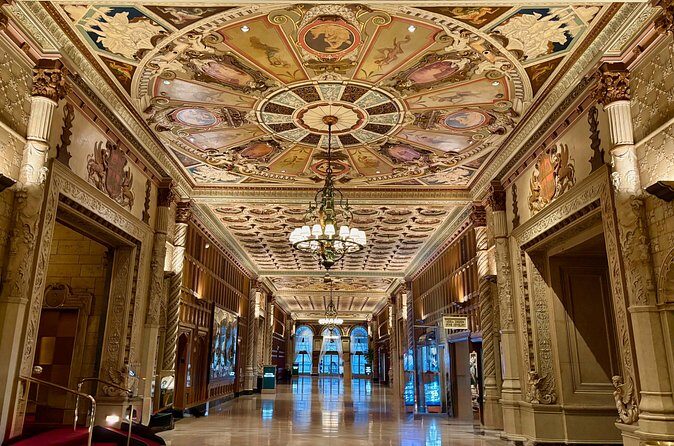
The tour’s main route runs through a sequence of iconic Biltmore rooms and corridors. Even though it’s only about an hour, it covers enough ground to feel like a full “greatest hits” tour inside the building.





Music Room: Cherubs, Italian Renaissance Details, and Early Hollywood Glam
You start with the Music Room, a classic Biltmore showcase with an intricate cherub-filled ceiling and a strong sense of Italian Renaissance influence. This is the room you’ll want to slow down in, because the AR works best when you’re paying attention to the details.
Why it’s worth your time: the Music Room is decorative, but it’s also functional. In a hotel like this, beauty wasn’t just for show—it set the tone for dinners, gatherings, and elite events that Hollywood later wanted to borrow.
Galleria Corridors: Painted Passages With a Real Named Artist
Next comes the Galleria—ornate corridors painted by Giovanni Smeraldi. This is the part where you get a sense of why people used the Biltmore for major film and event settings. The space doesn’t just look old; it looks staged, like it’s ready for a camera.
Practical tip: when the AR layers appear, glance at the corridor design first, then look at how the AR footage lines up. It’s the alignment that makes the tour stick with you later.
Historic Corridor: The First Academy Awards Connection
The tour then focuses on the Historic Corridor, specifically where the first Academy Awards were held. This is the “okay, we’re doing real Oscar stuff” moment of the tour.
The AR element helps here because it shifts the corridor from decorative space into a timeline space. You’re standing in the passage tied to early awards history, and then you’re shown scenes that connect to what happened there.
Even if you’re not a die-hard film-history person, this stop gives you a clean, memorable through-line: the building mattered to Hollywood early, not just in later decades.
Crystal Ballroom and Gold Room: Film Galas and Prohibition Secrets
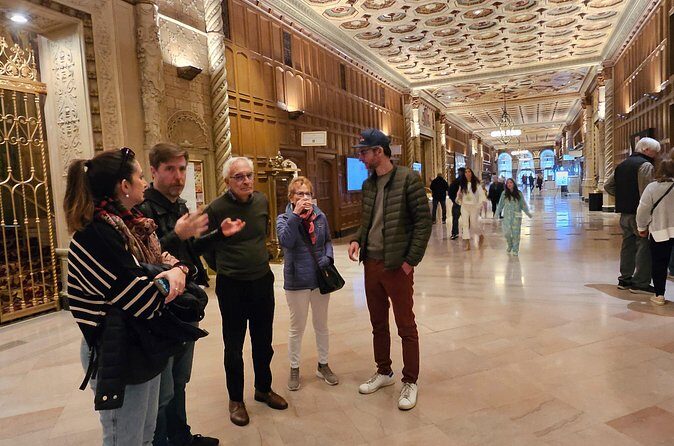
The middle stretch brings you into rooms tied to major Hollywood social life and darker, more secretive storytelling.
Crystal Ballroom: A Stage for Hollywood Galas
The Crystal Ballroom is described as a hub for Hollywood galas, and you can feel why. This is where you get the big “event room” scale—high drama, photo-ready angles, and a sense that something important happens here.
What makes it work on the tour: AR footage and scenes are layered to show how the room would have looked and how it functioned during important moments.
Gold Room: Prohibition-Era Speakeasy Story
Then comes the Gold Room, tied to a Prohibition-era speakeasy. This is one of those stops where the design and the story fit together—gold tones and hidden-feeling history are a natural pair.
The value here is tone. The tour uses the AR to shift from glamorous awards-night energy to a more underground vibe, so you’re not just touring rooms that look pretty—you’re tracking how the hotel supported different moods of Los Angeles culture.
VIP Olive Street Entrance, Chinatown Connection, and the Moorish Finish
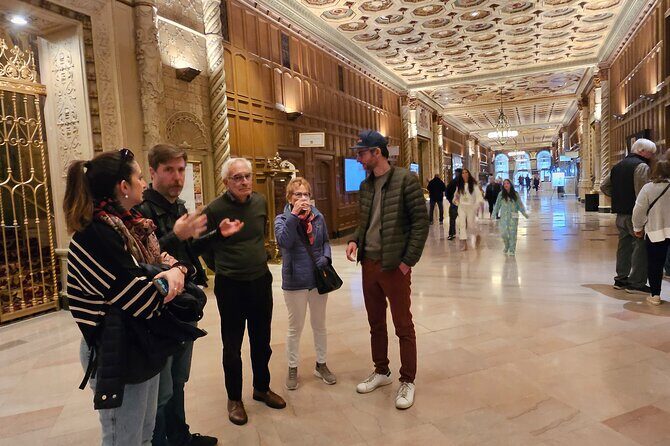
Near the end, you’ll visit two visually striking points: a famous entrance and a conclusion room that feels like a dramatic set wrap-up.
VIP Olive Street Entrance: Featured in Chinatown
You’ll see the VIP Olive Street Entrance, noted as being featured in Chinatown. This gives the tour a useful kind of connection: it doesn’t stop at “Hollywood happened here,” it also points you toward how Los Angeles neighborhoods and film storytelling overlap.
If you like location spotting, this is the moment where the tour helps you connect what you know about LA’s film identity to what you can physically stand in.
Rendezvous Court: Moorish-Inspired Grandeur
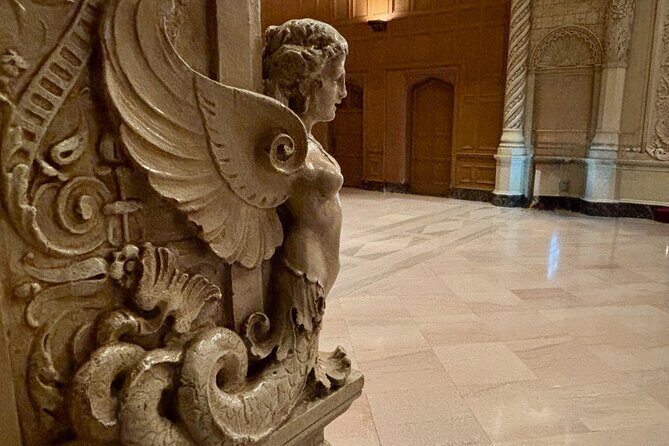
Finally, you end at the Rendezvous Court, described as a Moorish-inspired masterpiece. This is the finishing visual—decorative, dramatic, and built for scenes.
Why it’s a good ending: you leave with a last-room image that feels complete. The tour started with ornate grandeur (Music Room), moved through award and gala spaces (Historic Corridor, Crystal Ballroom), then shifted into Prohibition-era intrigue (Gold Room), and ends with a setting that looks like it belongs in a grand story finale.
Who This Tour Fits Best (And Who Might Skip It)
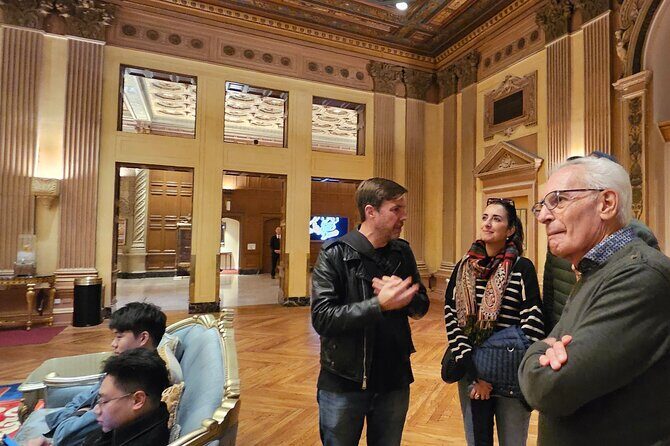
This experience is a great match if you:
- Like movie history and want specific rooms tied to recognizable titles.
- Enjoy AR or tech-based storytelling that helps you remember what you saw.
- Want a high-impact LA indoor experience that’s easy to plan for—especially when the weather isn’t cooperating.
You might consider skipping if you:
- Want lots of outdoor sightseeing or sweeping city views.
- Prefer purely factual, lecture-style tours with no AR visuals.
Tips to Get the Most Out of Your $25
A few small moves can make a big difference:
- Arrive a little early so you’re ready when the smart glasses go on.
- While AR is active, pause long enough to compare the real decor to what the glasses show. That alignment is the magic trick.
- If you love film, mentally tag rooms as you move: one for awards, one for galas, one for Prohibition. By the end, you’ll feel the structure.
Should You Book This Oscar History and Film Set Tour at the Biltmore?
In my view, this is a strong buy for anyone who wants LA film history in a tight, one-hour format. The AR smart-glasses are the differentiator, and the tour hits the core Biltmore spaces tied to Oscars, major film sets, gala nights, and Prohibition-era lore—without making you spend a whole day doing it.
If you’re in DTLA and you want an indoor activity that feels like you’re stepping into scenes instead of just reading about them, book it. Plan ahead because the group is capped, and the best moments depend on being able to follow the guide closely through the rooms.
FAQ
FAQ
How long is the Oscar History and Film Set Studio Tour at the Biltmore?
The tour runs for about 1 hour.
How much does the tour cost?
It costs $25.00 per person.
Where does the tour start and end?
It starts at Millennium Biltmore Historic Hotel, 507 S Olive St, Los Angeles, CA 90013 and ends back at the same meeting point.
Is the tour inside the hotel?
Yes. The experience is built around exploring the Biltmore’s interior spaces, including major rooms and corridors.
Is admission included?
The tour indicates Admission Ticket Included.
What language is the tour offered in?
It’s offered in English.
How big is the group?
The tour has a maximum of 10 travelers/people.
Do I need a ticket on my phone?
Yes, you get a mobile ticket.
When should I book?
On average, it’s booked about 25 days in advance, so planning a few weeks ahead is a smart move.
Can I cancel for a refund?
Yes. It offers free cancellation up to 24 hours before the experience start time for a full refund.
Is the activity suitable for most people?
The activity states that most travelers/people can participate.