REVIEW · LOS ANGELES
Historic Hollywood Boulevard and Movie Palaces Walking Tour
Book on Viator →Bookable on Viator
Hollywood has a way of feeling like a movie. This walk strings together the Hollywood Sign story and the movie-palace block like scenes you can actually stand in front of. You’ll start up near Ovation Hollywood, then work your way down past theaters tied to premieres, handprints, and awards history.
What I like most is the way the guide turns famous sights into actual context. Two things that made this feel worth the time: you get the behind-the-scenes stories behind the Hollywood Sign and you also get a theater-to-theater sense of how the Entertainment industry grew right here.
One possible drawback: this tour depends on good weather. It’s a 2.5-hour outdoor walk, so if skies don’t cooperate, you’ll want rain gear and patience (though a rainy version can still be fun).
In This Review
- Key highlights you should care about
- Why this Hollywood Boulevard walk feels like a real film set
- Starting at 6815 Hollywood Blvd: the “welcome” moment that sets the tone
- Ovation Hollywood and the Hollywood Sign: how a billboard became a rescue mission
- The Hollywood Sign itself: a second pass for the history-minded
- Hollywood Boulevard evolution: Walk of Fame views and the Prospect Avenue story
- A quick neighborhood pause: Art Deco meets Neo-Gothic details
- Las Palmas Hotel: the Pretty Woman filming location stop
- The Egyptian Theatre: Hollywood’s first movie palace and King Tut-inspired design
- El Capitan Theatre: Disney premieres and the Citizen Kane debut connection
- Hollywood Masonic Temple and Jimmy Kimmel Live: the institution behind the show
- TCL Chinese Theatres (formerly Grauman’s): handprints, imprints, and star power you can touch
- Dolby Theatre and the Oscars red carpet: the walk you can actually feel
- Hollywood Roosevelt: Marilyn Monroe’s connection and the first Oscars
- Price, pace, and what you get for $30
- Should you book this historic Hollywood Boulevard tour?
- FAQ
- FAQ
- How long is the Historic Hollywood Boulevard and Movie Palaces walking tour?
- How much does the tour cost?
- Where do I meet for the tour?
- Is the tour offered in English?
- How big is the group?
- Does the tour include a guide and ticketing details?
- What should I know about weather and cancellation?
Key highlights you should care about
- Hollywood Sign, not just photos: learn how the sign started as Hollywoodland and how it got saved.
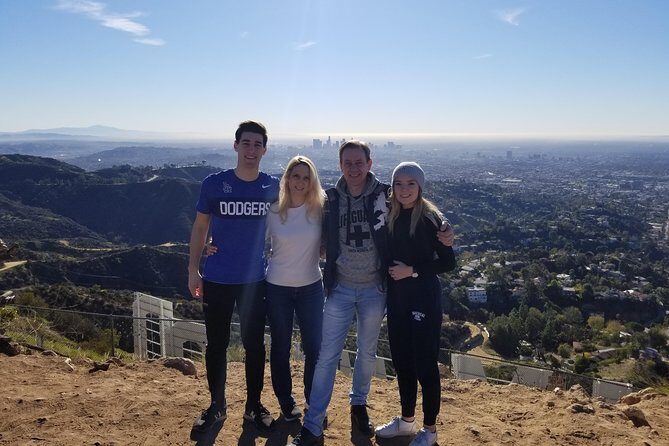
- Ovation rooftop views: you get a sweep of the area and big visual cues for how Hollywood evolved.
- Old-school movie palaces: Egyptian Revival design, a Citizen Kane debut connection, and Disney premieres at El Capitan.
- Famous handprints and imprints: see the tradition and the footprints of major stars from Marilyn Monroe to Harrison Ford.
- Oscars connection on the ground: walk right up to the Dolby Theatre’s red-carpet vibe.
- Small group energy: capped at 15 people, so you can actually hear the guide.
Why this Hollywood Boulevard walk feels like a real film set
Hollywood Boulevard can look like a poster in real life: neon, crowds, and landmark buildings that look familiar even if you’ve never been. What this tour does well is give you a story thread to follow, so each stop clicks into place. You’re not just collecting photos. You’re building an easy map of why these places matter.
The route is also smart for first-timers. It moves between big-name landmarks and the movie venues that made Hollywood into a destination. That includes the famous stages tied to premieres and screenings, plus the hotel and institutions that helped shape Hollywood’s public image. If you like movies, you’ll recognize more than you expect. If you don’t, you’ll still enjoy the mix of architecture and pop-culture trivia.
Another plus: this is led by a local guide, and the best tours here keep the tone friendly and the facts clear. In one rainy outing, the guide Mark from Belgium kept things entertaining, even with clouds rolling in. In other versions, Marc has a habit of delivering details in a down-to-earth way, mixing lesser-known facts with the big ones so you don’t feel lectured.
You can also read our reviews of more walking tours in Los Angeles



Starting at 6815 Hollywood Blvd: the “welcome” moment that sets the tone
You meet at 6815 Hollywood Blvd near the action, then you’re quickly pointed toward what matters for the day. The opening is framed as a welcome to Hollywood, which sounds simple, but it’s useful. It gives you a mental checklist before you start walking: where to look, what to remember, and which places are the anchors for the rest of the route.
Right away, the group heads toward Ovation Hollywood, a solid launching point because it puts the Hollywood Sign into view quickly. You’ll spend about 20 minutes there, and that time is used for more than quick sightseeing. You’re set up to understand the sign’s arc: what it originally represented and why people cared enough to keep it from fading away.
If you’re coming in with a phone full of movie trivia, this start helps you connect it. And if you’re coming in with no plan at all, you’ll leave with a clean sense of direction, since the early stop acts like your “map in the sky.”
Ovation Hollywood and the Hollywood Sign: how a billboard became a rescue mission
The Hollywood Sign stop is one of the biggest reasons to pick this tour. It’s not just a view—it’s the origin story, explained with the kind of clarity that makes you say, oh, that’s why it’s iconic.
You learn that the sign dates to 1923, when it started as an advertisement for Hollywoodland. Then the focus shifts from how it looked to how it changed—because Hollywood didn’t just keep the sign. Hollywood rewrote its meaning as the town’s identity grew.
Here’s a detail I really like: the story includes the celebrities who helped save the sign. Names like Alice Cooper and Hugh Hefner come up as part of that preservation story. That’s the kind of connection that makes the landmark feel human instead of untouchable.
Time at the stop is short—about 20 minutes—so you’ll want to do two things. First, let your camera rest for a moment and listen for the key facts. Second, stand in the spot the guide points out. The goal here is understanding the sign’s angle and setting, not just grabbing one more photo.
The Hollywood Sign itself: a second pass for the history-minded
Right after the Ovation Hollywood viewpoint, the tour gives you another moment for the Hollywood Sign area. It’s brief—around 10 minutes—but it works like a quick recap window. You’re seeing the same icon with new context in your head.
This is where you often notice what makes Hollywood confusing at first: everything looks like it belongs together, but the town’s story has layers. That second look helps you pick up details you might have missed on the first pass, especially around how the sign became a symbol over time rather than only a piece of branding.
If you’re someone who likes to understand a place by repeat views—same subject, new facts—this structure is ideal.
Hollywood Boulevard evolution: Walk of Fame views and the Prospect Avenue story
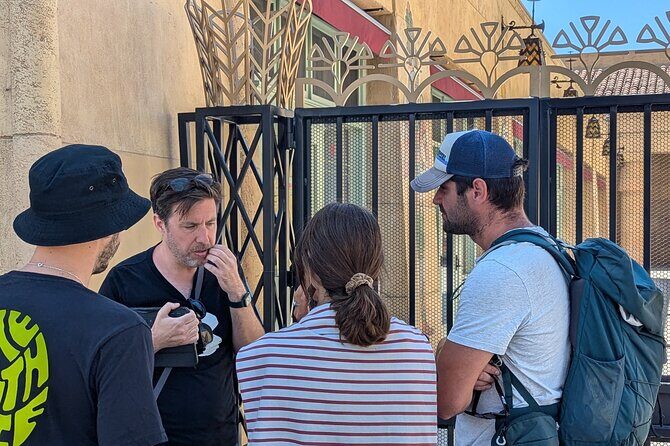
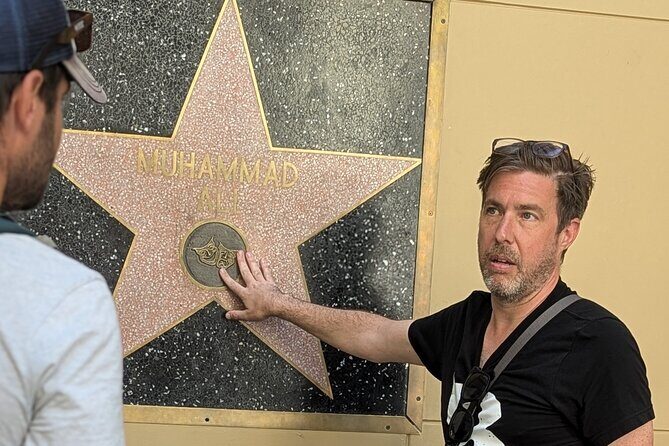
From there, the tour heads to the Hollywood Walk of Fame area. You get about 10 minutes here, and the guide uses it to explain how Hollywood Boulevard evolved. You’re not just looking at names embedded in sidewalks. You’re seeing the street’s transformation from earlier roots toward the theater district focus it gained by the 1920s.
A specific historical thread gets your attention: Hollywood Boulevard’s relationship to Prospect Avenue in the 1890s, then its shift into the heart of the theater district by the 1920s. That’s the key idea—Hollywood didn’t become Hollywood all at once. It grew into its role.
You also get sweeping views from the Ovation Mall rooftop, which is helpful for visualizing how the sidewalks and theaters connect. Rooftop viewpoints aren’t just for pretty pictures. They give you the “how it fits” perspective, which makes the walking route feel logical.
If you’re on a tight schedule, this is a strong use of time. You cover a lot of meaning in a short stop, which keeps the pace moving.
You can also read our reviews of more historical tours in Los Angeles


A quick neighborhood pause: Art Deco meets Neo-Gothic details
Between the Walk of Fame moment and the next major theater stop, you’ll pause to look at a grand building with Art Deco features and Neo-Gothic details. The tour doesn’t require you to know the name to appreciate the visual contrast. What you’ll get is an eye-opener for how many different styles Hollywood used to market itself.
This kind of stop matters because it trains you to look past the loudest landmarks. Hollywood is full of buildings that feel like they’re telling you their era. A quick architecture moment like this helps you notice those clues as you walk.
Keep your expectations realistic here: it’s a short visual stop, not a long architectural lecture. But it can make you see the block differently for the rest of the tour.
Las Palmas Hotel: the Pretty Woman filming location stop
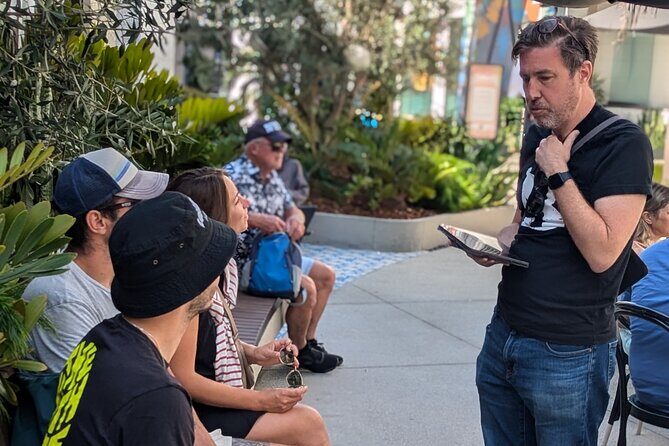
Next up is the Las Palmas Hotel, tied to the filming location of Pretty Woman. This is one of those stops that works even if you’re not a hardcore film buff. The film connection gives you a pop-culture anchor, and the guide adds the historical framing behind the site.
About 10 minutes here gives you time for the key story points without dragging. You’ll learn the kind of behind-the-scenes details that help a location feel specific—like it isn’t just a building, it’s a set, a scene, and a piece of Hollywood’s image-making.
A small practical note: this stop can be visually busy since it’s in a high-profile Hollywood area. If you’re photographing, ask the guide where to stand first. You’ll save time and avoid getting stuck in the wrong spot.
The Egyptian Theatre: Hollywood’s first movie palace and King Tut-inspired design
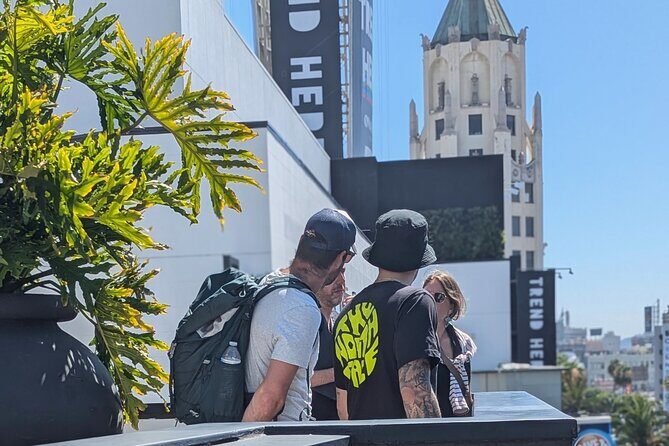
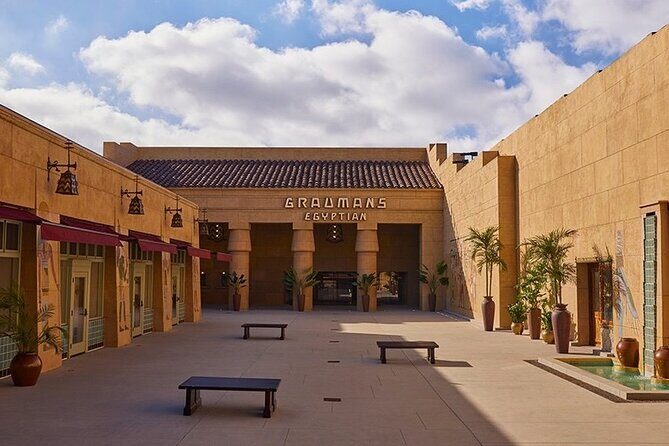
Now you hit one of the most visually memorable stops on the whole route: the Egyptian Theatre. You’ll spend about 20 minutes here, which is generous compared to some other quick stops.
The big idea is that this is Hollywood’s first movie palace, built with an Egyptian Revival look. The design inspiration ties back to the fascination with King Tut’s discovery, which explains why Egypt-themed details became a mainstream style for spectacle.
This is the kind of stop that rewards attention. The guide’s job here is to help you see the building as marketing and entertainment technology, not just a cool facade. You’ll learn how theaters like this competed for attention and made going to the movies feel like an event.
If you want a “wow” moment you can point to in photos, this is one of your best bets. If you want a “why it matters” moment, this is also one of the best stops for that.
El Capitan Theatre: Disney premieres and the Citizen Kane debut connection
After that, you head to the El Capitan Theatre for about 15 minutes. This is where Hollywood switches from early-era palace glamour to the kind of programming that kept the industry in public view.
You’ll learn about El Capitan as the home of Disney premieres. Even more compelling is the link to the legendary Citizen Kane debut, which connects the theater to one of the most famous films in cinematic history.
That combination—major studio premieres plus a landmark debut—helps you understand why these theaters matter. They weren’t just places where movies played. They were stages where Hollywood showed off.
Again, time is limited, so don’t get too hung up on the outside details alone. Listen for what the guide tells you about the theater’s role, because that’s where the stop becomes more than a picture.
Hollywood Masonic Temple and Jimmy Kimmel Live: the institution behind the show
Next the tour shifts to a different type of Hollywood landmark: the Hollywood Masonic Temple (1921), now home to Jimmy Kimmel Live! You get about 10 minutes here.
This stop is valuable because it shows Hollywood isn’t only theaters and movie palaces. It’s also institutions that got repurposed as TV and live production grew. You’ll hear stories about the famous Masons of Hollywood and how the temple became tied to the entertainment world.
If you like the idea of Hollywood as an evolving ecosystem, this is a neat pause. It reminds you that entertainment keeps finding new homes, and buildings get new jobs without losing their old character.
TCL Chinese Theatres (formerly Grauman’s): handprints, imprints, and star power you can touch
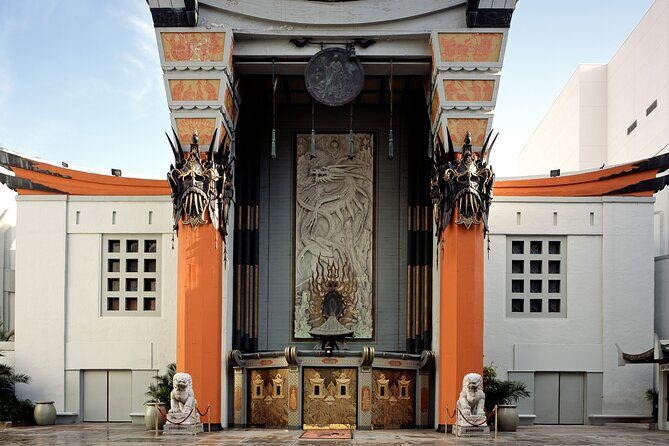
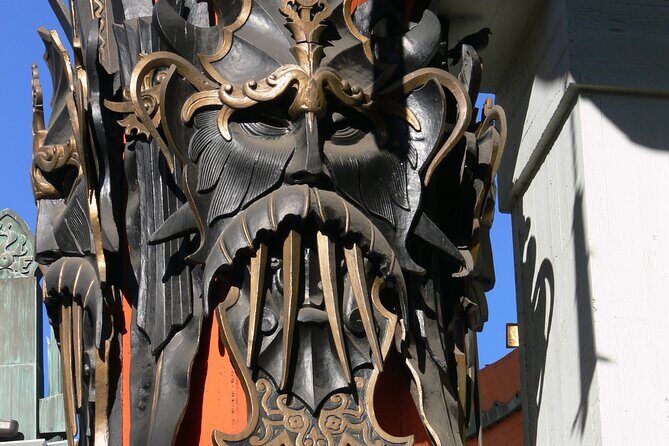
The tour’s next major stop is the TCL Chinese Theatres, known historically as Grauman’s Chinese Theatre. You’ll spend about 15 minutes here.
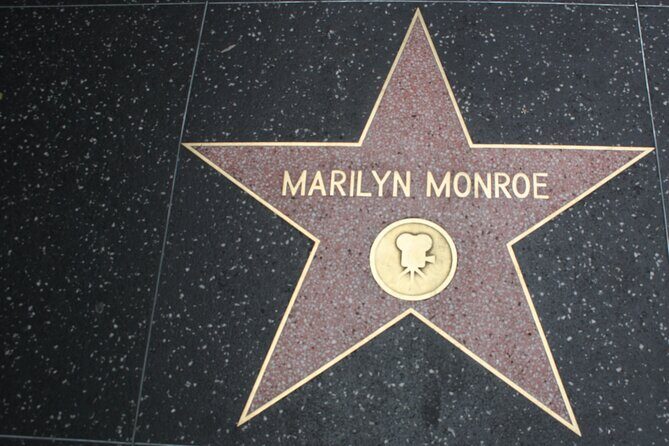
This is where the tour leans into one of Hollywood’s most interactive traditions: the handprints and footprints. You’ll learn about the tradition and what it represents—fans don’t just watch Hollywood; they mark it. The guide also points out imprints left by icons ranging from Marilyn Monroe to Harrison Ford.
One practical tip: this area can feel crowded because it’s a top tourist spot. Stand where the guide tells you to, then move slowly to see the details. If you try to do everything at once, you’ll miss the stories that make it more meaningful.
If you’re a movie person, you’ll probably get goosebumps. If you’re not, the tradition still reads as a clever piece of Hollywood branding and fandom culture.
Dolby Theatre and the Oscars red carpet: the walk you can actually feel
Then it’s on to the Dolby Theatre, about 20 minutes. This is one of the most famous modern Hollywood sites on the list because it’s tied to the Academy Awards.
The tour spotlights the experience of walking along the Oscars red carpet area. The magic here isn’t pretend. It’s that you’re standing where the spotlight usually is, and you can feel the choreography of the building and its public image.
This stop tends to be a highlight for people who want at least one “major event” anchor in their sightseeing. It also helps balance the older movie palaces earlier on, so you leave with a picture of Hollywood’s timeline—from classic theaters to awards spectacle.
If you’re short on time in Los Angeles, this stop makes the tour feel like it delivers big-name Hollywood without requiring you to plan separate visits.
Hollywood Roosevelt: Marilyn Monroe’s connection and the first Oscars
The final landmark stop on the walk is the Hollywood Roosevelt. You’ll spend about 10 minutes here, but it’s packed with story.
This hotel is described as the oldest continuously operating hotel in Hollywood. You’ll also hear about Marilyn Monroe living there, plus the fact that the hotel was the site of the first Oscars.
This matters because it gives Hollywood a grounded home base. The Academy Awards and Monroe are Hollywood symbols, but this stop connects them to a place that still operates, which makes the fame feel less like a myth and more like a real timeline.
When your last stop lands here, it gives you closure: you end with a piece of Hollywood that wasn’t just a stage. It was a home and a setting for history to unfold.
Price, pace, and what you get for $30
At $30 per person for about 2 hours 30 minutes, this tour offers solid value if you want structured storytelling rather than loose wandering. You’re paying mainly for the guide’s time and the way the stops link into a coherent Hollywood timeline.
The group size is capped at 15 travelers, which keeps it from turning into a moving crowd cluster. You also get a mobile ticket, and admission tickets at the stops are listed as free—so you’re not getting hit with extra entry costs for each landmark.
The pace is also worth noting. It’s not a marathon. Most stops are 10 to 20 minutes, which means you’re constantly moving but also not rushing through every site. That’s important for enjoying detail, especially around architectural features and traditions like the Chinese Theatre handprints.
For who it suits: I think this is great for movie fans, first-time Los Angeles visitors, and people who like guided walks where you learn why a place became famous. If you only want free time and selfies with minimal walking, you may find it a bit structured.
Should you book this historic Hollywood Boulevard tour?
If you want a practical, story-focused Hollywood overview in one outing, I’d book it. The best part is that you don’t just see the biggest icons—you learn how they connect: the Hollywood Sign’s origin and rescue story, the palace era, the Oscars present-day connection, and the hotel ties to early awards.
I’d skip it only if you hate walking for 2.5 hours in whatever weather shows up. Also, if you already know every theater fact and just want independent roaming, you might feel you could piece this together on your own. But if you’d like a guide like Marc or Mark to make the block make sense, this tour is a strong value.
FAQ
FAQ
How long is the Historic Hollywood Boulevard and Movie Palaces walking tour?
It’s about 2 hours 30 minutes.
How much does the tour cost?
The price is $30.00 per person.
Where do I meet for the tour?
The meeting point is 6815 Hollywood Blvd, Los Angeles, CA 90028, USA, and it ends back at the meeting point.
Is the tour offered in English?
Yes, it’s offered in English.
How big is the group?
The maximum group size is 15 travelers.
Does the tour include a guide and ticketing details?
Yes. It includes a local guide and a mobile ticket.
What should I know about weather and cancellation?
The experience requires good weather. Cancellation is free up to 24 hours in advance for a full refund.